Aleppo’s Kurdish Council Vows to ‘Stay and Defend’ as Sole Hospital Collapses Under Syrian Army Fire
Aleppo's Kurdish council vows defense as Syrian Army shelling disables the area's only hospital. Casualties rise to 23 dead amid international calls for de-escalation and dialogue.
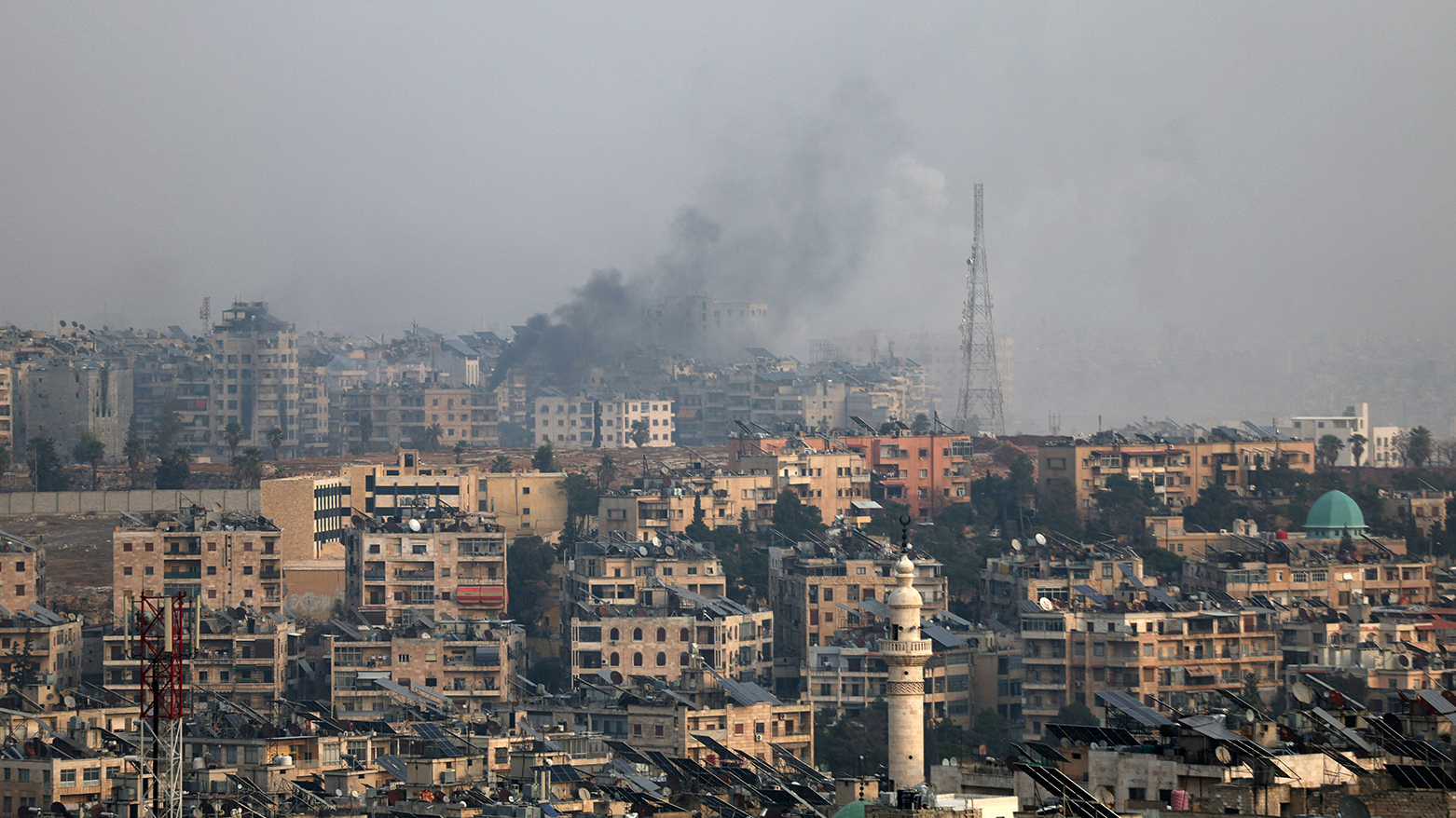
ERBIL (Kurdistan24) — The governing council of the Sheikh Maqsud and Ashrafiyeh neighborhoods in Aleppo issued a defiant proclamation on Friday, announcing a refusal to evacuate and a commitment to "stay and defend" the area despite an intensifying military offensive by the Syrian Arab Army.
The statement coincided with confirmation that the district's only operating medical facility, Khalid Fajr Hospital, has been rendered completely out of service due to heavy bombardment.
The Council of the Sheikh Maqsud and Ashrafiyeh neighborhoods released the statement following three days of what it described as a "severe wave of armed attacks" carried out by forces affiliated with the Syrian Arab Army and allied armed groups.
The Council rejected demands from attacking forces for the surrender of internal security forces (Asayish) and the evacuation of the population, stating that the decision to remain was made collectively by the people and defending forces.
Targeting of Critical Infrastructure
According to the official statement by the People's Council, the offensive, which commenced on January 6, 2026, has utilized heavy weapons to target civilian infrastructure directly.
The Council detailed strikes on mosques, schools, citizens' homes, and service centers. Most critically, the bombardment forced Khalid Fajr Hospital to shut down.
As the only health center serving these densely populated districts, its closure has created a catastrophic situation for the wounded, whom the Council reports include dozens of women, children, and civilians with no remaining options for medical treatment.
The Council characterized the military operation as an intentional effort to alter the demography of the neighborhoods, where it stated indigenous people have resided for hundreds of years.
The statement accused the Syrian government of aiming for the "forced displacement" of residents through the destruction of essential services.
The humanitarian situation was described as a crisis compounded by the winter cold and a severe shortage of basic necessities resulting from the siege.
The Council urged residents to mobilize to aid the wounded at the now-defunct hospital and to unite against what it termed attempts at "massacre and demographic change."
Diplomatic Stasis and International Reaction
The Neighborhood Council leveled strong criticism at international actors, noting the silence of parties designated as guarantors of the agreements of October 10 and April 1. These agreements, intended to stabilize the security situation, appear to have collapsed as the offensive enters its fourth day.
The local administration’s stance comes amidst growing international alarm.
The Kurdistani Diaspora Confederation (KDC) issued an urgent appeal on Thursday, calling on the United Nations and human rights organizations to intervene. In a statement released on January 8, the KDC warned that the humanitarian situation had deteriorated significantly and condemned the military actions as "racist attacks."
The KDC expressed support for the political roadmap advocated by President Masoud Barzani, describing his vision of preventing inter-component warfare and ethnic tension as an "urgent necessity" for protecting the Kurds in Western Kurdistan (Rojava).
The Confederation asserted that the Kurdish national identity would not be broken by force or siege, pledging to convey the grievances of the besieged population to decision-makers in Europe and the United States.
Regional and Domestic Condemnation
Domestically, the violence has drawn condemnation from the Supreme Islamic Alawite Council in Syria and the World. In a forceful statement, the Council demanded an immediate halt to the "massacre" in Aleppo.
The religious body pointed to the "de facto authority led by Abu Muhammad al-Julani," describing him as a temporary leader, and accused the current administration of carrying out mass arrests and killings that threaten the Syrian national fabric.
The Alawite Council warned that continuing a "policy of cleansing" risks dismantling Syrian society entirely. It called for the protection of all components of society without discrimination and urged the international community to push for a decentralized system governed by a civil constitution.
Casualties and High-Level Talks
Reports from the ground indicate a rising human toll. Since the heavy weaponry attacks began on Tuesday, 23 citizens have lost their lives and 64 others have been injured. A large number of residents have been forcibly displaced within the neighborhoods as shelling targets residential zones.
While the fighting rages, high-level diplomatic channels remain active.
On Friday morning, the official Syrian news agency, SANA, reported that Syrian President Ahmed al-Sharaa received separate telephone calls from French President Emmanuel Macron and Turkish President Recep Tayyip Erdogan.
In his conversation with President al-Sharaa, President Macron discussed bilateral cooperation and emphasized the importance of continued coordination between Paris and Damascus regarding the developments in Aleppo.
President al-Sharaa praised France’s role in supporting reconstruction efforts.
Simultaneously, Turkish President Erdogan spoke with President al-Sharaa to discuss security and stability. President Erdogan expressed Ankara's support for efforts to strengthen security and emphasized the importance of "joint coordination" to confront mutual threats.
SANA reported that the leaders agreed to maintain intensive communication between their institutions.
Meanwhile, Western diplomatic representatives have called for a cessation of hostilities.
Gregory Galligan, the Canadian Ambassador to Syria and Lebanon, stated on Thursday that Canada is "very concerned" about the fighting. Ambassador Galligan called for an immediate reduction in tensions and advocated for the resumption of dialogue between the Syrian government and the Syrian Democratic Forces (SDF) to resolve the crisis politically.
Despite these diplomatic interventions, the situation on the ground in Sheikh Maqsud and Ashrafiyeh remains volatile. With the hospital out of service and the Council declaring a refusal to surrender, the hundreds of thousands of civilians trapped in the enclave face the prospect of a prolonged siege amidst intensifying winter conditions.