Syrian Army Declares Eastern Aleppo a Military Zone as Tensions Escalate with SDF
The Syrian army declared eastern Aleppo a closed military zone and called for SDF withdrawal, while SDF said fighting has begun, denied troop buildup claims, and reported an overnight attack near the Euphrates.
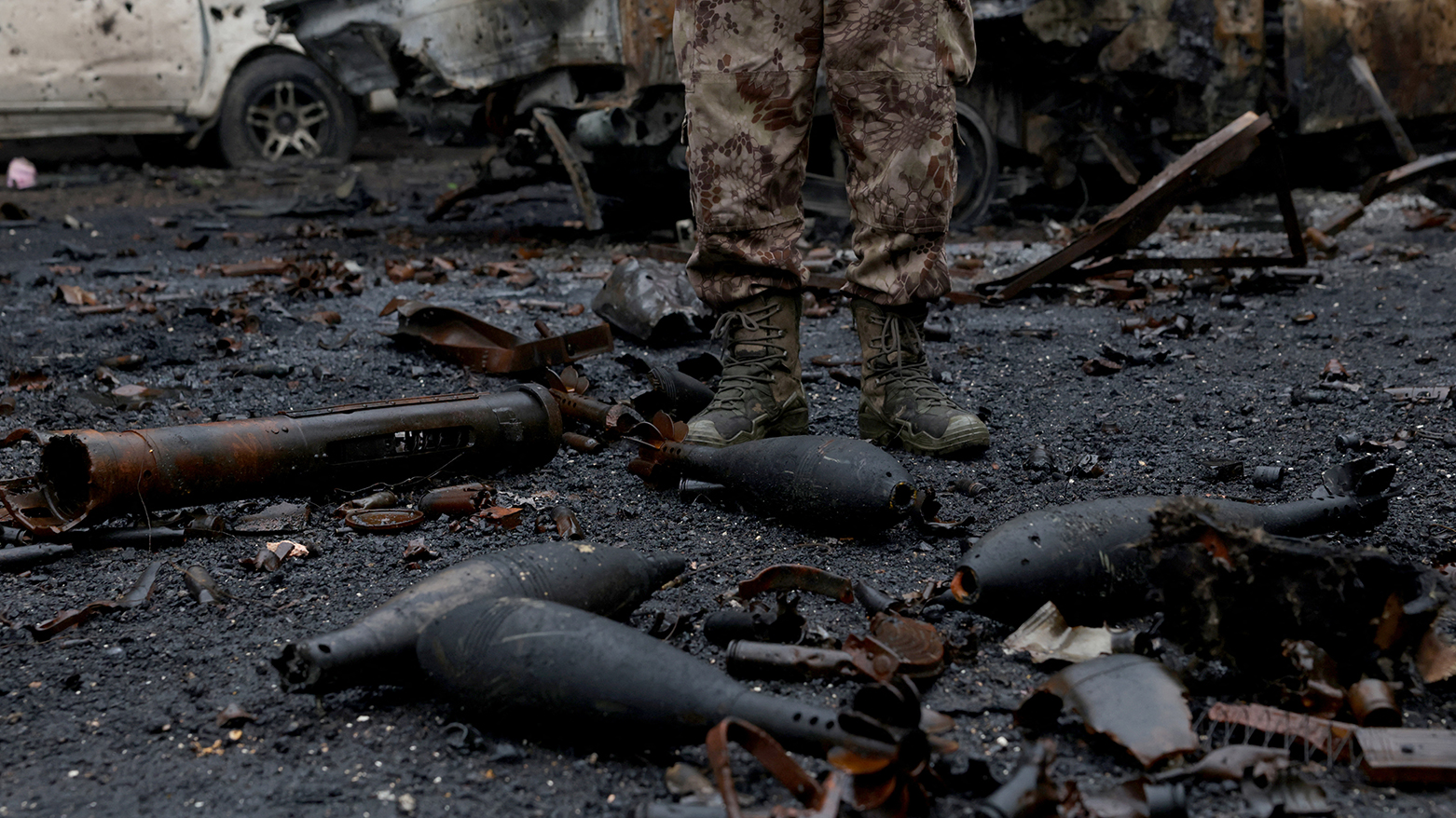
ERBIL (Kurdistan24) - As the security landscape across eastern Aleppo sharpens, the Syrian Arab Army has declared wide swathes of the area a closed military zone, signaling preparations for possible military action against territories held by the Syrian Democratic Forces, amid contradictory statements and fresh exchanges of fire along the Euphrates.
On Tuesday, the Syrian Arab Army issued a public announcement accompanied by a map, designating several areas in eastern Aleppo as closed military zones. The statement specifically identified Deir Hafir, Maskanah, and surrounding areas as restricted zones, warning of potential military operations.
According to the announcement, areas marked in red on the published map are subject to a ban on movement and civilian access. The Syrian army called on civilians to protect their lives by distancing themselves from bases and positions belonging to the Syrian Democratic Forces (SDF).
The statement further demanded the immediate withdrawal and evacuation of SDF forces from the designated areas, urging them to move toward the eastern bank of the Euphrates River. The announcement follows days of heavy clashes and military escalation in the Kurdish-majority neighborhoods of Ashrafiyeh and Sheikh Maqsud in central Aleppo.
A military source from the Syrian Democratic Forces told Kurdistan24 that “the war has started, and we are defending against the assault,” confirming the onset of hostilities.
In the early hours of Tuesday, the SDF Media Center released a statement reporting a separate incident in eastern Deir ez-Zor. According to the statement, at exactly 11:25 p.m. the previous night, armed groups affiliated with the Damascus government attacked SDF positions in the town of Abu Hamam, east of Deir ez-Zor, from the opposite side of the Euphrates River using machine guns.
“Immediately, our forces responded to the sources of fire and took all necessary measures to ensure the security of the positions and protect the area,” the statement said, adding that no injuries were reported among SDF forces.
However, only a day earlier, the SDF had publicly rejected claims that it was mobilizing forces in the same areas. In a statement published on the social media platform X on Monday, the SDF denied allegations by Syria’s Ministry of Defense regarding military movements near Maskanah and Deir Hafir.
The statement described the claims as “entirely unfounded,” stressing that no troop buildup or military maneuvers had been carried out by SDF forces in those locations. Instead, it asserted that movements on the ground were being conducted by factions affiliated with the Damascus government.
The SDF warned that repeated false accusations could fuel unnecessary tension and escalation, while reaffirming its commitment to de-escalation and its right to defend the region and protect civilians if necessary.
The latest developments come amid a sharp escalation of violence in Aleppo’s Kurdish-majority neighborhoods in January 2026. Sheikh Maqsud and Ashrafiyeh were subjected to intense military assaults and a prolonged siege, with clashes involving the Syrian Arab Army and its affiliated factions against Kurdish-led internal security forces.
Military operations during that period included heavy bombardment using tanks, artillery, Grad rockets, and suicide drones. The Syrian Arab Army declared the neighborhoods closed military zones and imposed an indefinite curfew.
Pro-government media and monitoring groups reported that Syrian army units entered the neighborhoods, after which a ceasefire was announced at 3:00 p.m. local time to facilitate the relocation of Kurdish fighters. According to the information provided, approximately sixty Asayish fighters surrendered and were evacuated to Western Kurdistan.
The escalation triggered large-scale displacement, with estimates indicating that between 142,000 and 165,000 residents fled the violence.
As Damascus expands its military declarations across eastern Aleppo and the SDF issues conflicting signals of restraint and readiness, the situation remains volatile, underscoring the fragility of security arrangements and the risk of wider confrontation along the Euphrates.