US Envoy Signals Tougher Financial Scrutiny in Iraq, Warns of Sanctions on Illicit Networks
US envoy Mark Savaya said Washington and Treasury officials agreed to review suspect financial transactions in Iraq linked to smuggling, money laundering, and terrorist financing, and discussed upcoming sanctions against actors undermining state authority.
ERBIL (Kurdistan24) - In a pointed message on financial governance and accountability, the United States Special Envoy to the Republic of Iraq announced a coordinated push with US Treasury officials to scrutinize suspect financial activities and prepare sanctions targeting actors undermining Iraq’s financial integrity.
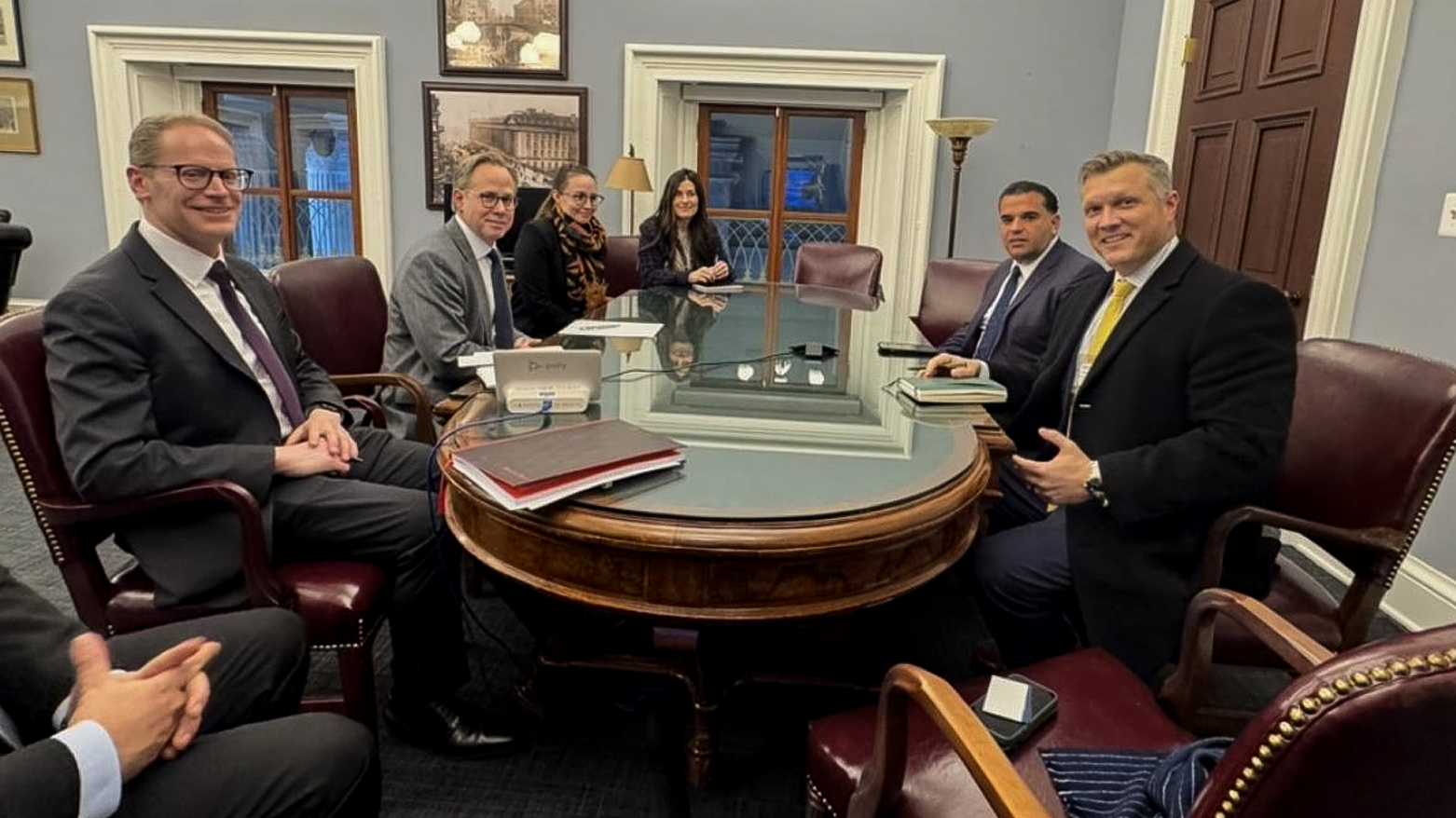
Mark Savaya, the United States Special Envoy to the Republic of Iraq, said in a statement published on X that he met with the US Department of the Treasury and the Office of Foreign Assets Control to address what he described as key challenges and reform opportunities across both state-owned and private banks in Iraq.
“Today, I met with the U.S. Department of the Treasury and OFAC to address key challenges and reform opportunities across both state owned and private banks, with a clear emphasis on strengthening financial governance, compliance, and institutional accountability,” Savaya said.
He added that the discussions led to agreement on conducting “a comprehensive review of suspected payment records and financial transactions involving institutions, companies, and individuals in Iraq linked to smuggling, money laundering, and fraudulent financial contracts and projects that finance and enable terrorist activities.”
Savaya said the talks also covered “next steps related to forthcoming sanctions targeting malign actors and networks that undermine financial integrity and state authority.”
In his statement, the US envoy stressed the broader political context of US-Iraq relations, saying, “The relationship between Iraq and the United States has never been stronger than it is today under the leadership of President Donald J. Trump.”
Today, I met with the U.S. Department of the Treasury and OFAC to address key challenges and reform opportunities across both state owned and private banks, with a clear emphasis on strengthening financial governance, compliance, and institutional accountability.
— Mark Savaya (@Mark_Savaya) January 15, 2026
We agreed to… pic.twitter.com/CU8Z4ZmYEV
The statement follows remarks made by Savaya at the start of 2026, when he used a New Year message to signal what he described as a decisive shift in Iraq’s trajectory. On Jan. 1, 2026, Savaya pledged that the year would mark a turning point toward stability, sovereignty, and accountability, while issuing a direct warning to what he called corrupt actors.
In that message, Savaya said efforts were underway to make 2026 the year Iraq moves beyond instability, uncontrolled weapons, militias, corruption, smuggling, money laundering, bogus contracts, and the plundering of public resources. He warned those responsible for corruption that “your time is over, and the time of Iraq and the Iraqi people has begun.”
Savaya has repeatedly emphasized limiting weapons exclusively to the authority of the Iraqi state, a position that has fueled political and social debate. Several armed factions publicly rejected calls to surrender weapons, linking any such move to the withdrawal of foreign forces and what they described as broader sovereignty concerns.
As these debates continue, Savaya’s latest statement places financial reform, sanctions, and institutional accountability at the center of Washington’s engagement with Iraq in 2026.
By tying financial scrutiny, potential sanctions, and governance reform into a single message, the US envoy underscored that accountability and financial integrity remain central pillars of the US approach toward Iraq in the coming year.