Afghan Man Goes on Trial in Germany Over Deadly Munich Car Attack
Prosecutors said Farhad N., who was born in Kabul, shouted “Allahu Akbar” after the attack and believed he was obligated to kill randomly selected people in Germany in response to the suffering of Muslims in Islamic countries.
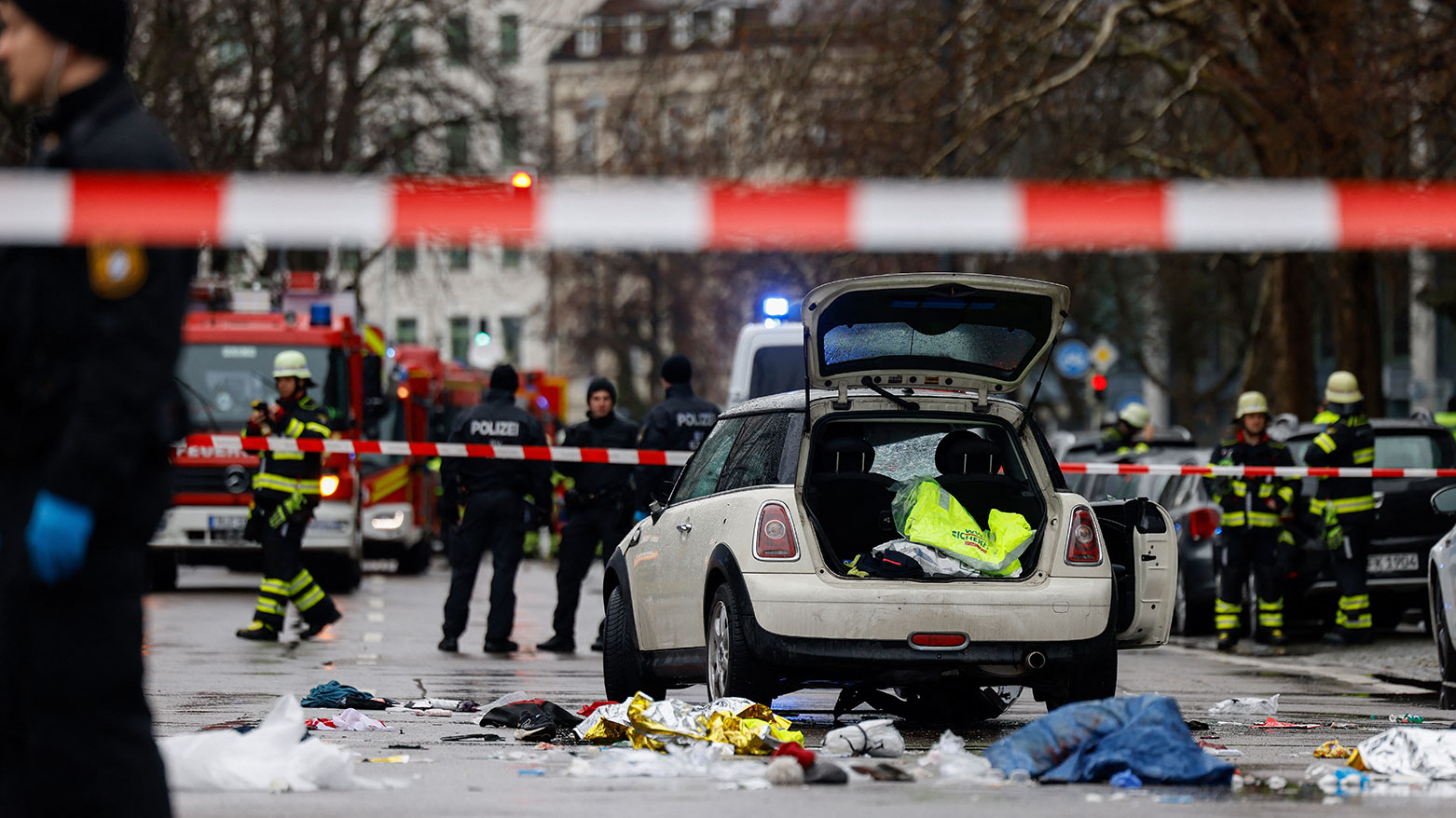
ERBIL (Kurdistan24) – An Afghan man accused of ramming a car into a crowd in Munich last year, killing a two-year-old girl and her mother and injuring dozens of others, goes on trial in Germany on Friday.
The suspect, identified by prosecutors as Farhad N., faces two counts of murder and 44 counts of attempted murder. Prosecutors allege the attack was carried out for “religious motivation,” saying the defendant expected to die during the assault.
The incident occurred on February 13, 2025, when Farhad N., then 24, allegedly drove a BMW Mini into a trade union rally attended by around 1,400 people in central Munich. According to the charge sheet, the vehicle came to a stop after traveling 23 meters because its front wheels lifted off the ground due to people lying in front of and beneath the car.
A 37-year-old woman and her young daughter were thrown about 10 meters through the air, suffering severe head injuries. Both died several days later in hospital.
Prosecutors said Farhad N., who was born in Kabul, shouted “Allahu Akbar” after the attack and believed he was obligated to kill randomly selected people in Germany in response to the suffering of Muslims in Islamic countries. Authorities, however, said he was not a member of any known Islamist militant organization, including the Islamic State group.
Farhad N. arrived in Germany in 2016 during the peak of Europe’s migrant influx. Although his asylum application was rejected, he was not deported and later found employment, working in the security sector. Police said he was heavily involved in fitness training and bodybuilding.
The Munich attack was one of several violent incidents that intensified debate over immigration in Germany ahead of the country’s general election last year. It came one month after a separate knife attack by another Afghan national on a kindergarten group in Aschaffenburg, which killed two people, including a two-year-old boy. That suspect was later committed to psychiatric care after being found to have acted during an acute psychotic episode.
In December 2024, six people were killed and hundreds injured when a car plowed into a Christmas market in the eastern city of Magdeburg. A Saudi national was arrested and is currently on trial. Around the same period, several Syrian nationals were arrested over attacks or alleged plots, including a knife attack at a street festival in Solingen that left three people dead.
Germany accepted more than one million asylum seekers in 2015 and 2016, a move that has remained deeply divisive and contributed to the rise of the far-right Alternative for Germany (AfD) party.
Conservative Chancellor Friedrich Merz, who took office last May, has pledged tougher measures against criminal migrants and increased deportations, including of convicted offenders to Afghanistan. In December, Germany also deported a man to Syria for the first time since the outbreak of the Syrian civil war in 2011.