KRG Water Project Poised to Transform Life in 18 Villages of Khalifan District
A major drinking water project in Khalifan District is nearing completion, bringing reliable water to 18 villages while supporting the Kurdistan Region's broader strategy to strengthen rural infrastructure and long-term water security.
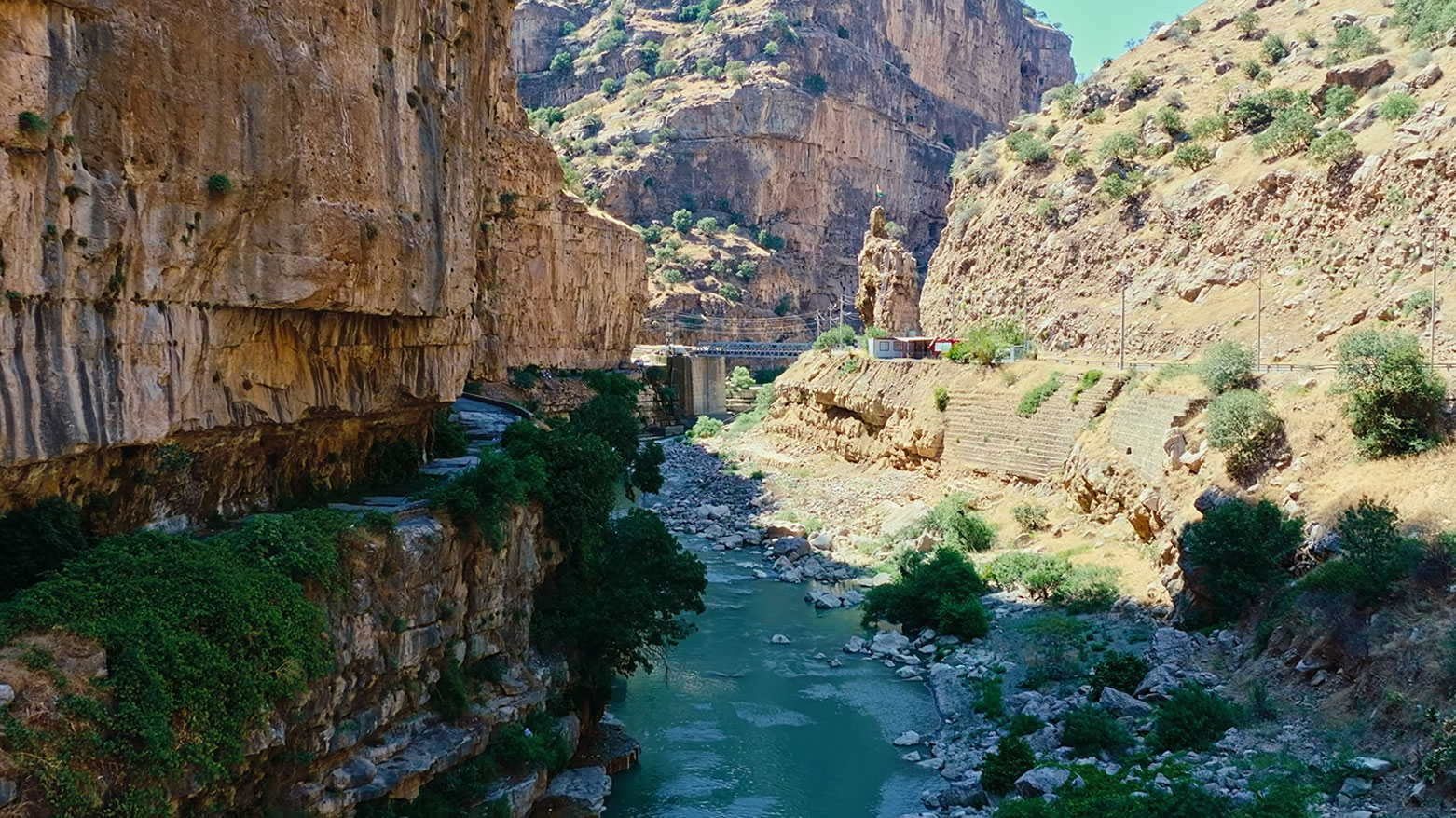
ERBIL (Kurdistan24) - A major drinking water project serving the Byaw Valley in Khalifan District is approaching completion, promising to bring a dependable supply of clean water to 18 villages where hundreds of families have long relied on unreliable wells and natural springs.
For approximately 700 households scattered across the mountainous communities of the valley, the project represents more than the construction of new infrastructure. It marks the prospect of a permanent solution to years of water shortages while extending modern public services to an area where geography has often complicated access to essential utilities.
Officials say the initiative reflects the Kurdistan Regional Government's continued emphasis on improving living conditions in rural communities by investing in infrastructure that supports both immediate needs and long-term development.
According to Muslih Mustafa, head of the Sreshma Water Department, the system has been designed around the Greater Zab River, whose water will serve as the primary source for the network. Modern engineering and water treatment methods have been incorporated throughout the project to ensure a reliable supply of potable water for residents once operations begin.
Rather than drawing directly from the river, engineers developed an integrated treatment process beginning with a well drilled approximately 12 meters beneath the riverbed. Water is then directed through a 180-meter filtration system designed to remove impurities before entering the distribution network.
From there, the treated water moves through three strategically positioned reservoirs. Two lower reservoirs, each equipped with dual pumping systems, transfer water to a higher storage reservoir that serves as the central distribution point for the surrounding villages. This gravity-assisted design is intended to improve operational efficiency while maintaining stable water pressure throughout the network.
The engineering approach illustrates how contemporary water infrastructure increasingly combines treatment technology with carefully planned distribution systems to provide dependable service across challenging terrain.
For residents, however, the project's importance extends well beyond its technical design.
Reliable access to clean drinking water is expected to reduce daily dependence on inconsistent local water sources while improving public health and easing one of the most persistent challenges facing families in the area. Residents have welcomed the project's progress, describing it as a long-awaited improvement after years of uncertainty surrounding their household water supplies.
Officials also anticipate broader economic benefits.
A stable water supply is expected to support agricultural activities that remain central to rural livelihoods while improving conditions for livestock production. The project may also strengthen tourism by enhancing public services in the scenic Byaw Valley, where natural landscapes attract visitors but infrastructure has historically lagged behind growing demand.
The Kurdistan Regional Government allocated approximately 1.98 billion Iraqi dinars for the project, underscoring its commitment to extending essential infrastructure beyond major urban centers. The investment reflects a broader recognition that sustainable regional development depends on improving services in rural districts alongside continued urban expansion.
The Khalifan initiative also fits within a wider strategy pursued by the KRG's Ninth Cabinet to strengthen water security across the Kurdistan Region.
Facing increasing pressure from population growth, changing climate conditions and rising demand for public utilities, the government has expanded investment in drinking water production, transmission networks and modern treatment facilities intended to improve both the capacity and resilience of the Region's water infrastructure.
That strategy extends beyond individual projects to encompass new distribution pipelines, upgraded treatment plants and wastewater management systems designed to improve the efficient use of water resources while reducing pressure on groundwater reserves.
Across both cities and rural communities, officials increasingly view reliable water infrastructure as a foundation for economic development, agricultural productivity and environmental sustainability. Investments in transmission networks and modern treatment technologies are intended not only to increase access to safe drinking water but also to build systems capable of meeting future demand.
Against that broader backdrop, the Khalifan project illustrates how regional policy is being translated into practical improvements at the local level.
While its immediate impact will be measured by clean water reaching homes across 18 villages, its wider significance lies in demonstrating how targeted infrastructure investment can strengthen rural resilience, improve public services and create conditions for sustainable economic growth. As the project enters its final stage, it stands as part of a longer-term effort to ensure that dependable access to safe drinking water becomes a lasting feature of communities throughout the Kurdistan Region.
|
Summary A new drinking water project nearing completion in Khalifan District will supply reliable water to 18 villages and around 700 households. The investment strengthens rural infrastructure while supporting the Kurdistan Region's broader strategy for water security, sustainable development and improved public services. |