Erbil Researchers Successfully Cultivate White Eggplants for First Time
Researchers at Erbil's College of Agricultural Engineering Sciences say years of scientific experimentation have produced the Kurdistan Region's first successful white eggplant crop, opening new opportunities for agricultural innovation and crop diversification.
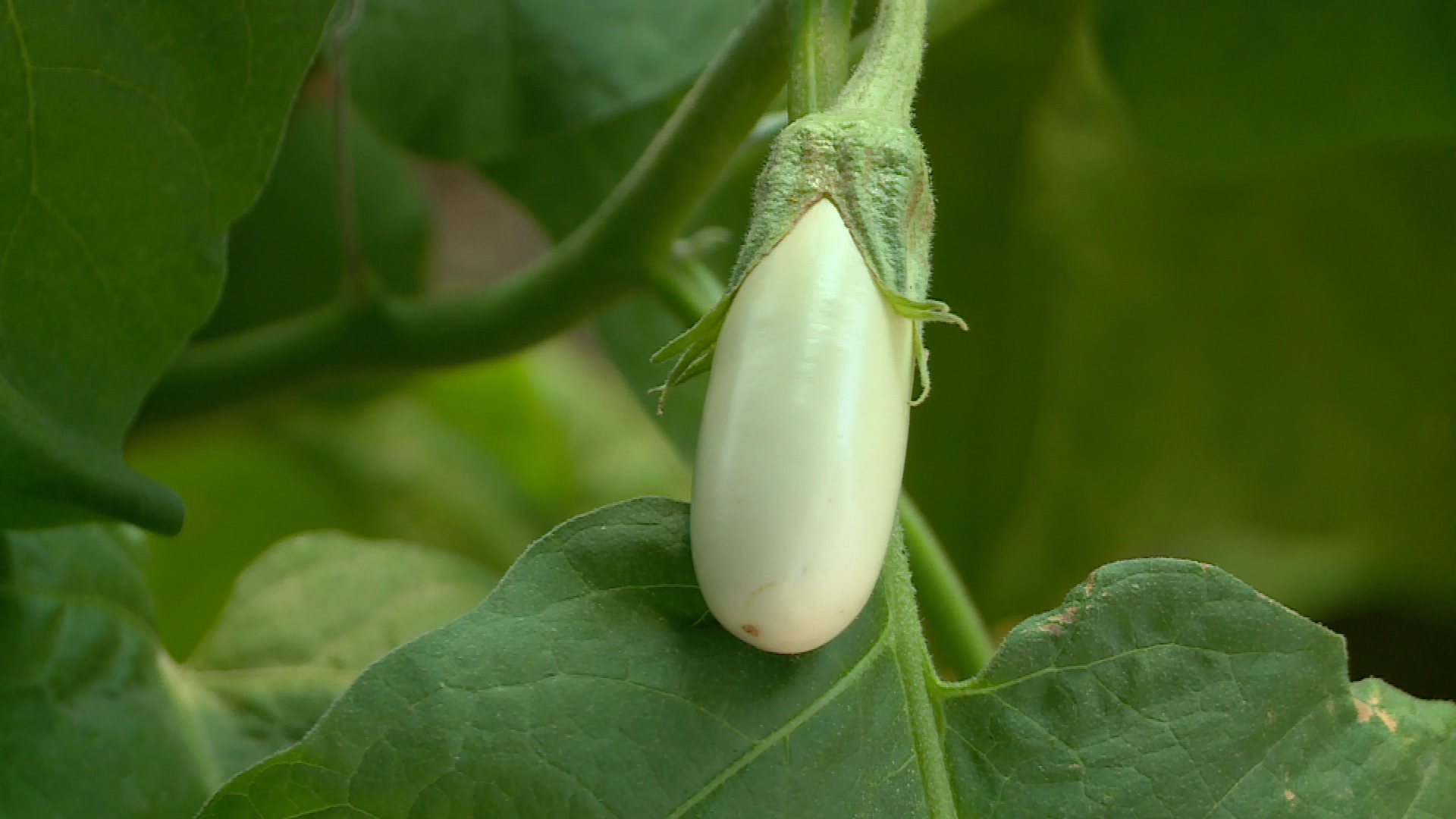
ERBIL (Kurdistan24) - A research team at Erbil's College of Agricultural Engineering Sciences has successfully cultivated white eggplants for the first time in the Kurdistan Region, marking an important step in university-led agricultural innovation that could broaden crop diversity, strengthen food production, and create new opportunities for local farmers.
The achievement is the culmination of several years of scientific research aimed at introducing a new vegetable variety capable of adapting to local growing conditions while offering qualities that distinguish it from conventional eggplants.
Beyond demonstrating the feasibility of cultivating the crop, researchers say the project illustrates how academic institutions can help translate scientific research into practical solutions for agriculture.
The study was led by lecturer and researcher Bekhal Abdulrahman, whose work focused on evaluating a white-skinned eggplant variety under controlled cultivation conditions.
The successful harvest represents the first stage of a broader research program designed to assess both the crop's agricultural performance and its potential value for consumers.
According to Abdulrahman, the new variety differs from commonly grown dark-purple eggplants in several ways.
It has a noticeably thinner skin, fewer seeds, and a milder taste with reduced bitterness, characteristics that may appeal to consumers while also expanding the range of vegetables available to local markets.
Researchers also highlighted the crop's nutritional profile as one of the project's most significant findings. Traditional eggplants contain relatively higher concentrations of solanine, a naturally occurring compound that can cause sensitivities in some individuals.
The white variety contains substantially lower levels of the compound, making it a potentially more suitable option for people who experience dietary intolerance to conventional eggplants.
While additional scientific evaluation is expected as the research progresses, the findings suggest that introducing alternative crop varieties could contribute not only to greater consumer choice but also to more resilient agricultural systems capable of responding to changing dietary preferences and market demand.
The project was developed within the College of Agricultural Engineering Sciences, where researchers cultivated the crop inside a greenhouse before considering wider agricultural applications.
The controlled environment allowed scientists to evaluate the plant's growth and establish the conditions necessary for its successful development before exposing it to more variable field conditions.
Dr. Arshad Abdulkhaliq, Head of the Department of Horticulture and Landscape Architecture, said the initiative reflects a broader effort to introduce innovative crops to the Kurdistan Region and Iraq through scientific research rather than relying solely on imported agricultural practices.
Greenhouse cultivation served as an essential first phase, providing researchers with the ability to monitor plant performance and refine cultivation techniques before moving toward larger-scale production. Such controlled trials are widely regarded as an important step when introducing unfamiliar crop varieties into new environments, helping reduce risks before wider adoption.
The research team is now preparing for the next phase of the project, which will involve testing the white eggplant under open-field farming conditions.
These trials are intended to determine how the crop performs outside greenhouse environments and whether it can maintain consistent productivity under natural agricultural conditions across the region.
Once sufficient data has been collected, researchers plan to share their findings with the Ministry of Agriculture and specialized agricultural research institutions.
The longer-term objective is to make seeds available to local farmers if the trials continue to produce positive results.
Officials involved in the project believe successful commercialization could provide farmers with an additional crop option capable of generating new sources of income while contributing to greater agricultural diversity throughout the Kurdistan Region.
Beyond the introduction of a single vegetable variety, the initiative highlights the increasingly practical role universities are playing in supporting agricultural development.
Research institutions are becoming important partners in addressing challenges related to crop diversification, sustainable farming, and domestic food production by developing solutions that can eventually be adopted beyond academic settings.
The successful cultivation of white eggplants therefore represents more than a scientific milestone.
It demonstrates how sustained research, institutional collaboration, and agricultural innovation can contribute to strengthening food security, encouraging sustainable rural development, and expanding opportunities for farmers across the Kurdistan Region.
As the project advances from experimental cultivation toward practical farming applications, it offers a model for connecting scientific discovery with the long-term needs of local agriculture.
|
Summary Researchers at Erbil's College of Agricultural Engineering Sciences have successfully cultivated white eggplants for the first time in the Kurdistan Region. The breakthrough supports agricultural innovation, crop diversification and future plans to introduce the new variety to local farmers through expanded field trials. |
Kurdistan24 correspondent Shaima Bayiz contributed to this report.