Kurdistan House Returns to Davos With Expanded Focus on Innovation and Investment
Kurdistan House returns to Davos 2026 with an agenda focused on investment, AI, and regional stability. Established by PM Masrour Barzani, the venue hosts panels on industry and education to foster global partnerships.
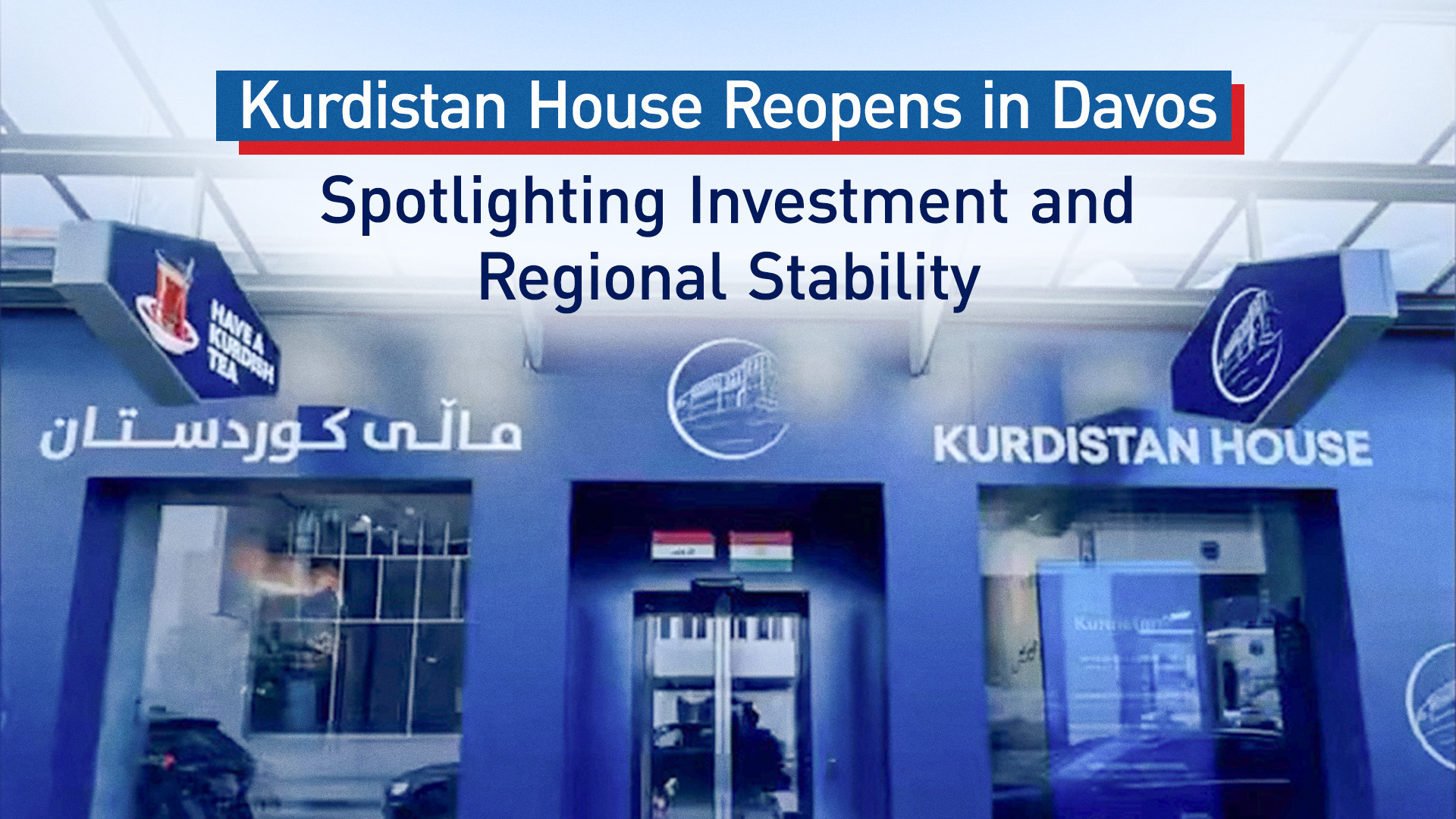
ERBIL (Kurdistan24) - The Kurdistan Regional Government (KRG) has launched its participation in the 2026 World Economic Forum with the reopening of "Kurdistan House," a dedicated platform in Davos designed to position the Region as a hub for investment and innovation. Established under the auspices of Prime Minister Masrour Barzani, the venue aims to foster global partnerships and showcase the economic potential of Kurdistan and Iraq to the international community gathered in Switzerland.
According to an official statement regarding the agenda for Davos 2026, the primary mission of Kurdistan House is to open a gateway for showcasing the region's capabilities on the global stage.
Building on its debut at the 2024 forum, the initiative seeks to drive meaningful dialogue and exchange ideas addressing both regional and global opportunities.
For the duration of the forum, from January 19 to January 23, the venue will be open daily to guests for open house events and targeted discussions, all facilitated over traditional Kurdish tea to encourage networking.
The 2026 agenda reflects a strategic focus on geopolitics and sustainability.
Organizers stated that this year’s programming will prioritize fostering geopolitical stability and strengthening regional cooperation, elements viewed as vital to sustainable economic growth in Kurdistan and Iraq.
The discussions are set to explore pathways to an inclusive energy transition and promote public-private partnerships as a foundation for lasting development.
Additionally, the platform will emphasize the empowerment of youth, the role of the diaspora, and the unlocking of investment potential in key sectors such as real estate, urban development, and modern infrastructure.
A series of panel discussions has been scheduled to address these themes directly.
On January 20, the agenda features a session titled "Building from Within: Local Investors on Growth, Challenges, and Opportunity," with speakers including Julien Haarman, a consultant for the KRG Board of Investment, and local business leaders Roj Peshraw of Empire World and Mustafa Bajger of Cihan Group.
Later that day, the focus shifts to technology with "The Future of Artificial Intelligence: Shaping Creativity, Entertainment, and Youth Education," featuring Danar Worya of Bright Winter Studio and Maxx Burman of KitBash3D.
Education and workforce development are central to the January 21 schedule.
A morning session titled "Educating for Impact" will examine the alignment of education with labor market needs, led by Dr. Honar Issa of the American University of Kurdistan and Chapka Najeeb Othman of Cambridge Educational Services - Kurdistan.
In the afternoon, the forum will turn to industrial investment with "Kurdistan Open for Industry," featuring Dr. Mohammed Shukri, Chairman of the Board of Investment, alongside CEOs Saad Kolak and Shwan Mohammed Sulaiman.
The programming concludes with a high-level discussion on "Digital Transformation and Innovation," including contributions from Mark Mueller-Eberstein of Adgetec Corporation and Dr. Garif Yalak of Cisco.
Beyond economics, Kurdistan House is committed to advocating for broader social goals. The official statement highlights a commitment to empowering women’s peace and security and providing re-skilling opportunities for a youth-driven workforce.
Cultural heritage and tourism are also positioned as pivotal economic drivers, with the venue showcasing the Region's landscapes to attract global interest through inclusive and sustainable practices.
The return of Kurdistan House to Davos follows a successful expansion of its activities observed in previous years. In 2025, the venue evolved into a significant hub for diplomatic activity.
According to reporting by Kurdistan24 from last year’s forum, the house hosted presidents, leaders, and international delegations, serving as a focal point for the Region’s external engagement. The expanded scope was designed to improve global visibility and foster long-term partnerships, moving beyond simple representation to active participation in global dialogues.
Prime Minister Barzani’s initiative utilizes the informal nature of World Economic Forum interactions to advocate for trade and development.
Previous engagements at the forum have facilitated direct invitations for international leaders to visit the Kurdistan Region, laying the groundwork for robust cooperation.
The continued presence of Kurdistan House reflects the KRG’s dedication to positioning the Region as a valued partner in the global economic and political landscape, contributing to solutions for challenges affecting both the local population and the wider world.