Al-Hol Camp Under Full Control, Director Warns of Threats to Aid Routes
Al-Hol Director Jihan Hanan reports the camp is secure under SDF guard, with food and medicine available. However, she warned that dangerous access roads are hindering humanitarian aid, even as a new deal mandates transferring camp control to Damascus.
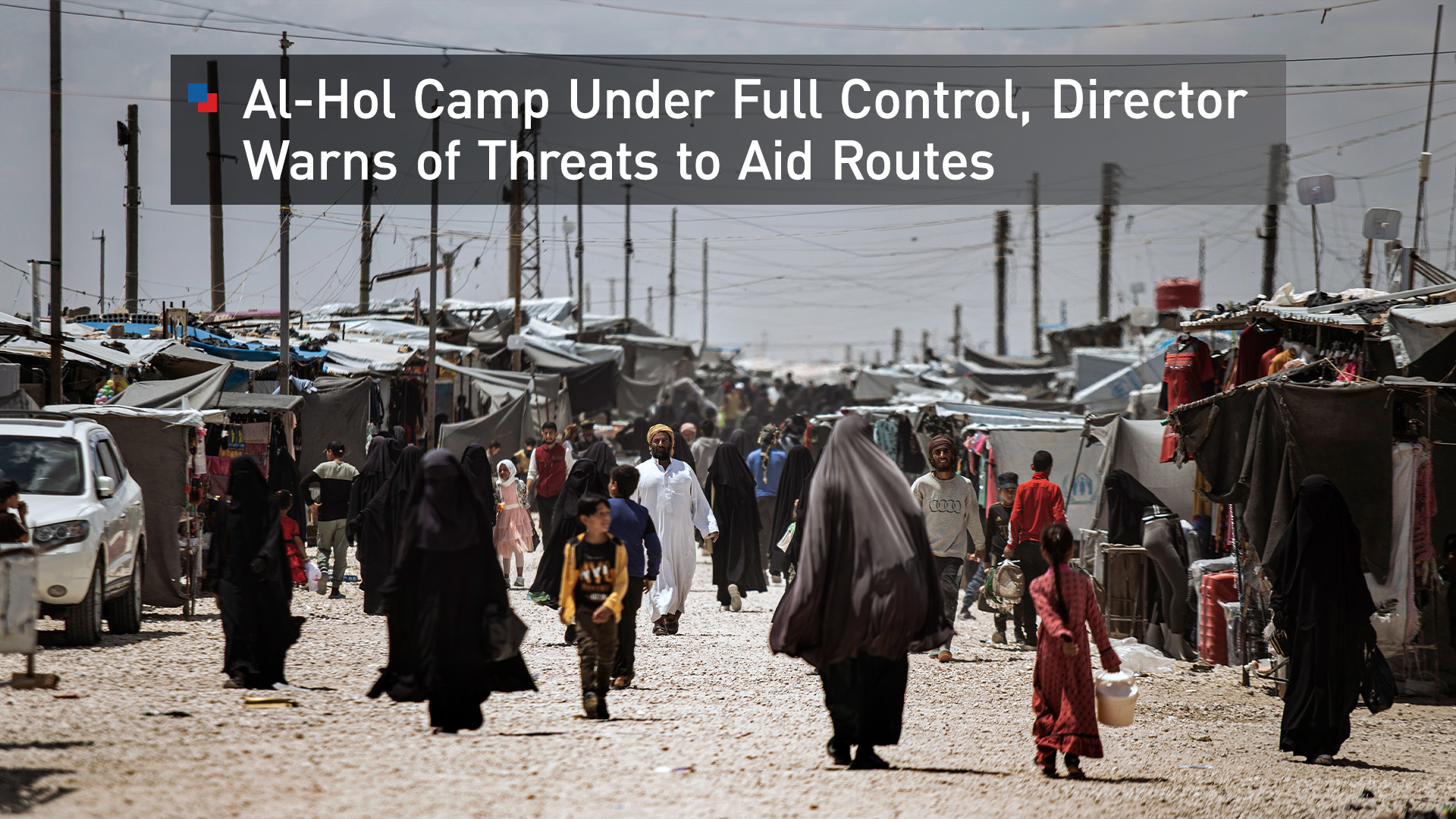
ERBIL (Kurdistan24) - The director of the Al-Hol detention camp in northeastern Syria stated on Monday that internal security remains under the complete control of local forces, even as the volatile security environment surrounding the facility has begun to impede the movement of international humanitarian organizations. Jihan Hanan, the Director of Al-Hol Camp, told Kurdistan24 in a special statement on Monday, that despite the massive geopolitical shifts occurring in the region, the facility’s containment protocols are holding firm.
Hanan confirmed that the Asayish internal security forces and the Syrian Democratic Forces (SDF) remain the primary entities responsible for protecting the camp and its perimeter.
"The situation inside Al-Hol Camp is completely under control," she stated, seeking to allay fears of a security vacuum following the rapid redeployment of Kurdish forces across the region. She further announced that essential supplies, specifically food and medicine, are currently available within the facility to meet the immediate needs of the population.
However, the director issued a stark warning regarding the logistical lifeline of the camp.
Hanan highlighted that while the interior of the camp remains secure, the external infrastructure has become increasingly perilous. "Despite the fact that we are supervising the camp, the roads leading to Al-Hol Camp are dangerous," she told Kurdistan24.
She emphasized that these roadside dangers have become a significant obstacle for humanitarian organizations attempting to reach the site, hindering operations and the consistent delivery of aid.
The al-Hol and al-Roj camp director also told Kurdistan24 that following the attacks by the Syrian Arab Army on Kurdish fighters, "that families of ISIS members in the Al-Hol and Roj camps held celebrations following attacks by the Syrian Arab Army." The remarks highlight continued security and ideological challenges within the camps, which house relatives of former Islamic State fighters.
The operational challenges cited by Hanan are unfolding against the backdrop of a comprehensive transformation of the security architecture in northern and eastern Syria.
On Sunday, the Syrian government and the SDF signed a detailed 14-point integration agreement intended to unify the country’s military and administrative structures. While Hanan confirmed that the SDF currently maintains security at Al-Hol, the ninth clause of the newly signed agreement explicitly stipulates the transfer of this responsibility.
According to the text of the deal, the administration responsible for the file of ISIS prisoners and camps, as well as the forces securing them, is to be integrated with the Syrian government, which will assume "full legal and security responsibility" for these facilities.
The current security posture at Al-Hol is also a direct result of recent tactical maneuvers by the SDF leadership. Mazloum Abdi, the General Commander of the SDF, explained in a televised address that his forces had decided to redeploy from the provinces of Deir ez-Zor and Raqqa to Hasakah—where Al-Hol is located—in order to protect civilians and preserve the region's achievements.
General Abdi characterized the SDF’s withdrawal to the Hasakah region as a necessary defensive consolidation following what he described as planned and violent attacks that began earlier in the month.
The consolidation of SDF forces in Hasakah appears to have ensured the immediate security of the camp, even as the roads leading to it remain contested or hazardous. This complex security environment prompted the Syrian Ministry of Defense to issue a formal ceasefire order on Sunday, mandating a cessation of combat operations across all engagement zones.
The ministry’s directive aims to facilitate the opening of safe corridors, which could potentially alleviate the logistical bottlenecks described by Hanan, though the implementation of these corridors remains in its nascent stages.
The broader political framework governing the camp's future involves high-level international and regional consensus.
Syrian President Ahmed al-Sharaa publicly thanked Kurdistan Region President Masoud Barzani, U.S. President Donald Trump, and French President Emmanuel Macron for their roles in facilitating the agreement that will eventually determine the fate of Al-Hol’s detainees.
President al-Sharaa noted that the agreement is intended to reinforce state authority and enhance security in areas affected by conflict, a mandate that covers the detention facilities currently under SDF guard.
U.S. Special Envoy to Syria Tom Barrack also weighed in on the integration process, endorsing the deal as a means to safeguard national security interests by continuing the battle against ISIS remnants.
The agreement obliges the Syrian state to continue the fight against terrorism as an active member of the International Coalition, ensuring that the transition of control over facilities like Al-Hol does not result in a security breach.
While the diplomatic ink dries on the agreement in Damascus, the reality on the ground in Hasakah remains one of transition. Hanan’s comments indicate that the day-to-day management of the camp is still functioning under the existing autonomous administration structures, with the SDF providing the physical security guarantee.
However, the dangerous condition of the access roads underscores the fragility of the situation outside the camp's perimeter walls, where the friction of the recent conflict continues to disrupt the humanitarian networks essential for the camp's stability.
As the implementation of the 14-point agreement progresses, the status of Al-Hol will serve as a critical test case for the integration of SDF and Syrian government security apparatuses.
For the moment, Hanan asserts that control is maintained, supplies are present, and the guards remain at their posts, waiting for the "dangerous" roads to clear and the political transition to take hold.