France Hails Syria Ceasefire, Reaffirms Loyalty to Kurds in Syria
France welcomed the Syria ceasefire Monday, affirming loyalty to the SDF. The deal involves SDF integration into the Syrian army, the handover of Raqqa and Deir ez-Zor to Damascus, and the recognition of Kurdish cultural rights.
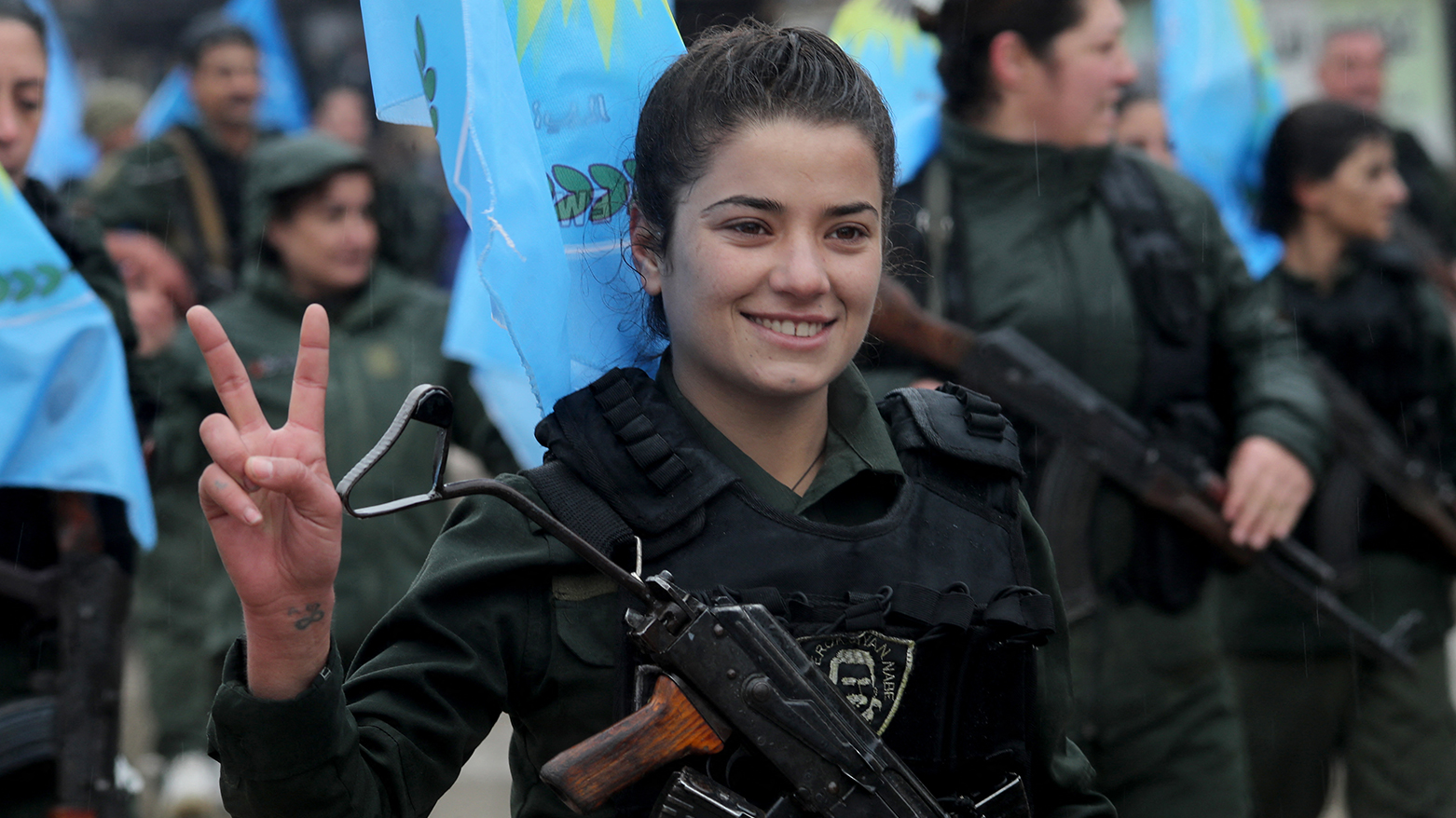
ERBIL (Kurdistan24) - France formally welcomed a ceasefire agreement between the Syrian government and Kurdish-led forces on Monday, issuing a diplomatic statement that sought to balance support for Syria’s territorial integrity with continued loyalty to the Kurdish partners who spearheaded the ground campaign against the Islamic State.
The reaction from the French Foreign Ministry follows a rapid shift in the country's security landscape, where Syrian government troops have advanced across areas of the north and east previously held by the Kurdish administration.
Agence France-Presse (AFP) reported that Paris views the cessation of hostilities as a necessary step toward stability. "We welcome the ceasefire deal," the ministry stated, emphasizing that France "firmly supports Syria's unity and integrity."
However, the statement also underscored Paris’s enduring commitment to its wartime allies. The ministry explicitly noted that France "remains loyal to those with whom it fought against IS," a direct reference to the Kurdish-led Syrian Democratic Forces (SDF).
The SDF served as the primary ground component of the international coalition, which included French forces, in the years-long battle to dismantle the jihadist group’s caliphate.
AFP noted that the French government urged all sides to respect the terms of the deal, which is designed to see the Kurdish administration and the SDF integrate into the central state apparatus after months of stalled negotiations.
The agreement hailed by France involves a comprehensive restructuring of military, administrative, and economic power in northeastern Syria, detailed in a 14-point framework that effectively dissolves the autonomous military structures established during the conflict.
Central to the military and security file is the immediate and comprehensive ceasefire across all battlefronts and points of contact between the Syrian army and the SDF.
Under the terms of the integration process, all SDF forces are to be transferred to the structure of the Syrian Ministry of Defense.
This transition will not occur as a bloc; rather, the agreement stipulates that the process will be implemented on an "individual" basis following security vetting for each fighter. While the forces will be absorbed into the central command, the deal provides guarantees to preserve the specificity of the Kurdish areas within this new military arrangement.
The accord also addresses specific regional security concerns that have long been points of contention. In the city of Kobani, the agreement mandates the removal of heavy weapons and the formation of a local security force affiliated with the Syrian Ministry of Interior.
Furthermore, the SDF has committed to the expulsion of all fighters and members of the Kurdistan Workers' Party (PKK) from Syrian territory, a measure likely aimed at addressing regional geopolitical sensitivities.
Concurrently, the SDF leadership has committed to excluding remnants of the "defunct regime" from its ranks and will hand over lists of officers from that era who are present in northeastern Syria.
Administratively, the deal dictates a significant transfer of authority back to Damascus.
The governorates of Deir ez-Zor and Raqqa are to be handed over completely to the Syrian government, both administratively and militarily, in an immediate manner. The arrangement for Hasakah Governorate appears distinct, involving the reintegration of all civil institutions within the framework of the Syrian state institutions.
To ensure representation, a presidential decree will be issued to designate a new governor for Hasakah, and a list of SDF candidates will be approved for appointment to various posts and ranks within the Syrian state.
A critical component of the agreement involves addressing the legal status of the Kurdish population.
The framework welcomes Presidential Decree No. 13 of 2026, which formally recognizes the cultural and linguistic rights of the Kurds. This decree also aims to resolve long-standing legal and civil files related to stateless individuals, promising to restore rights that were usurped over past decades.
On the economic front, the agreement necessitates the transfer of key energy resources, mandating the handing over of all oil fields to the Syrian government. This transfer of economic assets is paired with a shift in humanitarian and security responsibilities.
The management of prisons and camps holding ISIS families—a burden previously shouldered by the SDF with international support—will now fall under the authority of the Syrian government. The state has committed to continuing the duty of combating the ISIS terrorist organization.
Additionally, the agreement outlines humanitarian procedures to facilitate the return of displaced populations. It calls for understandings to pave the way for the return of displaced persons and migrants to the Afrin area and the Sheikh Maqsood neighborhood.
As France calls for strict adherence to these terms, the implementation of the deal marks the end of the autonomous military project in northeast Syria and the beginning of a complex reintegration process under the banner of a unified Syrian state.