Syrian Army Shells Raqqa Prison as Iraq Issues 'Shoot on Sight' Order for Border Infiltrators
Syrian forces shelled Raqqa's Aqtan Prison holding ISIS members, while Iraq ordered troops to shoot border infiltrators on sight. This follows mass Kurdish protests demanding intervention against Damascus's offensive.
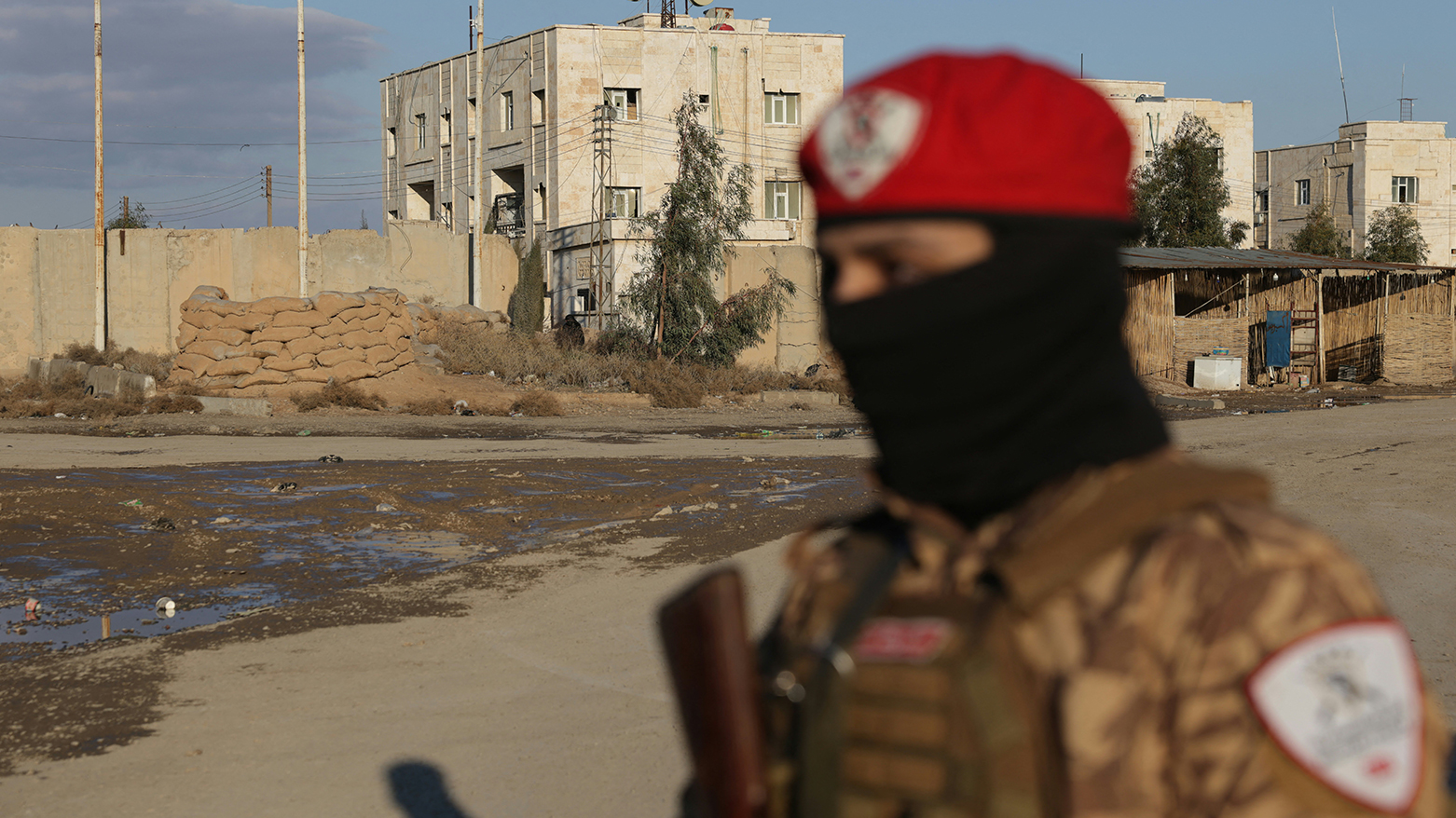
ERBIL (Kurdistan24) - The Syrian Arab Army has launched an artillery and heavy tank bombardment targeting Aqtan Prison in northern Raqqa, a sensitive facility currently housing detained members of the Islamic State organization. The Syrian Observatory for Human Rights reported on Tuesday, that government forces shelled both the prison and the headquarters of Division 17 of the Syrian Democratic Forces (SDF), marking a dangerous escalation in the conflict over control of strategic infrastructure in the northeast.
According to sources cited by the Syrian Observatory, the bombardment was directed precisely at the prison complex, raising immediate concerns regarding the security of the high-risk detainees held within.
The Observatory noted that drones have been observed circling over the area, suggesting ongoing aerial surveillance or potential further strikes.
In response to the assault, Kurdish security forces have been placed on full alert in the vicinity of prisons and security centers across the region, preparing for any potential breaches or subsequent ground operations.
The extent of the damage remains unclear.
The Syrian Observatory indicated that as of Tuesday afternoon, the exact number of casualties and the scale of material destruction resulting from the shelling are unknown.
However, the SDF is reportedly reinforcing its positions around the detention facility to prevent a security vacuum that could be exploited by Islamic State operatives.
The military escalation is not confined to the prison; the Observatory previously reported heavy clashes between the SDF and armed groups affiliated with the Syrian government in the town of Jalabiya and the rural areas between Girê Spî and Kobani.
Iraq Fortifies Border Against Infiltration
As violence intensifies in Syria, neighboring Iraq has adopted a maximum alert posture along its western frontier. Iraqi Interior Minister Abdul Amir al-Shammari issued a stern warning on Tuesday to any parties attempting to cross the border illegally.
In a press statement, Minister al-Shammari declared, "Any gunman from Syria who attempts to approach Iraq's borders will be answered with bullets," signaling a zero-tolerance policy for infiltration amid the chaos next door.
The Interior Minister emphasized that Iraqi forces are fully prepared to defend the nation's sovereignty. He noted that security officials had anticipated the potential for such instability three years ago and had developed comprehensive readiness plans accordingly.
"Our forces on the border line are in a state of complete readiness," Mr. al-Shammari stated, adding that Baghdad is closely monitoring the internal situation in Syria to adjust its defensive posture as needed.
To prevent unauthorized crossings, Iraq has implemented robust physical security measures.
Minister al-Shammari revealed that a defensive trench has been excavated along 620 kilometers of the shared border.
Additionally, movements in the area are monitored around the clock through a network of special surveillance cameras. The minister also confirmed that ground units are receiving continuous support from warplanes patrolling the skies, ensuring that Iraqi forces can respond rapidly to any "untoward possibility" on the borders.
Widespread Protests and Calls for Intervention
The military escalation in Raqqa and the tightening of borders coincide with a wave of mass protests by Kurdish communities globally.
On Tuesday, demonstrations swept through cities in Southern, Northern, and Western Kurdistan, as well as in the diaspora, calling for an immediate halt to the Syrian government's offensive.
In Erbil, a large crowd gathered outside the U.S. Consulate General, waving Kurdistan flags and chanting slogans against oppression. Protesters expressed "strong dissatisfaction" with Washington’s perceived silence, urging the United States to intervene to prevent a massacre of civilians in Rojava.
Similar rallies took place in Zakho, Duhok, Ranya, Khanaqin, and Kalar, where demonstrators emphasized the need to protect Kurdish achievements and prevent a return to tyranny.
In Bochum, Germany, the Kurdish diaspora urged European governments to pressure Damascus to stop its attacks. The protests reflect growing fears of ethnic cleansing and mass displacement as tanks and artillery pound Kurdish-held areas in northern and eastern Syria.
Religious Rhetoric and Political Standoff
The conflict has also taken on an increasingly sectarian tone.
On Tuesday, the Syrian Ministry of Endowments (Awqaf) issued a directive instructing mosques to recite the Takbir and pray for a "conquest" by the Syrian Arab Army over the SDF.
This religious mobilization is paired with a firm political stance from Damascus; Hamza Mustafa, the Minister of Information for the Syrian Transitional Government, declared on social media that the government would "not allow the creation of the Jazira Region," asserting that the territory is sovereign Syrian land.
Kurdish leaders have responded with urgent appeals for international action.
Elham Ahmad, Head of Foreign Relations for the Autonomous Administration, warned that silence from global powers would lead to a humanitarian disaster.
The Kurdish National Council in Syria (ENKS) also issued a statement warning that the military escalation threatens civilian security and risks plunging the region into a new phase of destruction.
Despite a ceasefire agreement announced on Sunday, the reality on the ground remains volatile. The SDF reported repelling attacks near Sarrin, south of Kobani, destroying seven military vehicles and shooting down four drones.
Meanwhile, the Syrian Ministry of Interior announced the recapture of 81 Islamic State inmates who escaped from Shaddadi prison in Hasakah, where approximately 120 detainees had fled following heavy attacks.
As shelling continues at Aqtan Prison and Iraqi forces fortify their positions, the region faces a precarious moment where local clashes threaten to spill over into a broader security crisis involving escaped terrorists and cross-border tensions.