UNHCR Reports Thousands Displaced in Northeast Syria as Fighting Intensifies
UNHCR reports thousands displaced in Northeast Syria as fierce fighting rages near Taqtan prison despite a ceasefire. Iraq reinforced its border, issuing a "shoot on sight" order against infiltrators amid fears of ISIS breakouts.
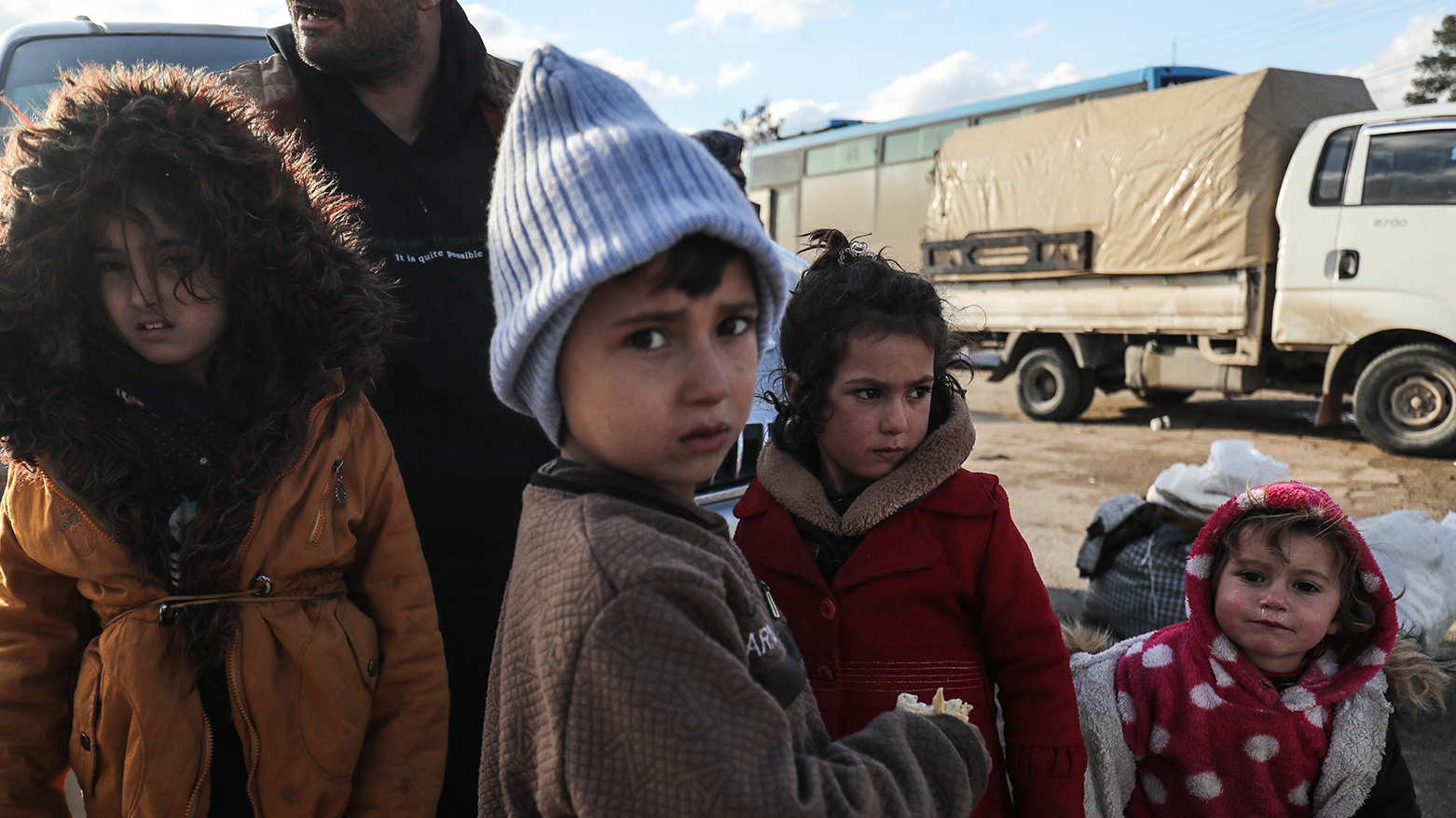
ERBIL (Kurdistan24) - The United Nations High Commissioner for Refugees (UNHCR) announced on Tuesday, that thousands of civilians have been displaced across Northeast Syria as military clashes continue to escalate, defying a recently implemented ceasefire agreement. The humanitarian crisis is unfolding alongside fierce battles between the Syrian Democratic Forces (SDF) and the Syrian Arab Army near strategic locations, including sensitive detention facilities.
In a statement, the UNHCR confirmed the scale of the displacement and emphasized its commitment to ongoing relief operations.
"We are continuing to deliver aid and are trying to ensure that assistance and supplies reach the displaced in an appropriate manner," the commission stated. However, the operational environment for aid delivery remains perilous as the security situation deteriorates across multiple governorates.
Despite the existence of a ceasefire intended to halt hostilities and facilitate the integration of forces, the reality on the ground is characterized by active combat.
The SDF released a statement revealing that "fierce fighting" is currently underway in the vicinity of "Taqtan" prison, a critical site where security forces are battling to maintain control.
Concurrently, clashes have been reported in the areas of Raqqa, Shaddadi, and Ain Issa, indicating a widespread breakdown of the truce along several axes.
Kurdish officials have issued urgent appeals for mobilization in response to what they describe as an existential threat.
Fawza Yusuf, a member of the PYD Presidential Body, utilized social media to call for cross-border support. "An urgent appeal to our people in Northern Kurdistan; they must head towards the cities of Nusaybin and Suruc, because Rojava is under severe attack and Kurds are being massacred," Yusuf wrote on the platform X.
She extended this call to the Kurdistan Region of Iraq, urging youth to head to the border crossing at Derik to aid their counterparts, framing the moment as "the day to protect national dignity."
This sentiment was echoed by Farhad Shami, Director of the Media Center of the SDF, who posted a message on Monday framing the conflict in stark terms. "We do everything for the sake of our people; we are facing two options: either we live a dignified life, or we choose a proud martyrdom," Shami wrote.
The escalation comes amidst high-stakes diplomatic maneuvering.
On Monday evening, Mazloum Abdi, the General Commander of the SDF, arrived in Damascus for a critical meeting with Syrian President Ahmed al-Sharaa. As of Tuesday, no details regarding the content or outcome of this meeting have been released, leaving the trajectory of the political process uncertain while violence rages on the ground.
Iraq Reinforces Border Amid Spillover Fears
The instability in Syria has prompted immediate defensive measures from neighboring Iraq.
On Tuesday, Iraqi Minister of Defense Thabet Abbasi declared that the nation’s security forces maintain full control over the border and will not permit any external threats to compromise stability.
This assurance coincided with a visit by Lieutenant General Abdul Amir Rashid Yarallah, Chief of Staff of the Iraqi Army, who led a high-level military delegation to the frontier to inspect defenses.
Minister Abbasi emphasized that the border remains securely under Iraqi jurisdiction, stating that the military possesses "high capabilities and proper plans to confront any security challenge."
He noted that Iraqi authorities are closely monitoring regional developments, particularly the potential movement of Islamic State (ISIS) remnants, to ensure they do not impact the country's security.
The urgency of Baghdad’s mobilization is driven by specific tactical threats.
On Tuesday, the Syrian Arab Army launched an intense artillery and heavy tank bombardment targeting Aqtan Prison in northern Raqqa, a facility housing detained ISIS members.
The Syrian Observatory for Human Rights (SOHR) reported that government forces shelled both the prison and the nearby headquarters of SDF Division 17. Drones were observed circling the area, raising fears of a precision strike or a coordinated assault that could trigger a mass breakout.
In response to the potential for infiltration, Iraqi Interior Minister Abdul Amir al-Shammari issued a "shoot on sight" warning.
"Any gunman from Syria who attempts to approach Iraq's borders will be answered with bullets," Minister al-Shammari stated in a press release. He detailed robust security measures, including a 620-kilometer defensive trench, round-the-clock surveillance cameras, and continuous air support, asserting that Iraqi forces are in a state of "complete readiness."
Widespread Unrest and Security Collapse
The fighting has already resulted in security breaches within Syria. The Syrian Ministry of Interior announced on Tuesday that security forces had recaptured 81 ISIS gunmen who escaped from Shaddadi prison in Hasakah governorate following heavy attacks.
Approximately 120 inmates had originally fled the facility, underscoring the fragility of the detention network amidst the chaos.
The military escalation has also triggered mass protests. On Tuesday, demonstrators in Erbil gathered outside the U.S. Consulate General, chanting slogans against oppression and urging Washington to intervene to prevent a massacre in Western Kurdistan.
Similar rallies took place in Zakho, Duhok, and among the diaspora in Germany, reflecting deep anxiety over the potential for ethnic cleansing.
Kurdish leaders have warned that silence from the international community could lead to disaster. Elham Ahmad, Head of Foreign Relations for the Autonomous Administration, called for a clear stance to prevent further escalation.
Meanwhile, the Syrian Ministry of Endowments has injected religious rhetoric into the conflict, instructing mosques to pray for a "conquest" by the Syrian Arab Army, further inflaming tensions.
This article was updated on Tuesday, Jan. 20, 2026, at 11:37am.