Kurdish Diaspora Rallies in Calgary, Urging Action to Protect Civilians in Western Kurdistan
The Kurdistani Diaspora in Calgary, Canada, protested for Western Kurdistan's protection as the US signaled a policy shift, backing Syrian state integration amid ceasefire talks and ISIS security concerns.
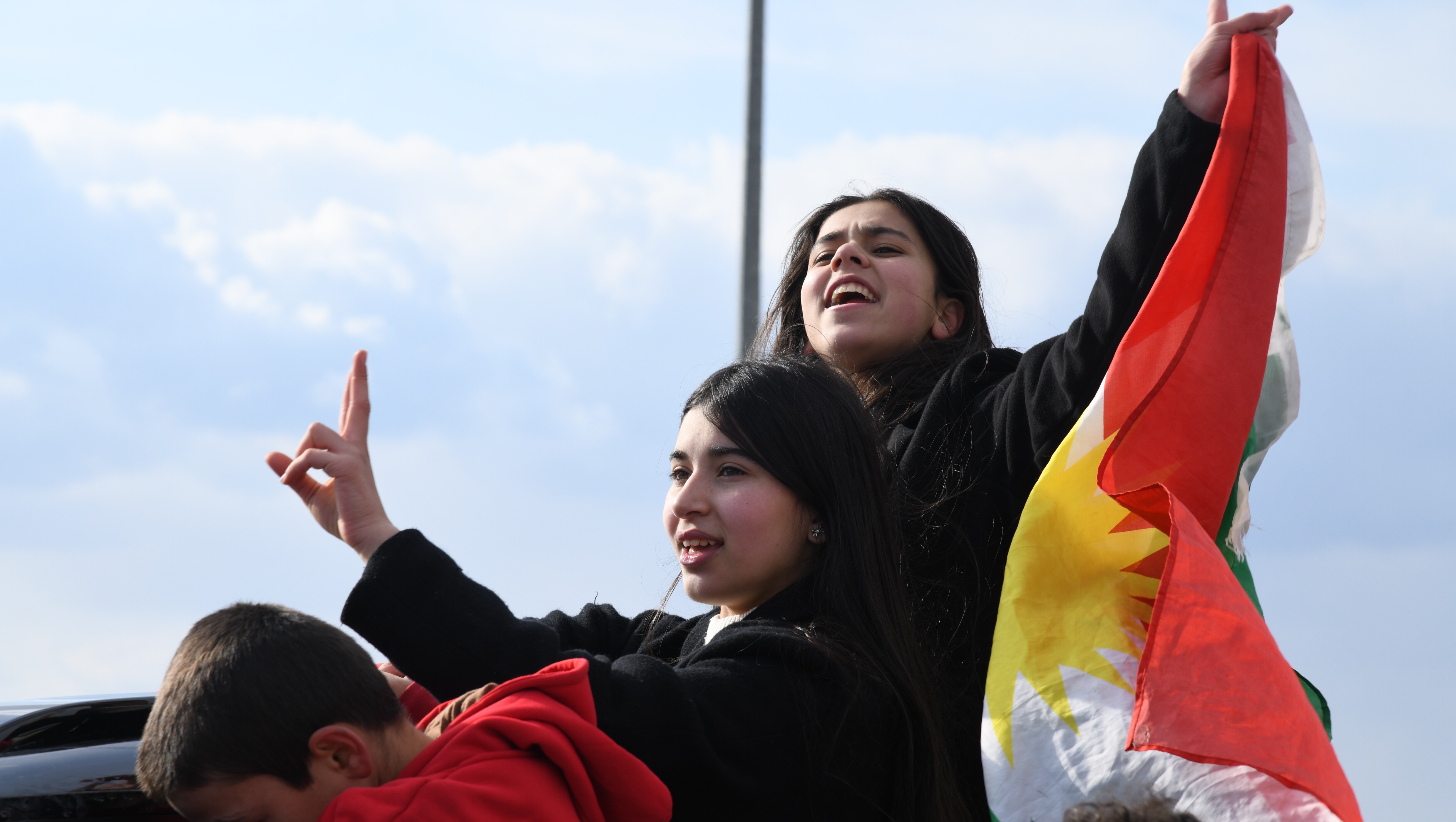
ERBIL (Kurdistan24) - Community groups organized by the Kurdistani Diaspora – Calgary Centre convened a peaceful demonstration in downtown Calgary on Jan. 20, marching to the United States Consulate to demand urgent international intervention for the protection of Kurdish civilians in Western Kurdistan, also known as Rojava.
The rally underscored growing anxiety among the expatriate community as well Kurdistanis in Kurdistan Region regarding the security of Western Kurdistan as major diplomatic and military shifts reshape the region.
According to a statement released by the organizers, the demonstrators delivered a formal letter to the U.S. Consulate highlighting the critical role Kurdish forces played in the territorial defeat of the Islamic State (ISIS).
The correspondence warned that ongoing attacks by radical armed groups pose a direct threat not only to civilians but to broader regional stability. Central to the group’s concerns is the potential release of ISIS detainees currently held in the region, a scenario the organizers described as a "serious global security risk."
In addition to their engagement with American diplomatic officials, the organizers confirmed they have initiated contact with Canadian media outlets and the federal government in Ottawa.
The group called on the Government of Canada to impose sanctions on Syrian authorities and affiliated forces, citing a failure to protect civilians, minorities, and religious and ethnic communities.
The statement urged Canada and its allies to "stand firmly with the Kurdish people and uphold international law, human rights, and global security."
Washington Shifts Support to Damascus
The demonstration in Canada coincides with a fundamental strategic pivot by the United States regarding its involvement in Syria. On Tuesday, U.S. President Donald Trump voiced strong support for Syrian President Ahmed al-Sharaa, whose government has recently launched a military offensive against Kurdish-led forces in the northeast.
Speaking to journalists at the White House, President Trump praised al-Sharaa’s handling of the volatile security situation. “He's working very hard, the president of Syria. He's working very, very hard. Strong guy, tough guy,” President Trump said. He dismissed concerns about the new leader's background, stating, “Pretty rough resume. But you're not gonna put a choir boy in there and get the job done.”
While the President noted that he "likes the Kurds," he characterized the U.S. partnership with them in transactional terms. "Kurds were paid tremendous amounts of money - we have given oil and other things. So, they were doing that for themselves, more so they were doing it for us," he said.
Nevertheless, he maintained that the U.S. is "trying to protect the Kurds," implying that integration into the Syrian state is the administration's preferred mechanism for that protection.
This stance aligns with a new directive outlined by U.S. Special Envoy for Syria Tom Barrack.
In a statement published on the social media platform X, Barrack declared that the original role of the Syrian Democratic Forces (SDF) as the primary ground force fighting ISIS has effectively concluded.
He argued that the rationale for the U.S.-SDF partnership has expired because Syria now possesses an "acknowledged central government" capable of assuming security responsibilities.
Barrack emphasized that the best path forward for the Kurds lies in the "post-Assad transition" under President al-Sharaa. He asserted that integration into the new Syrian state offers opportunities for full citizenship rights and cultural protections—rights that were systematically denied under the previous rule of Bashar al-Assad.
“The US has no interest in long-term military presence,” Barrack stated, warning that "prolonged separation" could invite instability or an ISIS resurgence.
Integration Talks and Security Fragility
Diplomatic efforts on the ground have accelerated in line with Washington's new posture. The Syrian presidency announced on Tuesday that a "joint understanding" had been reached with the SDF regarding the future of Hasakah province.
According to the state news agency SANA, the agreement grants the SDF a four-day consultation period to prepare a detailed plan for military and administrative integration.
Under the terms outlined by Damascus, Syrian government forces would remain on the outskirts of major cities like Hasakah and Qamishlo, while local security forces drawn from the area's residents would police Kurdish villages.
The deal reportedly includes the integration of SDF fighters into the Syrian Ministries of Defense and Interior, alongside the implementation of "Decree No. 13," which guarantees linguistic and cultural rights for Kurds.
In a move signaling compliance, the SDF issued a statement on Tuesday announcing its "full commitment" to the ceasefire.
“We announce our full commitment of our forces to the ceasefire that was agreed upon with the government in Damascus, and we confirm that we will not initiate any military action unless our forces are subjected to attacks in the future,” the statement read.
However, the situation on the ground remains perilous. SDF General Commander Mazloum Abdi stated that his forces have withdrawn to Kurdish-majority areas, declaring their protection a "red line."
In a statement to the Hawar News Agency, Abdi described "brutal attacks and systematic killing against Kurds" and accused Damascus of intensifying assaults on Hasakah and Kobani.
The chaos has directly impacted the security of detention facilities. Abdi reported that the al-Hol camp faced "violent attacks" involving tanks and armored vehicles, forcing guards to withdraw. The U.S. has estimated that approximately 200 ISIS detainees escaped from the Shaddadi prison following attacks linked to the Syrian Arab Army.
President Trump addressed the prison security issue in an interview with the New York Post, claiming credit for thwarting a larger escape. “European terrorists were in prison. They had a prison break. And working with the government of Syria and the new leader of Syria, they captured all the prisoners, put them back to jail,” he said.
The escalation has drawn concern from neighboring Kurdistan Region of Iraq. President Masoud Barzani issued a statement warning that harming the people of Western Kurdistan is "unacceptable in any form."
He urged the international community to intervene to prevent a resurgence of terrorist groups, emphasizing that instability poses a serious threat to regional security.