US Envoy to Iraq Calls Corruption the “Disease” Undermining Stability
Mark Savaya says dismantling corruption networks is essential to restoring Iraqi sovereignty and weakening militias.
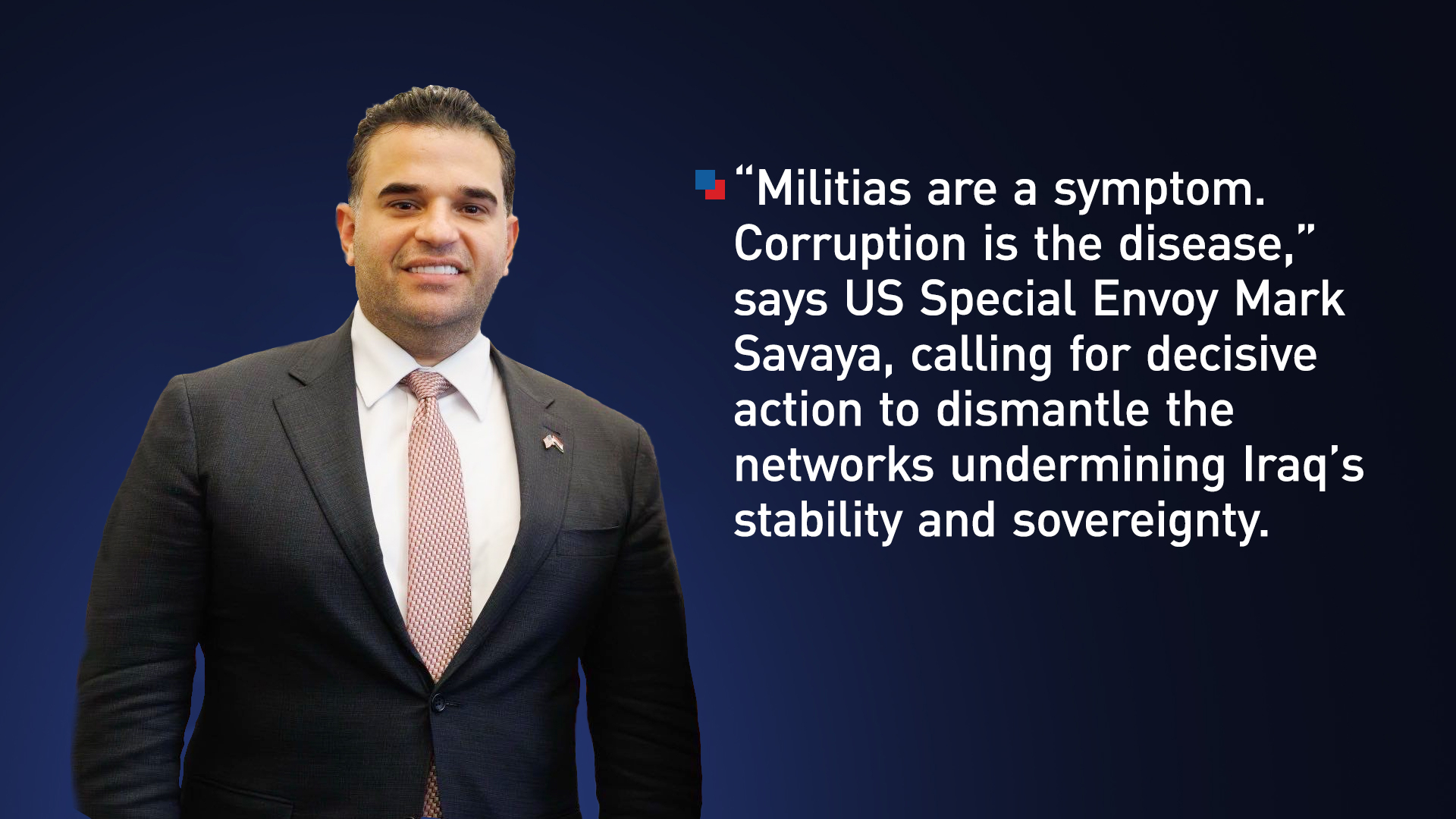
ERBIL (Kurdistan24) — Mark Savaya, the United States president’s special envoy to Iraq, said on Wednesday that corruption lies at the core of Iraq’s instability and must be confronted decisively if the country is to be stabilized and militias dismantled.
In a statement posted on his official X account, Savaya argued that while militias are often treated as the central problem, they are in fact a byproduct of a deeper and more entrenched system of corruption.
“Militias are a symptom. Corruption is the disease,” he said, stressing that meaningful reform must begin with targeting illicit financial networks.
Savaya said he has detailed knowledge of how corrupt money is channeled through complex structures that extend beyond senior officials.
According to him, illicit funds frequently move through layers of lower-level actors, including family members, friends, guards, drivers, and intermediaries, a system designed to provide insulation and plausible deniability while remaining fully functional.
He described the corruption apparatus as a highly sophisticated and deliberately constructed network that has been active for more than two decades. Savaya said the system has repeatedly bypassed regulations, compliance mechanisms, and international auditing frameworks, allowing it to operate with relative impunity.
According to the US envoy, these corruption networks have played a critical role in financially empowering, protecting, and sustaining Iranian-backed militia groups in Iraq.
He warned that without dismantling these financial lifelines, efforts to restore Iraqi sovereignty and weaken armed groups would remain ineffective.
Savaya emphasized that any serious attempt to stabilize Iraq must focus on shutting down major sources of corrupt funding, including fake payrolls, fraudulent loans, and fictitious assets.
“Without that,” he said, “every other effort will fail.”
His comments come amid ongoing debates within Iraq and among international partners over governance reform, state authority, and the long-term challenge posed by militias and entrenched corruption.