DAANES Official Credits Global Kurdish Support as ‘True Line of Defense’ Amid Deepening Siege of Kobani
Elham Ahmad credited global Kurdish support as a "line of defense" against genocide amid a severe siege on Kobani, while diplomatic efforts in Erbil and Europe seek to resolve the crisis.
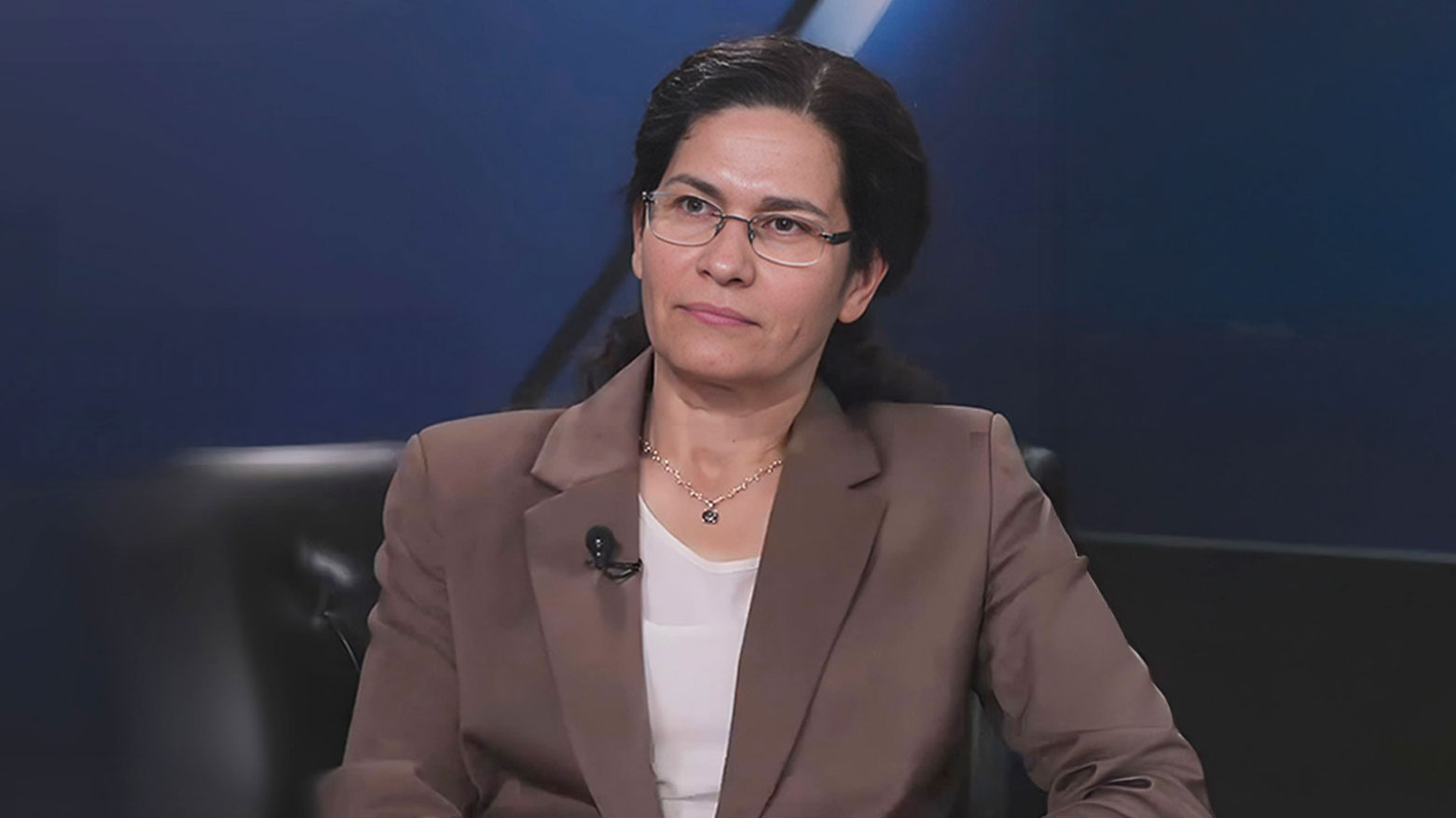
ERBIL (Kurdistan24) – Elham Ahmad, the Head of Foreign Relations for the Autonomous Administration of North and East Syria (DAANES), issued a public statement on Friday crediting the Kurdish diaspora and domestic population with forming a vital defensive layer for the region’s political project, as humanitarian conditions in the besieged city of Kobani deteriorate rapidly under harsh winter conditions and military pressure from Syrian government forces.
In a message published on her official account on the social media platform X on Friday, Jan. 23, 2026, Ahmad addressed the Kurdish people both within the homeland and abroad.
She expressed "thanks and appreciation" for what she described as a "sincere and responsible stance" demonstrated by the community regarding the struggle of the Autonomous Administration and its security forces.
Ahmad explicitly linked the political and media advocacy efforts of the Kurdish community to the physical security of the region.
"Your voices, support, and political and media movements have created a true line of defense to protect the dignity of our people and the right to live in freedom and security," Ahmad wrote.
Concluding her statement, she urged the community to sustain these efforts to "bring an end to the threat of genocide against our people," a reference to the escalating military hostilities that have enveloped northeastern Syria in recent weeks.
Humanitarian Emergency in Kobani
The urgency of Ahmad’s message coincides with a critical deterioration of the situation in Kobani.
According to local reports and monitoring groups, the Syrian Arab Army (SAA) and affiliated armed groups close to the Damascus government have tightened a siege around the city and its surrounding villages for several days. This encirclement has precipitated a major humanitarian disaster compounded by severe weather.
Mustafa Sheikh Muslim, a lawyer residing in Kobani, told Kurdistan24 on Friday that the situation in the city is at its "worst."
Despite the absence of a formal, publicly announced ban on the entry of goods, Mr. Sheikh Muslim emphasized that forces on the ground are actively obstructing the delivery of humanitarian aid.
He reported that attacks by the Syrian Arab Army continued until noon on Friday, with the sound of heavy weapons fire audible throughout the district, although hostilities on the eastern front had ceased "to some extent" by the afternoon.
The blockade has resulted in the collapse of essential infrastructure.
Residents report that electricity, drinking water, and internet services have been cut, effectively severing the population’s connection to the outside world. Journalist Redwan Bezar, reporting via video clip from inside the city, warned that Kobani is "completely besieged."
He highlighted that basic necessities such as fuel for heating, medicine, and baby formula are running out as the region experiences heavy snowfall and freezing temperatures.
The crisis is exacerbated by a massive influx of displaced persons. Thousands of Kurdish migrants who had previously fled conflict zones in the "Tal Samen" camp and areas around Ain Issa, Raqqa, and Girê Spî have sought refuge in Kobani, only to find themselves trapped. This demographic surge has placed an unsustainable burden on the city's depleting resources.
Amid this chaos, a convoy of escapees from the "Aqtan" prison reportedly arrived in the city and was welcomed by residents near the "Free Woman" statue, though reports indicate many of the personnel tasked with protecting the prison were wounded.
The Syrian Observatory for Human Rights (SOHR) issued a stern warning regarding the situation, stating that the region faces a major humanitarian disaster due to the heavy siege and "international silence." The Observatory noted that the prevention of basic necessities is causing the condition of the people to worsen daily.
High-Level Diplomatic Intervention
As the situation on the ground worsens, regional leaders have intensified diplomatic efforts to broker a solution.
President Masoud Barzani, speaking at a press conference at the Kurdistan Regional Government’s (KRG) Representation in Italy, called for stronger international support to safeguard Kurdish rights in Western Kurdistan.
He revealed that he had engaged with senior Italian officials, including the Pope and the Foreign Minister, who expressed sympathy for the Kurdish situation.
President Barzani disclosed that he had contacted Syrian President Ahmed Sharaa through intermediaries after fighting erupted in Aleppo to warn against a renewed conflict.
Furthermore, he confirmed that a high-level meeting had taken place in Erbil involving Syrian Democratic Forces (SDF) Commander Mazloum Abdi, U.S. Special Envoy for Syria Tom Barrack, and U.S. Central Command Commander Admiral Brad Cooper. This meeting reportedly resulted in an agreement on a ceasefire and "positive steps" toward stability.
"We are making every effort to maintain control over the Kurdish areas that remain in our hands and to protect them," President Barzani said, adding, "Our hearts and minds are with our brothers and sisters in Western Kurdistan."
He expressed deep concern over the siege of Kobani, stating that if he had the opportunity, he would send forces there immediately, though he noted the Barzani Charity Foundation is currently active in providing humanitarian aid.
KRG Mediation and International Calls
SDF General Commander Mazloum Abdi publicly acknowledged the mediation role of the Kurdistan Region.
In a statement on his X account, Gen. Abdi confirmed he met with President Nechirvan Barzani as part of political efforts to bridge viewpoints between the SDF and the Syrian government.
He expressed strong appreciation for the efforts of both President Masoud Barzani and President Nechirvan Barzani, noting that their support is being coordinated with U.S. mediators to achieve a ceasefire and implement integration agreements.
International engagement has also reached the highest levels. Gen. Abdi revealed that he received a phone call from French President Emmanuel Macron on Thursday. During the call, President Macron expressed his support for efforts aimed at achieving a ceasefire and returning to dialogue and negotiation in Syria.
Security Volatility and ISIS Threat
The military escalation has created a security vacuum that international organizations warn is being exploited by extremist elements.
The United Nations High Commissioner for Refugees (UNHCR) reported that volatile security conditions have blocked its teams from entering the al-Hol camp, a detention facility housing approximately 24,000 people, including families of suspected ISIS fighters.
Celine Schmitt, a UNHCR spokesperson, told AFP on Friday that while the agency delivered water to the perimeter, it could not enter the camp itself due to instability.
Syrian government forces have reportedly entered the camp following the withdrawal of Kurdish-led forces. The SDF stated on Tuesday that it was compelled to redeploy its forces from al-Hol to protect cities facing "increasing dangers and threats," citing international indifference to the ISIS issue.
The withdrawal of SDF guards and the subsequent security gaps have raised alarms about a potential resurgence of ISIS. President Barzani warned that the instability has created a "golden opportunity" for the group, confirming reports that a significant number of militants had escaped amid the chaos.
Meanwhile, political figures in neighboring Türkiye have linked the violence in Syria to broader regional peace. Keskin Bayindir, co-chair of the Democratic Regions Party (DBP), stated on Friday that lasting peace in Türkiye is impossible as long as Western Kurdistan remains under military attack.
"The sound of tanks and shelling in Western Kurdistan is incompatible with efforts to advance peace and dialogue in southeastern Türkiye," Bayindir said.
As diplomatic channels remain active in Erbil and Europe, the immediate fate of Kobani’s residents remains tied to the lifting of the siege, with Ms. Ahmad’s appeal highlighting the reliance of the administration on the political mobilization of the Kurdish community globally to avert further catastrophe.