Kurdish Red Crescent Team Issues Urgent Appeal as Siege of Kobani Deepens Amid Record Winter
The Kurdish Red Crescent has appealed for urgent UN intervention in Kobani, reporting a catastrophic siege and aid blockade by Damascus-affiliated forces despite a standing ceasefire agreement.
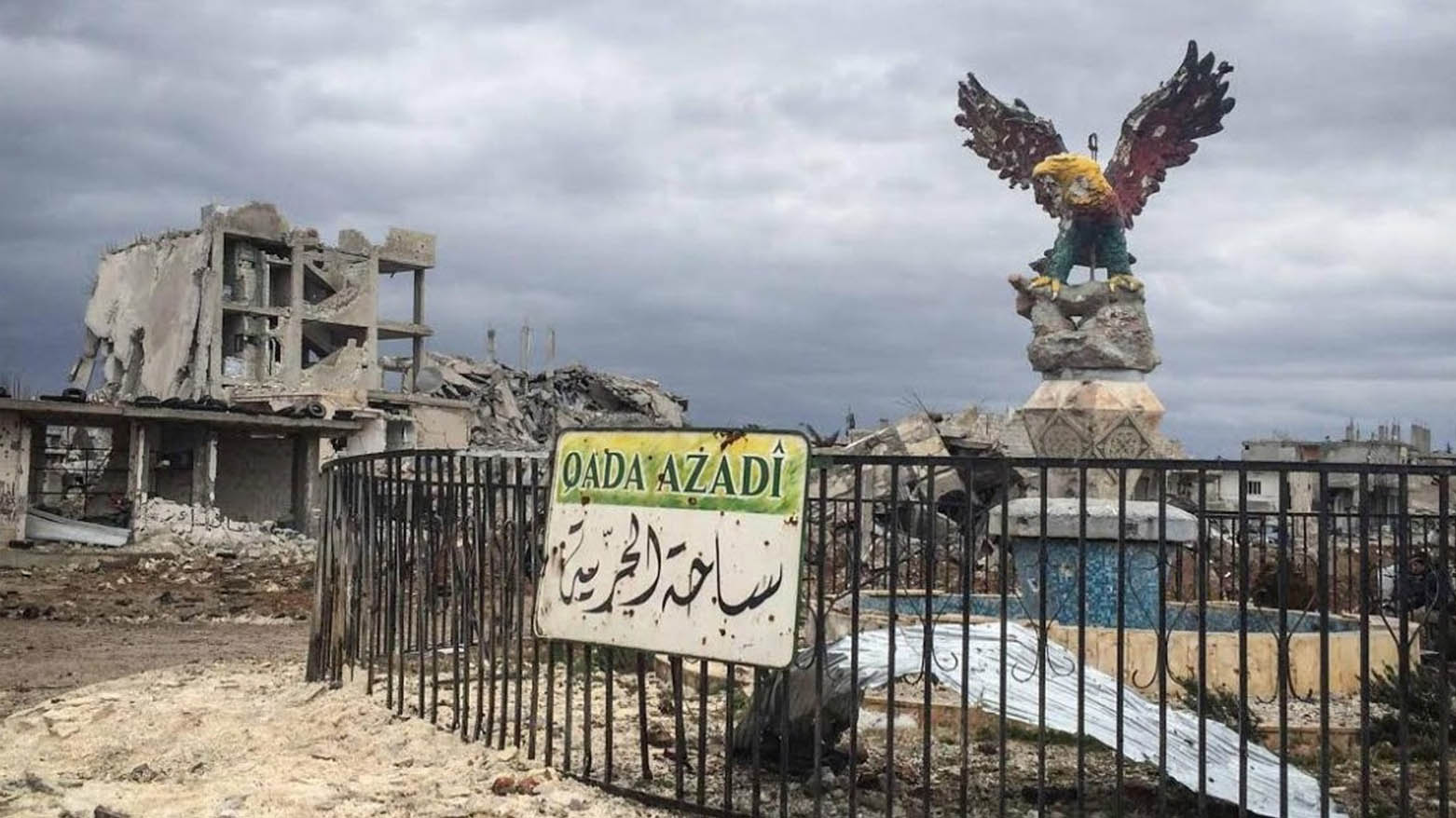
ERBIL (Kurdistan24) – The Kurdish Red Crescent team operating in Kobani issued a formal appeal on Friday to international humanitarian organizations and the United Nations, warning of a catastrophic humanitarian collapse in the city and its surrounding countryside.
The medical relief group, in a statement shared via the official account of the Syrian Democratic Forces (SDF) on the social media platform X, characterized the situation as a suffocating siege that persists despite the previous announcement of a regional ceasefire.
The appeal, addressed specifically to the United Nations High Commissioner for Refugees, Barham Salih, described a "brutal military campaign" led by armed factions affiliated with the transitional government in Damascus.
According to the Kurdish Red Crescent, these factions have systematically blocked the entry of basic life necessities into the city for several days. The group reported that essential supplies of water, fuel, and food have been severed, precipitating an emergency that medical workers say evokes the historical trauma of the city's previous encirclement by the Islamic State.
The humanitarian fallout has been intensified by a significant demographic shift, as a large number of families from the outlying villages have been displaced into the city center to seek refuge.
The relief team noted that the lack of adequate shelter has forced many of these families to sleep outdoors or in their vehicles during one of the most severe winters the region has seen in decades. This crisis has been further compounded by the recent termination of internet and communication services, effectively isolating the population from international monitoring and support.
Logistical Obstacles and Environmental Pressures
The deteriorating conditions in Kobani are unfolding against a backdrop of unprecedented weather patterns across northeastern Syria.
Stav Aso, the director of the Barzani Charity Foundation’s (BCF) Erbil office, told Kurdistan24 on Friday that the city of Qamishlo and surrounding areas are experiencing snowfall the likes of which has not been recorded in more than 50 years.
Aso emphasized that the extreme cold has rendered the situation "very difficult," making the continuation of aid campaigns a matter of immediate necessity.
In Erbil, a public aid collection campaign for Rojava (Western Kurdistan) has gained significant momentum.
Aso confirmed that citizens and philanthropists have contributed more than 100 million Iraqi dinars in cash, in addition to a large volume of physical goods.
On Friday alone, the foundation prepared and dispatched two heavy transport trucks; one was loaded with food, baby formula, and diapers, while the second carried winter essentials including blankets, mattresses, and heating supplies. Foundation officials indicated that they are currently awaiting the completion of a third truckload to sustain the flow of relief.
Beyond the public collection, the Barzani Charity Foundation has maintained a robust operational presence in the region.
Karzan Noori, a member of the BCF Administrative Board, informed Kurdistan24 that the foundation has delivered a total of 102 trucks—carrying more than 850 tons of food and essential supplies—to Western Kurdistan through various logistical channels. However, reaching the specific target of Kobani remains a primary challenge.
Noori stated that the foundation is currently utilizing diplomatic channels to establish a humanitarian corridor, as they take "every possible measure" to break the blockade and allow relief teams to enter the city.
Field Reports and Infrastructure Collapse
Reports from the ground in Kobani confirm the severity of the medical and infrastructure crisis. Mustafa Sheikh Muslim, a lawyer residing in the city, told Kurdistan24 on Friday that the urban center has reached its lowest point since the onset of hostilities.
While the Syrian government has not announced a formal ban on goods, Muslim emphasized that the encircling forces are actively preventing the entry of any humanitarian aid. He reported that the sound of heavy weaponry was audible through Friday noon, although some cessation of attacks was noted on the city’s eastern front.
The blockade has resulted in a total collapse of basic services. Residents are currently without access to electricity or safe drinking water. Redwan Bezar, a journalist who released a video clip from within the city, warned that stocks of medicine and baby formula are nearing total exhaustion.
The presence of a specialized BCF medical team in Rojava has provided some relief elsewhere; Noori reported that foundation doctors and staff have provided primary medical treatment to 685 individuals over the past two days, though the siege on Kobani limits the ability of such teams to reach the most affected populations.
The Syrian Observatory for Human Rights (SOHR) has issued its own stern warning, citing the "heavy siege" as a precursor to a major humanitarian disaster. The Observatory specifically highlighted the role of international silence in allowing the condition of the people to worsen, as Damascus-affiliated forces continue to restrict access to food and medicine.
Security Volatility and Allegations of War Crimes
The humanitarian emergency is inextricably linked to a volatile security landscape. Farhad Shami, the spokesperson for the Syrian Democratic Forces (SDF), released a detailed dossier on Friday alleging that the Syrian Arab Army and affiliated paramilitary groups have committed extensive war crimes during their 17-day military campaign.
The dossier lists 51 specific incidents, including the siege of the Khaled Fajr Hospital in the Sheikh Maqsoud neighborhood of Aleppo, where wounded civilians and medical staff were reportedly targeted by drones and heavy shelling after being denied food and supplies.
Shami also published graphic video evidence purportedly showing the burning of mutilated bodies and the torture of captives by government-affiliated factions. He characterized these acts as a "clear breach of all humanitarian and international laws and norms." These reports have fueled a sense of desperation among the Kurdish leadership.
Elham Ahmad, the Head of Foreign Relations for the Autonomous Administration of North and East Syria (DAANES), issued a public message praising the Kurdish diaspora as a "true line of defense" and calling for sustained international advocacy to prevent what she described as the threat of genocide.
Diplomatic Engagement and the Risk of Isolation
As the military noose tightens, regional and international players have attempted to intervene. President Masoud Barzani recently hosted a high-level meeting in Erbil with U.S. Special Envoy Tom Barrack and U.S. Central Command Commander Admiral Brad Cooper.
While the meeting reportedly led to "positive steps" toward a ceasefire, the Kurdish Peace Institute’s Director of Research, Megan Bodette, warned that the situation remains extremely precarious.
Reporting from Qamishlo on Friday, Bodette indicated that the Syrian Arab Army is continuing its advance toward Kobani.
She also highlighted a growing fear among residents that armed forces intend to cut the strategic road between Qamishlo and Derik. If successful, this maneuver would sever the primary escape route toward the borders of the Kurdistan Region, trapping the population in the event of further escalation.
Bodette noted that despite the high-level meetings in Erbil, the overwhelming desire for peace among the people is tempered by the looming expiration of the ceasefire deadline.
The convergence of military encirclement, record-breaking winter weather, and a systematic aid blockade has left the city of Kobani in a state of acute vulnerability, with relief organizations and local officials now looking toward the United Nations for an immediate and decisive intervention to prevent further loss of life.