Kurdish Administration Issues Clarification on Juvenile Detainees Following Mass Release From Raqqa Prison
Kurdish authorities clarified that juveniles in al-Aqtan were held for rehabilitation and security before their release by the Syrian Army, as control of the Raqqa facility shifted to Damascus.
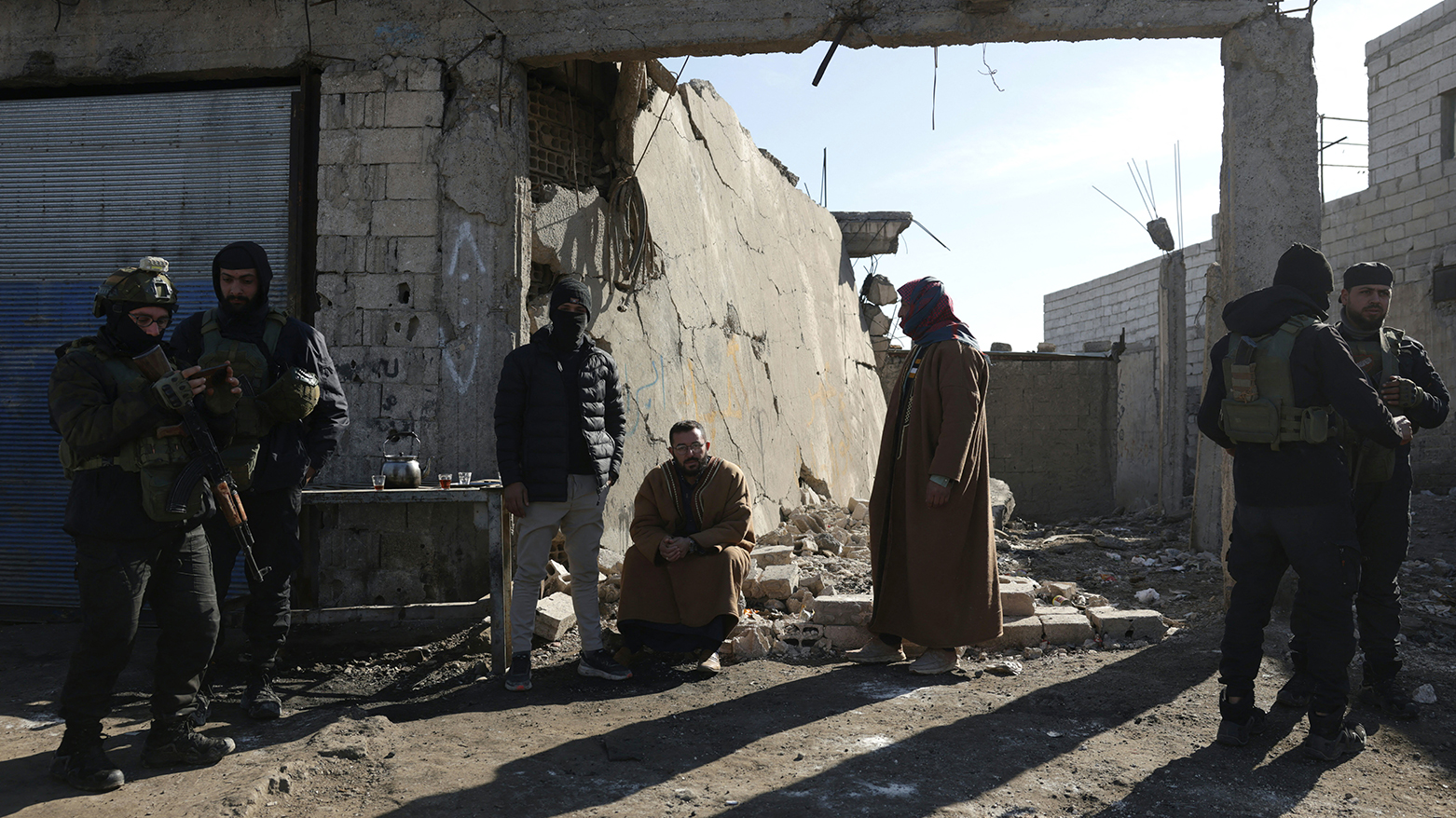
ERBIL (Kurdistan24) – The Prison Administration of the Autonomous Administration of North and East Syria (DAANES) issued a formal clarification on Sunday regarding the status and prior management of juveniles held at the al-Aqtan Prison in Raqqa. The statement follows the recent transfer of the facility to Syrian government control and the subsequent release of 126 minors, a development that has highlighted the complex legal and security challenges surrounding the legacy of the Islamic State (ISIS) in the region.
The Prison Administration’s communique, released on Jan. 25, 2026, sought to address the presence of minors within a high-security adult facility, a situation that has drawn scrutiny as front lines shift in northern Syria.
According to the administration, the juveniles were initially housed in a dedicated, specialized section of al-Aqtan Prison, separate from the adult population.
The administration asserted that the transfer of these individuals from standard juvenile reform centers to the Raqqa facility occurred approximately three months ago, a move it characterized as a necessity dictated by volatile security conditions on the ground.
In its detailed breakdown, the Prison Administration categorized the detained juveniles into two distinct groups. The first group consisted of minors involved in various criminal activities for which Syrian citizens had filed formal legal complaints.
The second group comprised individuals described as victims of the terrorist organization ISIS, having been recruited as fighters or utilized for other auxiliary purposes during the group’s territorial control. The clarification emphasized that despite the security-driven nature of their detention, the administration remained committed to rehabilitation and behavioral correction.
During their period of detention at al-Aqtan, the administration claimed that the treatment of the minors adhered strictly to international standards. The statement noted that the facility provided comprehensive rehabilitation programs specifically tailored for the juvenile population.
These initiatives were aimed at psychological and social preparation, with an overarching goal of ensuring a healthy reintegration into society once the individuals had completed their respective sentences. This focus on behavioral correction was presented as a critical counterweight to the radicalization many experienced under ISIS.
The clarification from the Autonomous Administration arrives 24 hours after a significant shift in the operational status of the facility.
On Saturday, Jan. 24, 2026, Syrian domestic media and the Syrian Arab Army confirmed the release of 126 juveniles under the age of 18 from al-Aqtan Prison. This mass release was facilitated by the Syrian government, which recently assumed authority over the prison following successful military offensives across the provinces of Aleppo, Raqqa, and Deir ez-Zor.
The release process utilized newly implemented administrative technology. A security source within the Syrian Interior Ministry stated that the eligibility of the detainees was verified through the ministry’s digital platform, titled "Your Voice Is Heard."
This application, which was officially launched in January 2025 to streamline security and administrative processes, allowed officials to verify the personal data and records of the detainees electronically.
The assessment concluded that because the 126 individuals were confirmed as minors at the time of their detention and were not deemed an immediate security threat, their release was authorized in accordance with national procedures for the treatment of juveniles.
The transfer of al-Aqtan Prison from the Syrian Democratic Forces (SDF) to the central government in Damascus represents a major transition in the region's security architecture.
For years, the SDF had overseen the detention of thousands of ISIS suspects and their relatives, many of whom were captured during the final stages of the territorial campaign against the group. The fate of these detainees—particularly the thousands of minors recruited or coerced by ISIS—has remained a point of contention and a primary concern for international human rights organizations.
Human rights monitors have consistently advocated for the differentiated treatment of children associated with armed groups, arguing that prolonged detention in high-security environments can hinder long-term stability.
The use of rehabilitation and reintegration programs, such as those described by the Autonomous Administration in its Sunday statement, is often cited as the preferred pathway for managing the complex humanitarian legacy of the ISIS conflict. However, the recent military escalations have disrupted many of these established protocols, leading to the rapid transfer of facilities and the accelerated processing of detainees under renewed state control.
Raqqa, which served as the de facto capital of the Islamic State’s self-declared caliphate, remains at the center of ongoing debates regarding justice, accountability, and post-conflict governance.
The transition of authority at al-Aqtan and the subsequent release of the 126 minors underscore the broader challenges facing Syria as it attempts to reassert centralized control over former conflict zones.
While the Syrian government has touted its digital platform as a means of ensuring administrative transparency, the lack of detailed post-release arrangements—including whether the released juveniles will continue to receive rehabilitation or be subject to state monitoring—remains a subject of concern for observers.
The Prison Administration’s statement concludes by reinforcing the premise that the prior management of the juveniles was a response to the "security circumstances" that have long defined the region's instability.
By detailing the rehabilitative efforts undertaken before the handover, the Autonomous Administration appears to be defending its record of detention even as Damascus moves to implement its own legal frameworks under the newly established status quo in Raqqa.