BCF Boosts Rojava Relief as KNCS Credits President Barzani for Stabilizing Efforts
The Barzani Charity Foundation has provided aid to 46,421 individuals in Rojava as KNCS officials credit President Barzani's diplomatic initiatives for restoring a fragile calm to the region.
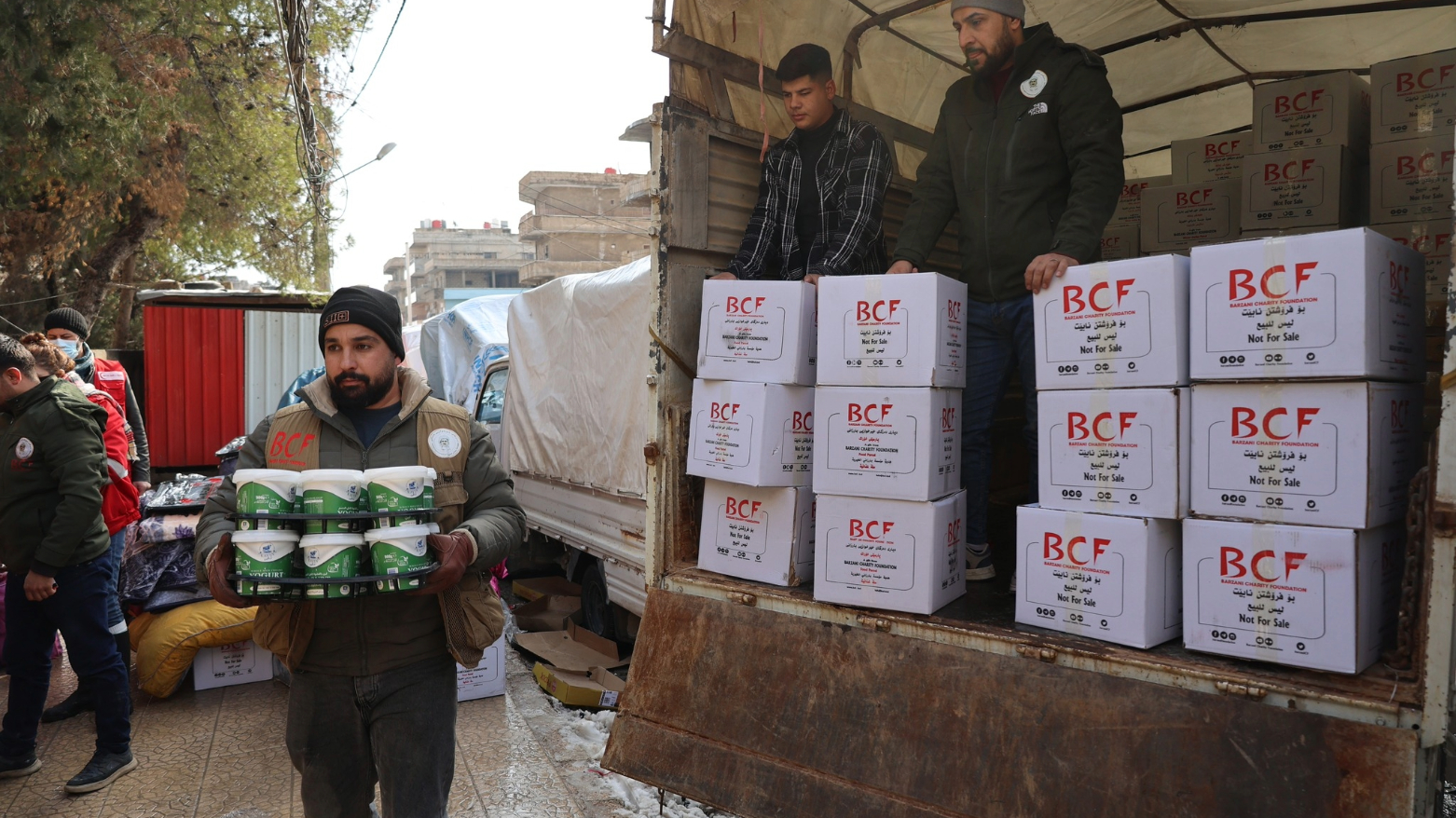
ERBIL (Kurdistan24) - The Barzani Charity Foundation (BCF) on Monday published its most comprehensive operational data to date regarding its humanitarian mission in Western Kurdistan (Rojava), detailing a relief effort that has reached tens of thousands of civilians across several key districts. Following the disclosure of these statistics, Faisal Youssef, the spokesperson for the Kurdish National Council (KNCS) in Syria, indicated that a series of high-level diplomatic interventions led by President Masoud Barzani has been instrumental in restoring a measure of stability to the region, providing a fragile window for political negotiations with the central government in Damascus.
In an official statement released on Jan. 26, 2026, the Barzani Charity Foundation (BCF) announced that its ground operations in Rojava, or Western Kurdistan, are currently being managed by a workforce of more than 150 employees. These personnel are organized into 12 distinct operational groups, with each unit assigned to provide essential services in different geographical sectors.
According to the foundation, the logistical scale of the mission has involved the successful delivery of 133 trucks of humanitarian aid. These shipments have targeted residents in the urban centers and surrounding areas of Qamishlo, Amuda, and Girkê Legê.
The BCF’s statistical summary highlights a significant human impact, noting that 7,506 families, comprising 46,421 individuals, have received direct assistance through the foundation’s distribution networks. The relief mission has prioritized multiple sectors, including nutrition, healthcare, and education.
BCF records show that 6,800 hot meals have already been distributed to the displaced and vulnerable, with foundation kitchens continuing to prepare an additional 3,000 meals daily to meet the ongoing demand. In the health sector, mobile medical teams have provided clinical treatment to 2,115 individuals, addressing urgent medical needs in areas where local infrastructure has been compromised.
Educational institutions have also been a focal point of the BCF’s regional strategy. The foundation reported that it has provided diesel fuel to 81 schools and one mosque to facilitate heating during a winter season characterized by extreme cold.
Furthermore, 60 schools were supplied with specialized aid packages containing 22 varieties of essential items, including food, mattresses, and blankets. To bolster the region's limited medical capacity, health teams have conducted service visits to 28 schools.
Beyond direct aid, the foundation noted that its operations have secured temporary employment opportunities for 235 local residents, providing a modest economic stimulus to the area.
This humanitarian mobilization is occurring alongside a significant shift in the region's political and security landscape.
During an appearance on Kurdistan24’s news bulletin on Monday, Faisal Youssef, the spokesperson for the KNCS, emphasized that the initiatives undertaken by President Barzani, in coordination with regional and international partners, have been the primary driver behind the current state of calm in Western Kurdistan.
Youssef underscored that while the immediate cessation of hostilities is a welcome development, the ultimate objective remains a final end to the war, the total protection of civilians from military attacks, and the permanent prevention of further displacement.
Youssef highly valued the role of President Barzani in unifying the disparate Kurdish political factions, characterizing his involvement as "very important and effective" since the initial collapse of the previous Syrian administration.
The KNCS spokesperson argued that the gains and sacrifices made by the Kurdish people during the protracted war against Islamic State (ISIS) terrorists must be defended through both diplomatic and constitutional means.
He emphasized that the KNCS seeks to resolve all outstanding disputes with the Syrian government through a structured dialogue conducted under international supervision.
A primary requirement for the KNCS is the formal enshrinement of Kurdish rights within a new, permanent Syrian constitution. Youssef stated that the Kurdish political parties are prepared to engage directly with Damascus whenever the central government shows readiness.
"Our goal is to resolve problems at the negotiation table," Youssef told Kurdistan24, though he qualified this readiness by stating that the absolute "primary condition for starting negotiations is the cessation of the war." He indicated that when these conditions are met, the Kurdish parties intend to send a joint delegation to Damascus to represent their collective interests.
The current diplomatic momentum follows the implementation and recent extension of a ceasefire agreement between the Syrian Democratic Forces (SDF) and the central government.
Originally announced following an agreement on Jan. 18, the ceasefire was recently extended for 15 days through international mediation. This period is viewed by regional actors as an essential step toward de-escalating the military friction that has characterized the past month.
According to reports from the region, President Barzani has maintained active communication with key stakeholders, including Syrian President Ahmed al-Shara and SDF General Commander Mazloum Abdi. These discussions have focused on ensuring that the rights of the Kurdish population are not sidelined in the post-conflict transition.
This political activity occurs as the region continues to handle a severe humanitarian crisis, particularly in the city of Kobane, where large-scale displacement has pushed local resources to their limit.
In response to these conditions, and upon the specific recommendation of President Barzani, the Barzani Charity Foundation has continued its "national and humanitarian duty" by sustaining the flow of 133 trucks through the Fishkhabour–Semalka border crossing, which remains the primary gateway for aid from the Kurdistan Region.
BCF officials noted that the coordination with international bodies, including the United Nations, has been productive, with UN representatives expressing approval for the quality and diversity of the foundation’s relief materials.
As the 15-day ceasefire extension proceeds, the KNCS maintains that unity among Kurdish parties and the utilization of international relations are the essential keys to securing a favorable outcome for the Kurdish cause in Syria.
For the 46,421 beneficiaries of the BCF’s aid, the continuation of both the humanitarian convoys and the diplomatic dialogue represents the only viable path toward escaping the current state of instability.