SDF Commander Calls for International Commitment on Kobani Victory Anniversary
“The world must honor its commitment to the sacrifices made in Kobani,” Abdi said, adding that the SDF “wholeheartedly salutes the Kobani resistance.”
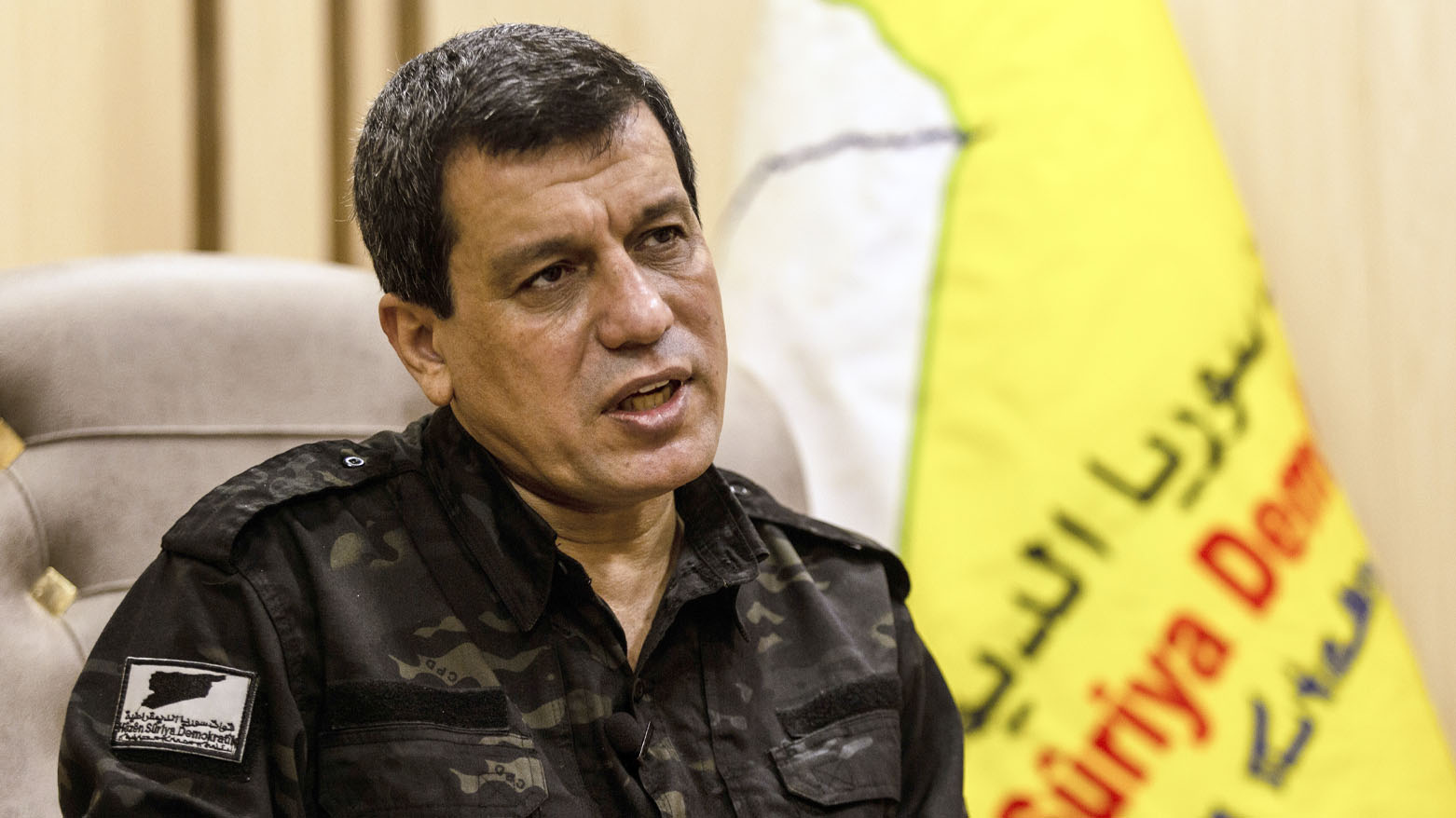
ERBIL (Kurdistan24) – The commander-in-chief of the Syrian Democratic Forces (SDF), Mazloum Abdi, on Monday paid tribute to the historic resistance of Kobani against ISIS, while warning that the city is once again facing serious security threats.
In a statement marking the anniversary of the victory over ISIS in Kobani, Abdi said that despite the sacrifices made during the battle, the city’s residents are now “under siege and facing heavy attacks.” He urged the international community to uphold its moral and political commitments to the people of Kobani, whose resistance became a global symbol in the fight against terrorism.
“The world must honor its commitment to the sacrifices made in Kobani,” Abdi said, adding that the SDF “wholeheartedly salutes the Kobani resistance.”
Abdi’s remarks came as Kurdish leaders across the region commemorated the 11th anniversary of the liberation of Kobani, a milestone widely regarded as a turning point in the war against ISIS.
Earlier on Monday, President Masoud Barzani described the defeat of ISIS in Kobani as a historic victory for humanity over extremism. In a statement published on X, President Barzani congratulated the Peshmerga forces and local fighters who defended the city with the support of the U.S.-led international coalition.
“The victory was not limited to a single faction, but represented a collective achievement for the Kurdish people and a broader defense of humanitarian principles,” President Barzani said, calling the outcome “the victory of humanity over terror and darkness.”
The Battle of Kobani, which began on Sept. 13, 2014, lasted 134 days and ended with the full liberation of the city on Jan. 26, 2015. The defense was initially led by the People’s Protection Units (YPG) and the Women’s Protection Units (YPJ), who resisted ISIS advances despite limited weaponry.
A decisive shift occurred following the deployment of Kurdistan Region Peshmerga forces, authorized by the Kurdistan Region Parliament and directed by President Barzani. The Peshmerga, equipped with heavy weapons, reached Kobani on Oct. 30, 2014, transiting through Turkish territory in a rare logistical arrangement that proved critical to the city’s defense.
The combined efforts of Kurdish forces on the ground, alongside sustained airstrikes by the international coalition, ultimately expelled ISIS from Kobani. Analysts regard the defeat as the first major territorial loss suffered by the extremist group after declaring its so-called “caliphate” in 2014.
Beyond its military significance, the victory in Kobani laid the groundwork for continued cooperation between Kurdish forces and the international coalition, leading to later successes in Raqqa and Manbij.
As commemorations continue, Abdi’s warning underscores the enduring relevance of Kobani—not only as a symbol of resistance and unity, but also as a reminder that the sacrifices made in the fight against terrorism require lasting international support.