Kurdistan Region Investors Donate 700 Million Iraqi Dinars to Support IDPs in Western Kurdistan
The investors have pledged to continue mobilizing financial and material support in the coming days, with a particular focus on displaced families in Kobani and other affected cities.
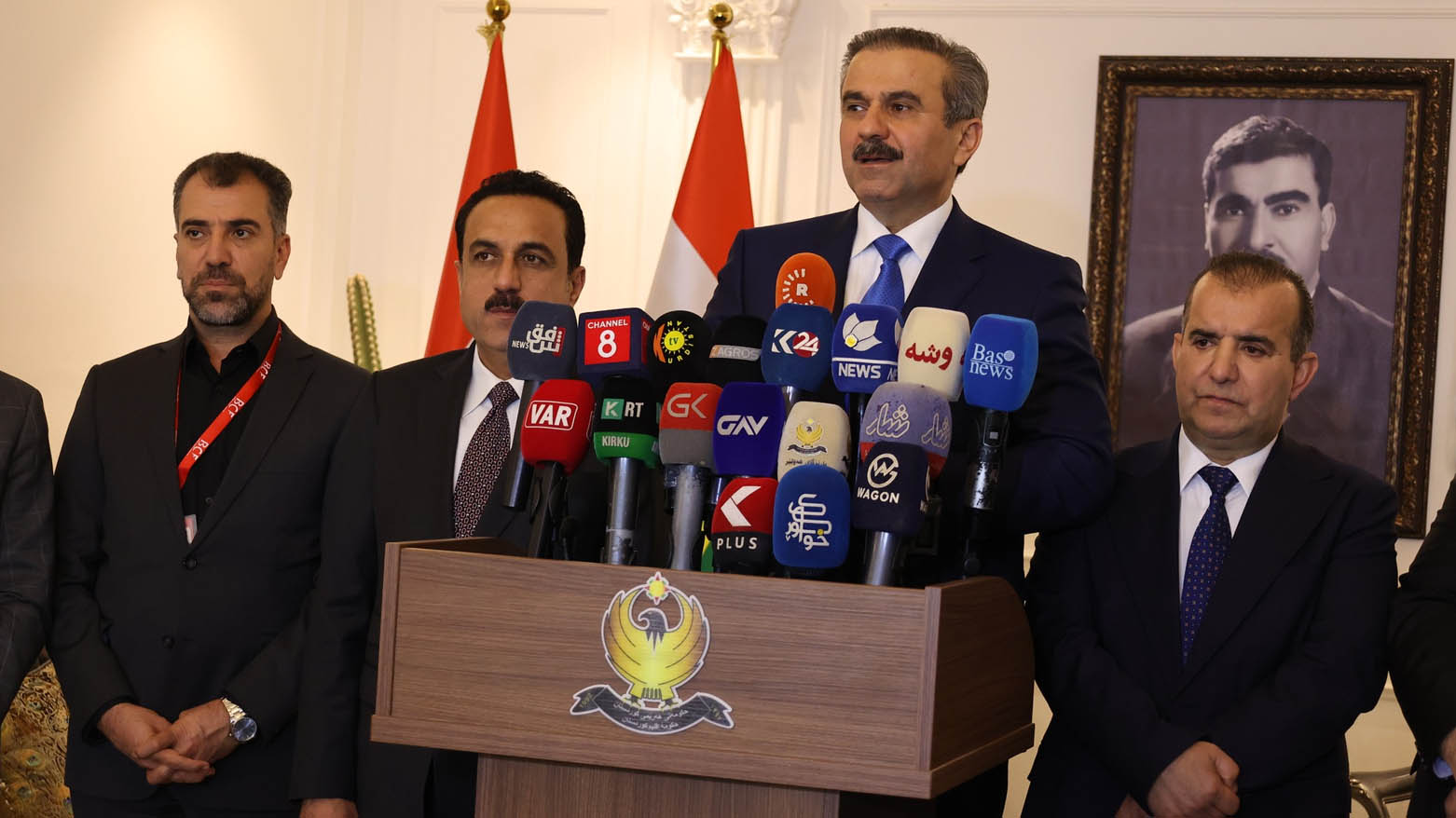
ERBIL (Kurdistan24) – Kurdistan Region investors have donated 700 million Iraqi dinars to support internally displaced persons (IDPs) in Western Kurdistan (Rojava), the Barzani Charity Foundation (BCF) announced on Monday, marking a further expansion of humanitarian assistance to civilians affected by ongoing instability in the region.
According to the foundation, the investors have pledged to continue mobilizing financial and material support in the coming days, with a particular focus on displaced families in Kobani and other affected cities. As part of these efforts, 16 trucks loaded with humanitarian aid were dispatched to Western Kurdistan on Sunday.
The latest contribution comes amid BCF’s largest humanitarian operation to date in Rojava. In an official statement released on Monday, the foundation reported that more than 150 staff members, organized into 12 operational teams, are currently managing relief activities across several districts, including Qamishlo, Amuda, and Girkê Legê.
BCF data show that a total of 133 trucks of aid have so far reached the region, delivering assistance to 7,506 families, or 46,421 individuals. The relief effort has prioritized food security, healthcare, and education, particularly as winter conditions continue to exacerbate humanitarian needs.
The foundation has distributed 6,800 hot meals to displaced and vulnerable residents and continues to prepare approximately 3,000 meals daily. Mobile medical teams have provided treatment to more than 2,100 patients, while diesel fuel has been supplied to 81 schools and one mosque to ensure heating during extreme cold.
In addition, 60 schools have received comprehensive aid packages containing essential supplies such as food, blankets, and mattresses, and health teams have conducted service visits to 28 educational institutions. The operation has also created temporary employment opportunities for 235 local residents, offering limited economic relief amid the crisis.
The humanitarian mobilization coincides with a fragile political calm in Western Kurdistan. Speaking to Kurdistan24, Faisal Youssef, spokesperson for the Kurdish National Council in Syria (KNCS), said diplomatic initiatives led by President Masoud Barzani have played a key role in stabilizing the region and opening space for dialogue with Damascus.
Youssef stressed that while the recent ceasefire extension between the Syrian Democratic Forces and the central government is a positive step, the ultimate goal remains the permanent protection of civilians, an end to displacement, and the constitutional recognition of Kurdish rights in Syria.
As humanitarian needs remain acute—particularly in Kobani—BCF officials said aid deliveries will continue through the Fishkhabour–Semalka border crossing, in coordination with international organizations, including the United Nations, which has praised the quality and scope of the assistance.
For tens of thousands of displaced civilians, the continued flow of humanitarian aid, reinforced by local and private-sector contributions, remains critical to alleviating suffering and sustaining stability during this uncertain period.