Military Siege and Fatal Bombardment Intensify Humanitarian Crisis in Syria’s Kurdish Regions
A child was killed in Qamishlo and ten civilians were massacred in Kobani villages as an eight-day siege intensifies. Local parties held the Syrian army responsible for ceasefire violations.
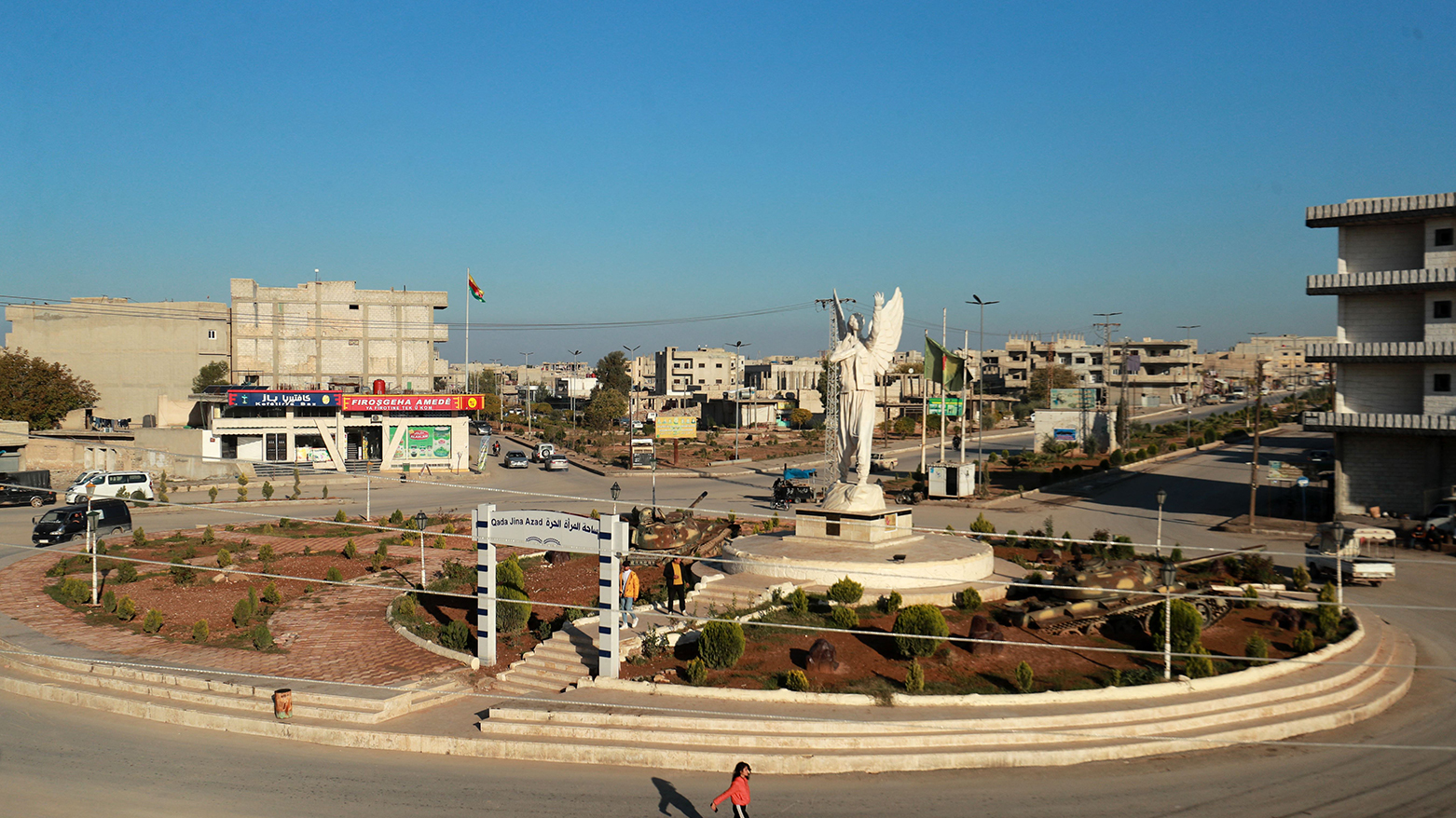
ERBIL (Kurdistan24) - The military siege of Kobani entered its eighth day on Monday, deepening an acute humanitarian crisis within the encircled city, while a separate bombardment in the Qamishlo countryside resulted in the death of a Kurdish child. These developments occur as local monitoring groups and political organizations report significant breaches of a recently brokered 15-day ceasefire, with casualties mounting among the civilian population in northeastern Syria.
According to reports provided by local sources to the Syrian Observatory for Human Rights, the city of Kobani has become a sanctuary for a large number of families displaced from surrounding villages, who were forced to flee following what they described as a brutal bombardment by the Syrian Arab Army and affiliated paramilitary groups.
The concentration of these displaced populations within the city center has strained limited resources to the point of collapse.
Infrastructure in the region has been severely compromised. A resident of Kobani informed the Observatory that the city’s electricity has been entirely cut off for ten days, a failure attributed to the targeting of the Tishrin Dam, the area's primary energy source.
Amid a harsh winter season, some households have attempted to rely on solar energy, but the utility of these systems has been diminished by a concurrent cutoff of the municipal water supply.
The health and food sectors are currently described as being on the verge of disaster. Local health centers and pharmacies report that they have exhausted stocks of essential medications for chronic conditions, including diabetes, hypertension, and heart disease.
Furthermore, the absence of heating fuel has precipitated a widespread increase in respiratory and chest illnesses among children. Syrian government forces and their affiliates are reportedly preventing food and medicine convoys from entering the city, forcing residents to depend on dwindling supplies available in local markets.
While the city of Kobani remains under a strict blockade, military activity has flared in other sectors of the northeast.
In the Chil Agha district, located east of Qamishlo, a violation of the 15-day ceasefire resulted in the death of a child in the village of Safa on Sunday night. The monitoring group, Syrian Observatory for Human Rights (SOHR), stated that the intensive bombardment was conducted by armed groups affiliated with the Syrian Interim Government, reportedly supported by Turkish unmanned aerial systems.
The attack also encompassed the town of Hamrat, utilizing heavy weaponry and artillery against Syrian Democratic Forces (SDF) positions.
In response to the shelling, the SDF engaged the attacking forces, claiming to have shot down multiple drones during clashes that lasted from Sunday afternoon until late in the evening. These engagements led to the further displacement of residents from Safa village.
The SDF reported that the attacking forces were supplemented by Arab tribal gunmen who joined the Syrian government units, prompting the use of heavy weaponry by the SDF to repel the advance. Military sources noted that these intermittent attacks have been launched from positions behind the M4 international road, focusing on strategic contact points along the Chil Agha axis.
The Kurdistan Democratic Party in Syria (Elpartî) issued a statement on Monday holding the Syrian government and its military directly responsible for what it characterized as a "bloody massacre" against civilian families.
The organization identified ten members of two families—the families of Rasho Bozan Gadro and Mustafa Osman Kicho—who were killed when gunmen attacked the villages of Kharab Ashk, Shahrabaniya, and Qasimiya.
The party asserted that the crime, occurring after the formal announcement of a ceasefire, reflects a "systematic program" to assault civilians rather than an individual military error.
The victims of the massacre include Fatima Osman, Jamila Ahmad Osman, Solaf Rasho Bozan, and Salwa Mahmoud.
Among the children killed were Jafar Mohammad Sheikh Bozan, eight-year-old Sabrin Ahmad Alawi, fourteen-year-old Judi Ahmad Alawi, ten-year-old Mohammad Ahmad Alawi, and five-year-old Ibrahim Ahmad Alawi, alongside a young daughter of Mohammad Sheikh Bozan.
Elpartî emphasized that the continuation of such violations under international silence places the global community and ceasefire guarantors before their legal and moral responsibilities.
Simultaneously, the Kurdish National Council in Syria (KNCS) convened an expanded meeting in Qamishlo to address the deteriorating security landscape. The council, led by President Mohammed Ismail, issued a statement endorsing the ongoing mediation efforts of President Masoud Barzani.
The KNCS characterized Barzani’s initiatives as a critical entry point for defusing regional tensions and reviving a meaningful political process.
The KNCS reaffirmed its commitment to the construction of a state based on partnership and national dialogue, stressing that the Kurdish issue is a fundamental national entitlement requiring explicit constitutional recognition.
The council reiterated demands for an immediate halt to all military operations and the total lifting of the siege on Kobani to allow for the unimpeded delivery of humanitarian aid.
The statement also noted that Presidential Decree No. 13, concerning equal citizenship, represents an initial positive step that must be entrenched within a broader constitutional path.
As the siege continues and ceasefire violations persist, local officials warn that the lack of accountability risks further escalation.
The Democratic Autonomous Administration of North and East Syria has joined Kurdish political parties in calling for the immediate opening of safe corridors to facilitate medical evacuations and relief operations, maintaining that the current policy of "collective punishment" against civilians constitutes a violation of international humanitarian law.