Kobani Resident Describes Civilian Deaths in Drone Strike as Fighting Intensifies
A Kobani resident told Kurdistan24 that a late-night drone strike killed multiple family members, describing collapsed homes, failed rescue efforts, and continued attacks as fighting intensified.
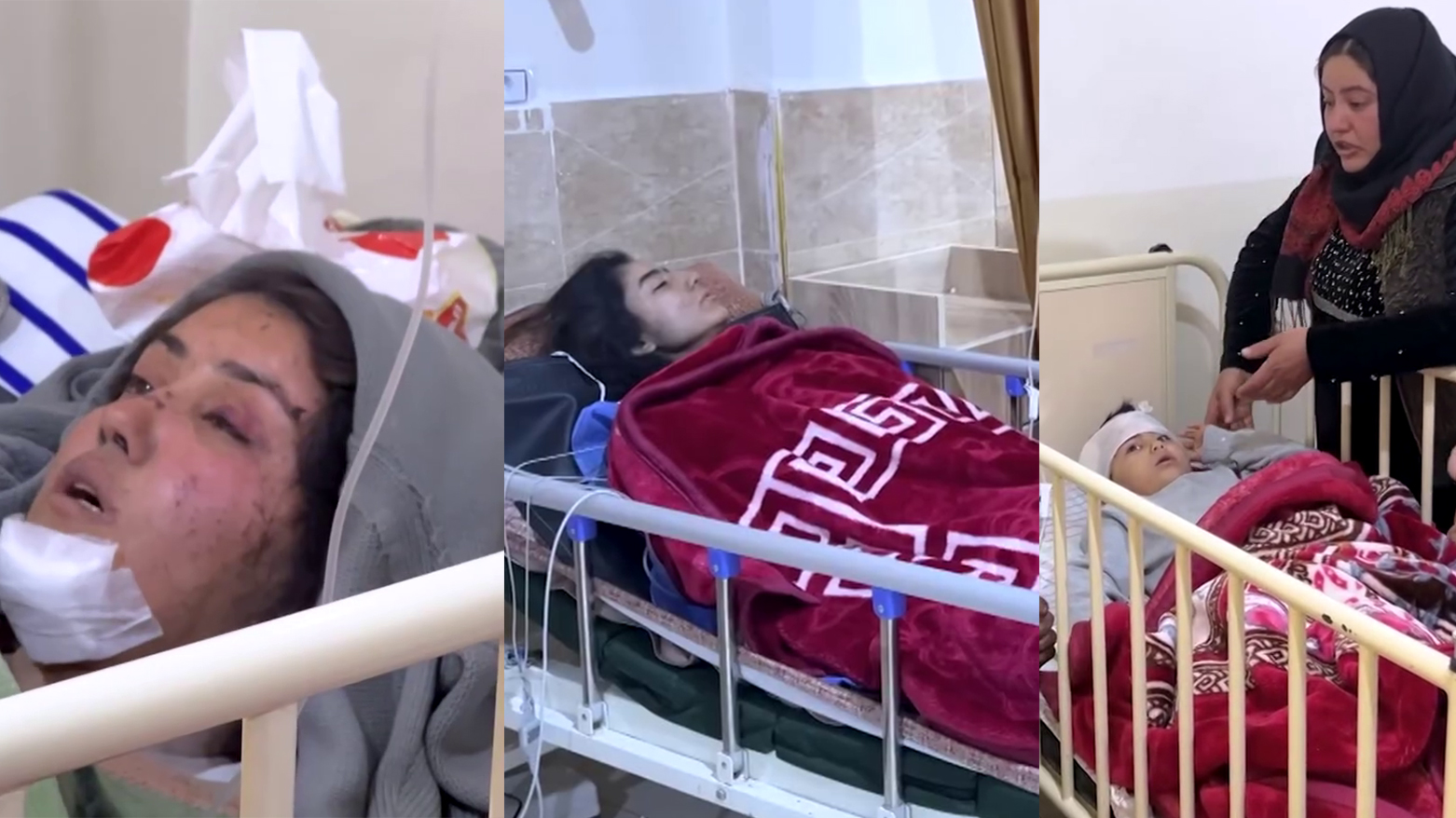
ERBIL (Kurdistan24) - A resident of Kobani said a drone strike killed several members of his family, including his wife, two children, and his mother, according to a first-hand account shared from the city as attacks continued amid intensified fighting in Rojava. The account, provided to Kurdistan24, offers a detailed description of the incident and highlights the mounting civilian toll as hostilities persist around Kobani.
According to the resident’s statement, the strike occurred at approximately 11:30 at night while multiple members of his extended family were gathered in a village near Kobani.
He said they had taken shelter together at his father-in-law’s house, where relatives had assembled after leaving nearby homes. The man stated that a plane arrived overhead and carried out an attack that caused extensive destruction and casualties inside the house.
“My family was: my wife, my two children, and my mother,” he said in his account. “All four went, they passed away.”
He added that they had been staying in a village surrounding Kobani and had moved between his uncle’s house and his father-in-law’s house shortly before the strike occurred. According to his description, several families were present in the same location at the time of the attack.
The resident said that when the strike hit, parts of the building collapsed, trapping people under the debris. He recounted that his three-year-old son, Mohammed, was beneath the lower floor when the roof fell. He said he could not see his son after the collapse and did not hear any sound from his wife. His daughter, Solin, who he said was four and a half years old, was also trapped under the rubble.
He described efforts by those present to rescue survivors using basic tools.
“We tried, dug with pickaxes, we pulled her out,” he said, referring to his daughter. He added that voices could be heard from under the debris, with people calling out for help and saying that they were running out of breath.
According to his account, continued aerial presence prevented sustained rescue efforts. “We tried, (but) the plane didn’t let us,” he said, adding that the aircraft remained overhead.
The man said that despite repeated attempts, rescuers were unable to reach everyone in time. He stated that his wife, his mother, and his young son were found dead under the collapsed structure. He also said his mother-in-law was killed and that a guest, described as a 20-year-old woman, also died in the strike. His sister survived, according to the account, though she was injured.
“This one here is injured,” he said, referring to his sister. He added that other members of the group were able to get out safely.
According to the account, several bodies remained under the house for some time after the strike, and the family later removed some of them and transported them to another village for burial.
The resident said that the group had previously left the main house and moved to an animal shed, believing it would be less likely to be targeted. “For the reason that they hit houses, we said ‘the house is a bit of a ruin, they won’t go near the village, they won’t hit it,’” he said.
He added that despite these precautions, the attack occurred and was followed by continued strikes in the area.
He described what he said were sustained aerial attacks following the initial strike. “Until this hour the plane does not stop,” he said, adding that the area was hit repeatedly with what he described as rockets and planes, and that a large explosion occurred.
According to his account, the sound of aircraft continued even after the family fled the immediate area.
The man identified himself as the son of Mustafa Osman of Kucho and said the family had been at the house of his father-in-law in the village of Gedro at the time of the strike. He stated that only a small number of people remained in the village during the rescue efforts, describing them as three or four young men who attempted to dig through the debris under difficult conditions.
The account emphasizes the difficulties faced by civilians attempting to escape or respond to attacks while hostilities continue.
The resident said that rescue efforts were repeatedly interrupted by the presence of aircraft overhead, limiting the ability of those on the ground to remove survivors or recover bodies. He said that some individuals remained unaccounted for under the rubble at the time he gave his statement.
The summary of losses provided with the account listed the man’s wife as deceased, his three-year-old son Mohammed as deceased, his mother as deceased, and his mother-in-law as deceased. His daughter Solin, aged four and a half, was described as injured and pulled out from under the rubble.
A 20-year-old female guest was also listed as deceased, while his sister survived with injuries.
The statement was shared as fighting continued around Kobani, where attacks have persisted amid what was described as intensified fighting in Rojava. The incident underscores the mounting civilian toll in the area as hostilities continue, with residents reporting casualties and destruction in residential locations.
The resident concluded his account by appealing for assistance, saying that his family and others had fled the area and were seeking help. His statement did not include further details about the broader military situation, focusing instead on the events surrounding the strike and its impact on his family and community.
The account, as presented to Kurdistan24, provides a detailed description of a single incident but reflects the broader pattern of civilian harm reported amid ongoing attacks near Kobani. It highlights the human consequences of continued hostilities and the challenges faced by civilians caught in areas of active fighting.