German Parliamentary Delegation Visits Erbil to Strengthen Ties with Kurdistan Region
Delegation meets with Kurdistan leadership to discuss Western Kurdistan and bilateral cooperation.
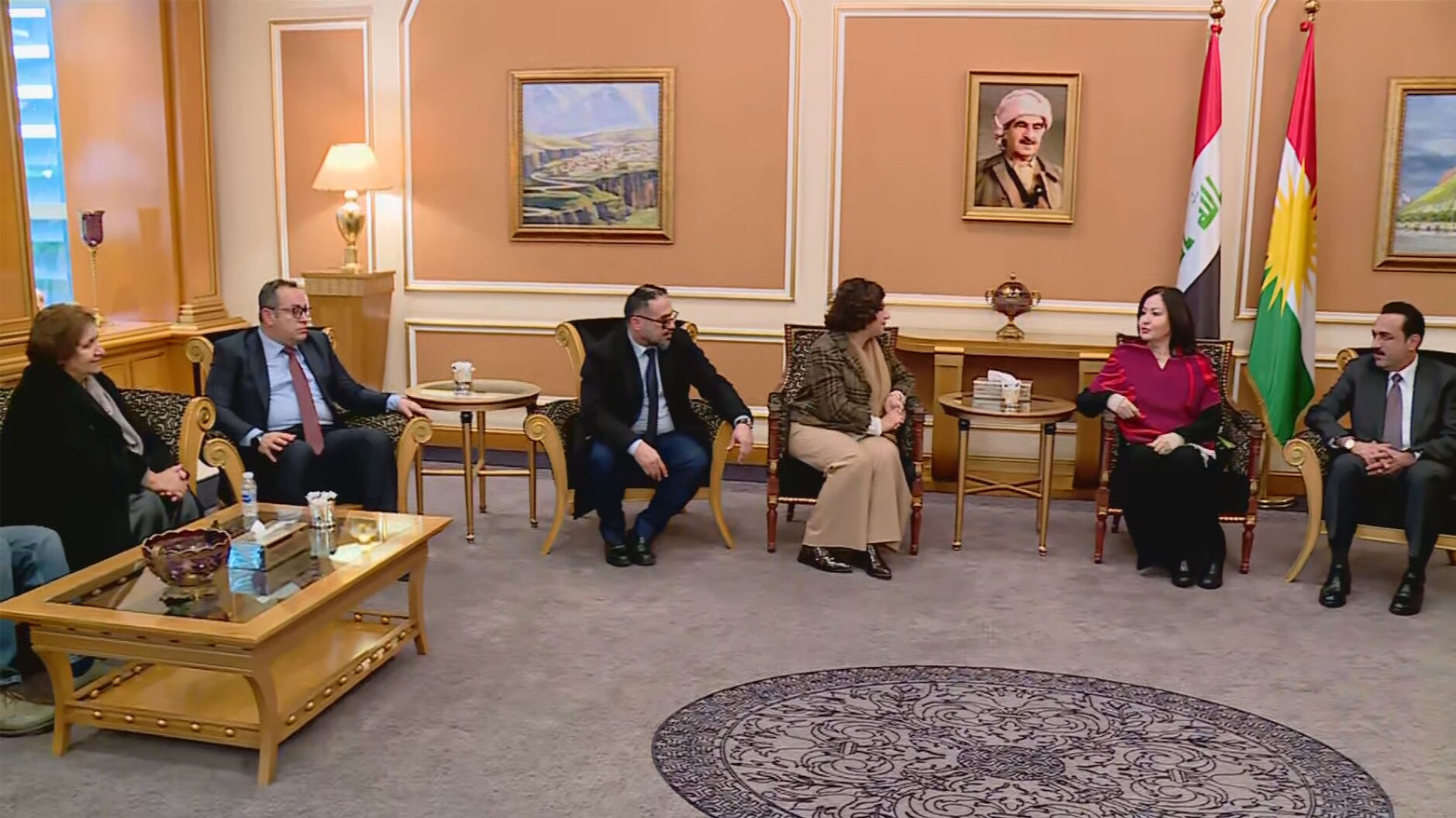
ERBIL (Kurdistan24) — A delegation of German parliamentarians, led by Berivan Eymaz, deputy speaker of North Rhine-Westphalia’s regional parliament, arrived in Erbil on Saturday to conduct a series of high-level meetings with the leadership of the Kurdistan Region.
Upon their arrival, the delegation was welcomed by Erbil Governor Omed Khoshnaw and Kurdish parliamentarians Vala Farid and other members of the Kurdistan Parliament.
Renas Jano, a diaspora representative at the Barzani Headquarters, said the delegation has a detailed agenda, including planned meetings with President Masoud Barzani, Kurdistan President Nechirvan Barzani, and Prime Minister Masrour Barzani.
During their visit, the German parliamentarians are expected to tour several Kurdistan Regional Government (KRG) institutions. The primary focus of their discussions with regional officials will center on the situation in Western Kurdistan and exploring opportunities to strengthen diplomatic and friendly ties between the Kurdistan Region and Germany.
The visit underscores the ongoing commitment of both Erbil and Berlin to deepen political, economic, and diplomatic cooperation, particularly in the context of regional stability and Kurdish-German relations.
The Kurdistan Region has long played a pivotal role in promoting stability and peace across Iraq and the broader Middle East, serving as both a secure partner for international actors and a mediator in regional conflicts.
In recent years, particularly amid developments in Western Kurdistan (northeastern Syria), the Kurdistan Regional Government (KRG) has actively supported efforts to protect civilian populations, coordinate humanitarian assistance, and foster dialogue between local actors and external powers.
The deployment of Peshmerga forces to assist Kobani in 2014, coupled with ongoing diplomatic engagement by KRG leaders, has been recognized as a critical stabilizing factor during and after the fight against ISIS.
More recently, the KRG has leveraged its political influence to encourage ceasefires, facilitate cross-border cooperation, and advocate for the constitutional and civil rights of Kurdish populations in Syria, highlighting the region’s role as a trusted interlocutor in a volatile environment.
The Syrian Democratic Forces (SDF) and the Syrian government reached a comprehensive agreement on Friday to end hostilities and integrate military, security, and administrative structures in Western Kurdistan, including a full ceasefire, withdrawal of forces from front lines, and the entry of Syrian Interior Ministry units into Hasakah and Qamishlo.
The deal establishes a new military division composed of three SDF brigades and a special Kobani brigade under Aleppo province, while administratively bringing Democratic Autonomous Administration institutions under Syrian state authority, ensuring the continuation of civil services, protecting Kurdish civil and educational rights, and facilitating the return of internally displaced persons.