At Bonn Rally, Şivan Perwer and Diaspora Leaders Call for Kurdish Unity
Kurdish leaders and artists said a major Bonn rally showed diaspora unity, praised President Barzani’s role, urged vigilance on Western Kurdistan, and highlighted resistance, rights, and coordinated diplomatic action.
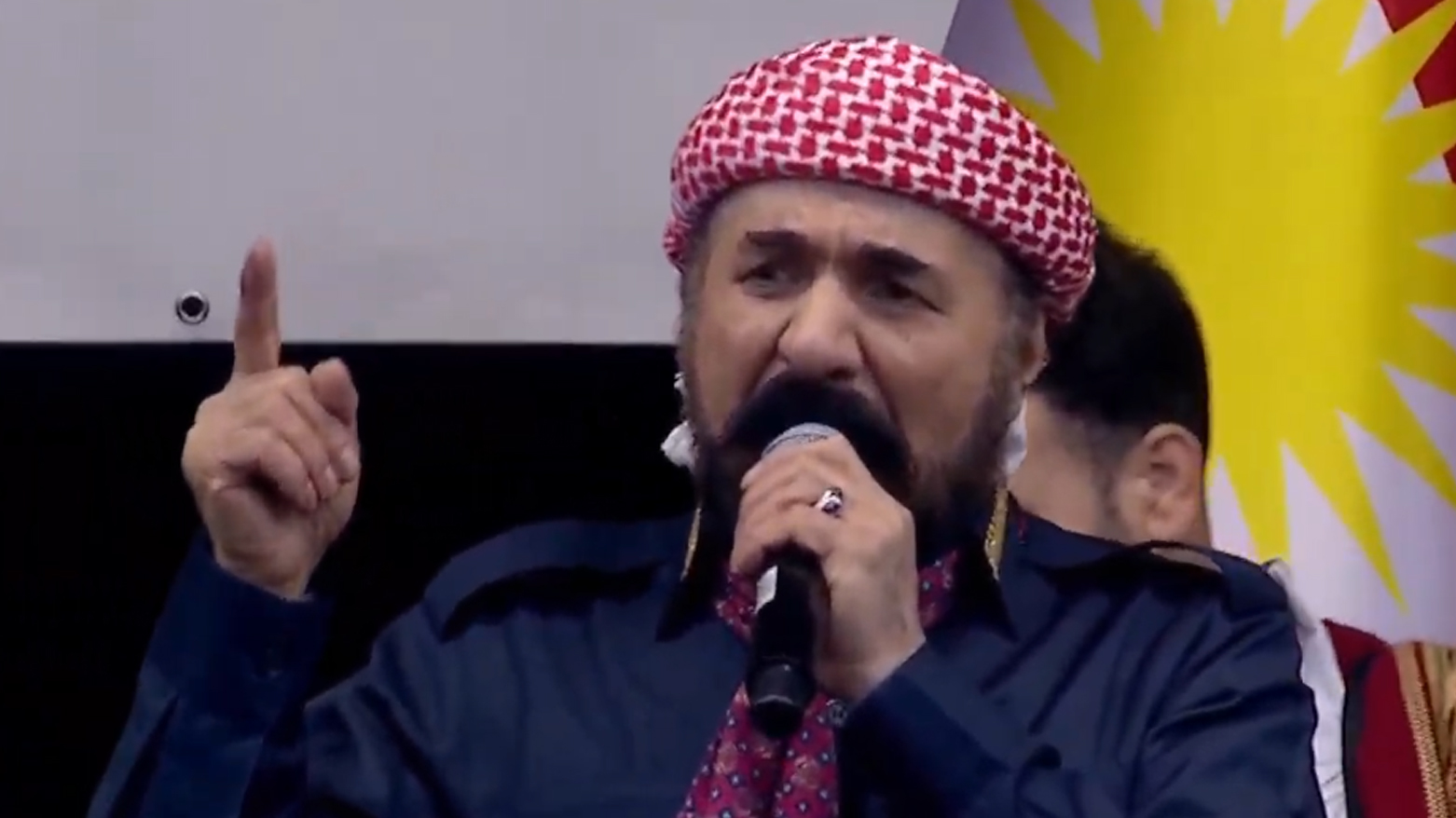
ERBIL (Kurdistan24) - Renowned Kurdish artist Şivan Perwer said the unity displayed by Kurds in a large diaspora protest in Bonn, Germany, demonstrated that the Kurdish people “have a guardian,” while cautioning against complacency amid political agreements and urging continued vigilance and resistance, according to remarks he delivered during a Kurdistan24 open studio discussion on Saturday.
Speaking from Bonn on Jan. 31, 2026, following his participation in a major demonstration supporting Western Kurdistan (Rojava), Perwer framed the gathering as a moment of collective affirmation for Kurds worldwide.
“We are Kurds; we are history, pride, and knowledge,” he said. “Globally, we are a great many people,” he added, underscoring the scale and significance of the diaspora presence.
Perwer directed praise toward President Masoud Barzani for what he described as sustained efforts to address Kurdish issues broadly and developments in Rojava specifically.
He said those efforts reflected mutual respect among Kurds and demonstrated the presence of leadership safeguarding Kurdish interests. “This is a sign that the Kurds have a guardian and respect one another,” he said.
He congratulated President Barzani and Kurds worldwide on what he characterized as a rare and meaningful moment of cohesion. “The unity of Kurds in the world and the diaspora is a source of pride and a very significant event,” Perwer said, presenting the Bonn protest as evidence of shared purpose across geographic and political divides.
Addressing recent developments related to an agreement between the Syrian Democratic Forces (SDF) and the Damascus government, Perwer urged realism and restraint in expectations. He said Kurds should not assume that political announcements alone resolve underlying challenges.
“We must not perceive that with the announcement of this agreement all problems are solved,” he said. Instead, he called for preparedness and foresight, emphasizing that uncertainty remains and vigilance is required. He said this perspective applied to all four parts of Kurdistan.
Perwer repeatedly emphasized the concept of resistance as a necessary condition for survival and dignity.
“In any stage of life, if there is no resistance, you cannot live,” he said, adding that Kurds must continue to confront challenges as they arise. His remarks framed resistance as a continuous civic and cultural responsibility rather than a momentary response to crisis.
He also highlighted the role of Kurdish women, noting their longstanding participation alongside men. “Our girls in all four parts of Kurdistan have always been Peshmerga and fighters alongside men on the battlefield,” he said, adding that Kurdish women are present and active throughout Kurdistan.
His comments were intended to underscore inclusivity and shared sacrifice within Kurdish society.
Turning to religion and politics, Perwer rejected the use of religion as a tool for violence or political domination. He said religion represents conscience and mercy, and argued that when religion becomes political, it leads to war, bloodshed, and what he described as fascism.
He contrasted this view with what he said were the practices and ideology of extremist groups.
Perwer said the mindset associated with the Islamic State (ISIS) and similar groups does not represent humanity. He described such actors as terrorists and said their approach to warfare and violence was indecent. He said their worldview treats others as infidels, a stance he rejected by emphasizing respect for all people regardless of religion, language, or culture.
In another portion of his remarks, Perwer stressed Kurdish rights, stating that Kurds, like Arabs and Turks, possess inherent rights that must be recognized. He condemned actions he described as indecent toward the Kurdish nation and toward Kurdish women, saying such behavior reflected a lack of civilization.
Perwer concluded by sending greetings to Kurdish mothers and girls. “Woman is the mother; woman is the goddess of life,” he said, adding that insulting women is incompatible with humanity. He said the world should recognize and reject such conduct.
Perwer’s remarks were echoed and expanded upon by Qaraman Osman, head of the Office for Supervising the Kurdistan Diaspora, who also spoke on the sidelines of the Bonn demonstration.
Osman said the unity witnessed in Bonn was the result of sustained efforts by President Barzani to bring Kurds abroad together under a single national umbrella and direct them toward what he described as the just cause of their people.
“The unity and cohesion witnessed today in the city of Bonn is the fruit of President Barzani’s continuous efforts,” Osman said in a statement to Kurdistan24. He added that the Kurdistan Diaspora Confederation has mobilized its full capabilities to organize Kurds abroad under a shared national identity.
Osman said the process of unifying the Kurdish diaspora is strengthening across all four parts of Kurdistan and within diaspora communities.
He pointed to the participation of Kurds from different regions in the Bonn gathering as evidence of growing cohesion and said expressions of gratitude toward President Barzani reflected the effectiveness of a unified national message.
He extended special thanks to President Barzani for what he described as a historic message delivered to Kurds abroad through the General Supervisor of the Kurdistan Diaspora.
Osman also highlighted what he called President Barzani’s effective global diplomatic role, saying these efforts aimed to prevent attempts to eliminate Kurds in Rojava and had strengthened diaspora morale for civil and diplomatic engagement.
According to Osman, the Kurdistan Diaspora Confederation operates as a national umbrella under the guidelines of the Barzani Headquarters to organize the potential of millions of Kurds in Europe and elsewhere.
He described the Bonn demonstration on Jan. 31 as one of the largest mass movements by the Kurdish diaspora, noting that it coincided with political developments in Syria and the SDF-Damascus agreement.
Osman said unity among Kurds abroad has functioned as effective diplomatic pressure, drawing attention from European parliaments and governments to what he described as the legitimate rights of the Kurdish people. He framed the gathering as part of a broader strategy to channel diaspora mobilization into sustained political advocacy.
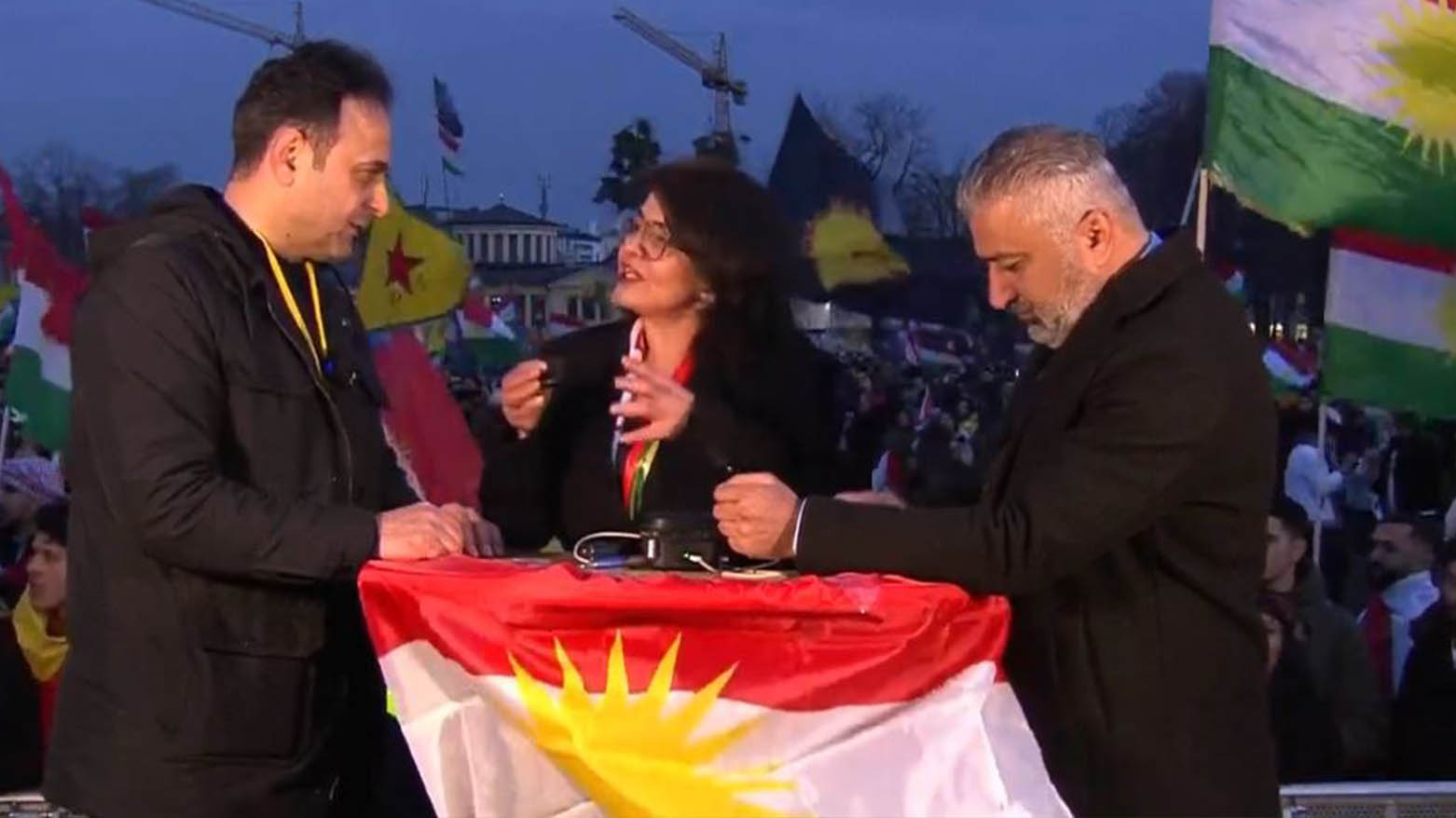
The Bonn rally also followed earlier reporting by Kurdistan24 that described the event as drawing tens of thousands of participants and featuring messages from European officials and Kurdish leadership.
That report said the demonstration was organized by the Kurdistani Diaspora Confederation and included a message from President Barzani, read to the crowd by Shifa Barzani, Director General of the Confederation, praising the unified stance of Kurds abroad.
According to that coverage, the gathering was framed as a response to developments in northern Syria and concerns over the security and rights of Kurdish communities in Rojava. Organizers and speakers emphasized peaceful, coordinated participation and described the rally as a significant moment for transforming cultural solidarity into diplomatic engagement.
Taken together, the remarks by Şivan Perwer and Qaraman Osman portrayed the Bonn demonstration as both a symbolic and practical assertion of Kurdish unity. Perwer emphasized vigilance, resistance, and cultural values, while Osman focused on organization, diplomacy, and the role of leadership in sustaining diaspora cohesion.