Coordination Framework Delegation Heads to Erbil for Talks on Iraq’s Presidency
Visit aims to bridge gaps between KDP and PUK as political deadlock deepens amid U.S. pressure and stalled parliamentary sessions.
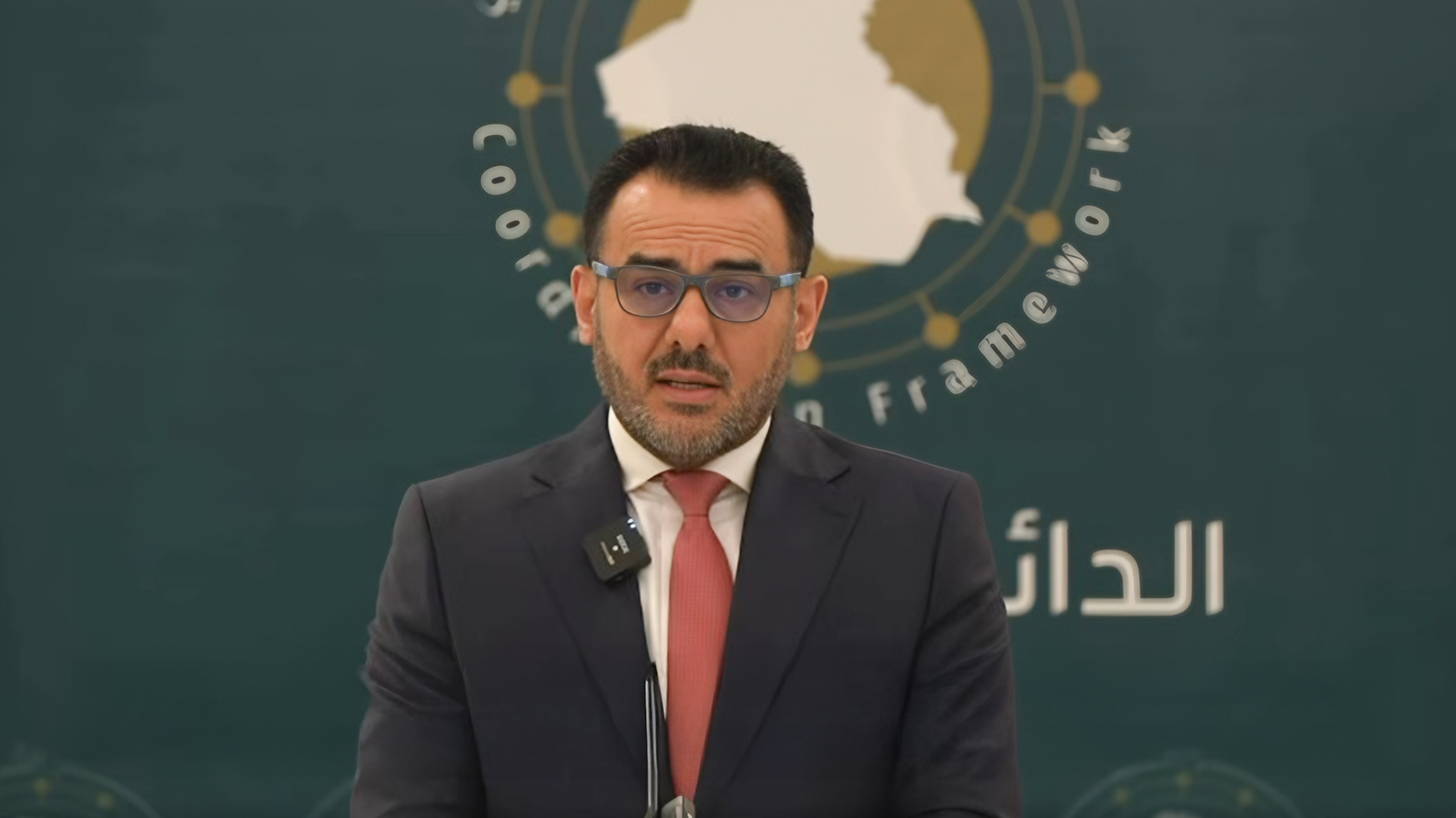
ERBIL (Kurdistan24) — A senior-level delegation from Iraq’s Shiite-led Coordination Framework is scheduled to visit Erbil on Monday, as part of renewed efforts to resolve the prolonged deadlock over the country’s presidency.
The delegation will hold meetings with the Kurdistan Democratic Party (KDP) and the Patriotic Union of Kurdistan (PUK), focusing primarily on unifying positions over the presidential post, according to Abbas al-Amiri, the Secretary-General of the Coordination Framework.
The visit comes amid intensifying political pressure and repeated delays in parliament’s presidential vote. Earlier, al-Amiri announced that a senior delegation comprising Prime Minister Mohammed Shia al-Sudani, Badr Organization leader Hadi al-Amiri, and Deputy Speaker Mohsen al-Mandalawi would visit both Erbil and Sulaimani.
He said the trip follows a final decision taken at the most recent Coordination Framework meeting and aims to foster understanding between the KDP and the PUK. al-Amiri stressed that the primary objective of the visit is to resolve the presidency issue by narrowing differences in viewpoints and reaching a political consensus.
Abdulrahman al-Jazairi, a member of the State of Law Coalition, told Kurdistan24 that the Erbil visit represents a “decisive step,” explaining that discussions will center on two sensitive files: the presidency and the nomination of Iraq’s next prime minister.
The visit comes as Iraq’s political impasse shows little sign of easing. Iraqi Foreign Minister Fuad Hussein emphasized that it would have been preferable for the PUK and KDP to agree on a consensus candidate, warning that failure to do so would leave the decision to parliament.
Meanwhile, Iraq’s parliament has once again postponed the election of a new president after failing to reach the required quorum, marking the second delay in as many weeks. Parliamentary officials said Speaker Haibat al-Halbousi will now meet bloc leaders to determine a final date for the vote.
By political convention, Iraq’s prime minister is Shiite, the parliament speaker Sunni, and the presidency—largely ceremonial—is held by a Kurd. However, the two main Kurdish parties have yet to settle on a unified candidate. While the presidency traditionally goes to the PUK, the KDP has this year nominated its own candidate, Foreign Minister Fuad Hussein.
On the Shiite front, the Coordination Framework has reiterated its backing of former Prime Minister Nouri al-Maliki as its nominee for the premiership, rejecting what it described as foreign interference.
The bloc insists that choosing the prime minister is an internal constitutional matter, even as it calls for balanced relations with the international community.
The issue has drawn sharp reactions from Washington. U.S. President Donald Trump recently described Maliki as a “very bad choice,” warning that the United States would end all support to Iraq if he returned to office.
Sources close to the Coordination Framework say Shiite leaders remain divided, with some urging Maliki to step aside to avoid potential U.S. sanctions.
Iraq’s political paralysis reflects a broader struggle to balance relations between the United States and Iran, amid fragile economic conditions and persistent foreign pressure. Until a Kurdish consensus on the presidency is reached and parliament can convene with a quorum, key constitutional steps—including the appointment of a new prime minister—are likely to remain stalled.