New Hasakah Security Chief Pledges Cooperative, Phased Implementation of Damascus-SDF Accord
Hasakah's new security director confirmed the phased implementation of the SDF-Damascus deal, pledging joint stability efforts with Asayish forces. The deployment occurred without tension, as similar moves took place in Kobani.
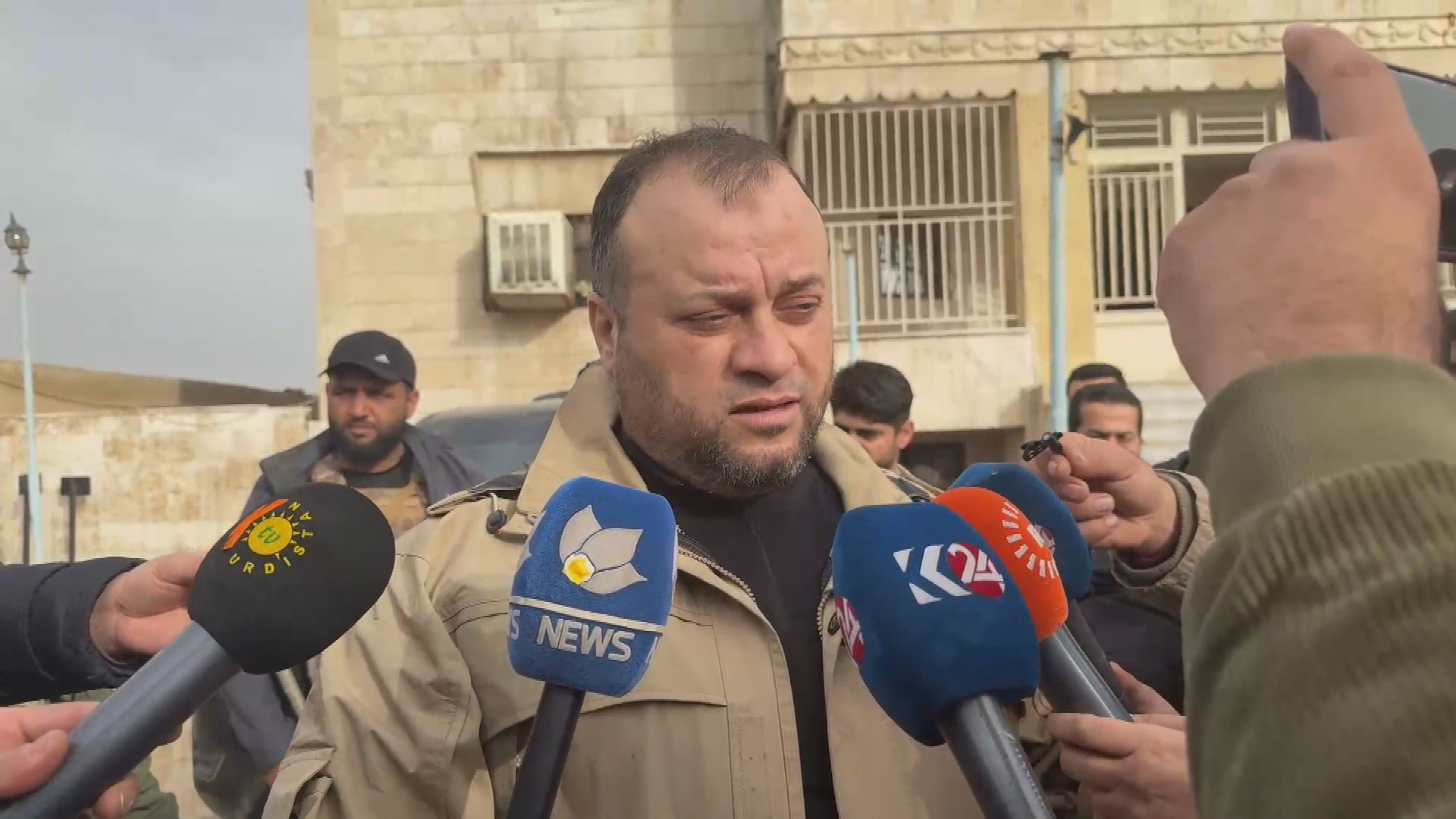
ERBIL (Kurdistan24) - The newly appointed Director of Hasakah Security announced on Monday that the integration of Syrian Ministry of Interior forces into the city is proceeding in strict accordance with the bilateral agreement signed between the Syrian government and the Syrian Democratic Forces (SDF).
Following the entry of government security units into the city on February 2, 2026, officials from both sides confirmed that the deployment aims to jointly restore stability to the region through a careful, phased implementation process.
Marwan Ali, who has assumed the role of Director of Hasakah Security, addressed the media shortly after the arrival of the interior forces to outline the operational philosophy of the new arrangement. In a press statement, Ali confirmed that the deployment was a direct result of the framework established by the recent accord.
"We have arrived in accordance with an agreement, and together we will protect the stability of the region," Ali said.
He emphasized that the execution of the deal's provisions would not be immediate but rather that "all articles of the agreement will be implemented step-by-step," suggesting a deliberate pace intended to prevent friction.
Highlighting the collaborative nature of the new security architecture, Ali noted that his forces would not operate in isolation but would work in tandem with existing local forces.
"In coordination with the internal security (Asayish) affiliated with the SDF, we will protect the area together," he stated. He expressed confidence in the rapid normalization of the security situation under this joint command, predicting that "in the coming days, everything will return to its proper course."
This sentiment of cooperation was formally echoed by Syamand Afrini, the newly appointed Deputy Director of Hasakah Security who was nominated by the SDF.
In a separate press release, Afrini confirmed that the entry of Syrian internal forces into Hasakah was fully coordinated with local Kurdish authorities. He reported that the transition occurred without incident, noting that "no tensions or complications occurred between the two sides" during the initial deployment of government vehicles.
The developments in Hasakah are part of a broader synchronized movement across Western Kurdistan (Rojava). Earlier on Monday, a convoy of 20 vehicles belonging to Syrian internal forces entered the city of Kobani. Expectations remain that a similar group will deploy to Qamishlo in the near future to fulfill the mandates of the announced agreement.
The operational shifts on the ground follow the disclosure of the agreement's terms by Mazloum Abdi, the General Commander of the SDF.
On Friday, January 30, 2026, Gen. Abdi outlined the specifics of the pact with the Damascus government, characterizing it as a necessary measure signed with the specific objective of "protecting the people and preventing massacres."
Under the terms of the deal, the region’s security apparatus is undergoing a significant structural realignment. The agreement stipulates that the Asayish internal security forces will become part of the Syrian Ministry of Interior, assuming the primary duty of protecting city centers.
Crucially, the text mandates that the regular Syrian Army will not enter Kurdish cities or villages. Meanwhile, the SDF is set to be integrated into the Syrian Ministry of Defense, though it will retain its organizational cohesion as brigades and military units stationed within their own regions.
Beyond security, the accord addresses key administrative and cultural issues. It formalizes education in the Kurdish language within schools and universities and transitions employees of the Autonomous Administration into the state civil service, while ensuring that regional administration remains "in the hands of the local people."
Regarding Kobani, the agreement dictates that the siege on the city be lifted and that military forces withdraw to the outskirts.
Gen. Abdi acknowledged that while the agreement does not satisfy all SDF aspirations, it represented the "best option for protecting their gains at this stage." He further noted that the United States and France are fully aware of the details and will serve as political guarantors for the implementation of the pact.