Syrian Government Forces Deploy in Qamishlo as Curfew Takes Effect Under Security Accord
Syrian Interior Ministry forces deployed 125 personnel into Qamishlo on Tuesday amid a strict curfew. The operation includes the handover of the airport to state control, following similar deployments in Hasakah and Kobani under the SDF-Damascus accord.
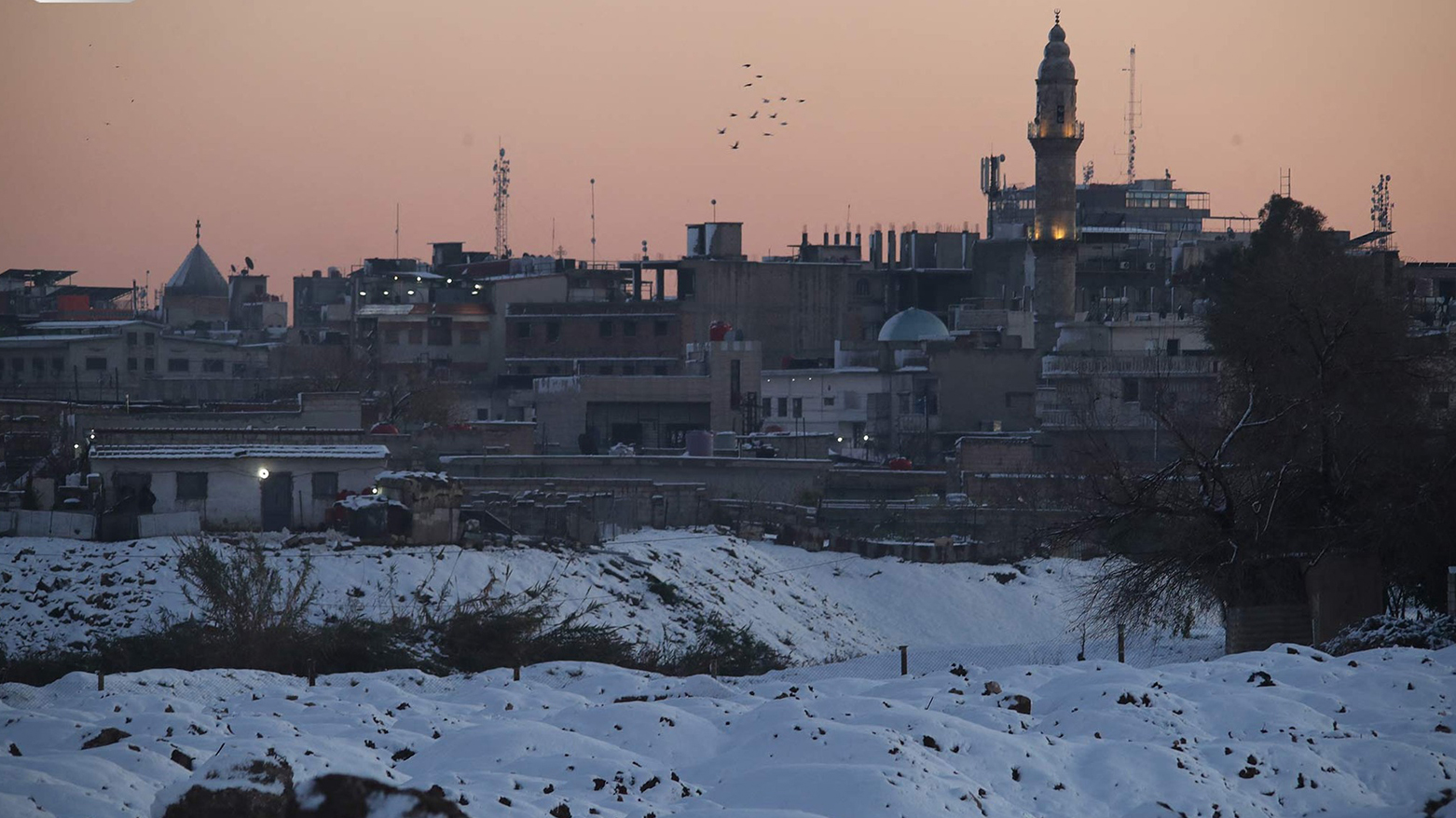
ERBIL (Kurdistan24) - Syrian Ministry of Interior forces commenced their deployment into the city of Qamishlo on Tuesday, marking a critical phase in the implementation of the comprehensive security agreement between the Syrian Democratic Forces (SDF) and the central government in Damascus.
The entry of state security personnel coincided with a dawn-to-dusk curfew imposed by local internal security authorities, signaling a major shift in the administrative and security architecture of northeastern Syria.
According to reporting by Kurdistan24, a strict curfew was announced for Qamishlo on Tuesday, February 3, 2026, effective from 6:00 a.m. to 6:00 p.m. Amid these restrictions, a contingent of Syrian Ministry of Interior forces consisting of 125 personnel entered the city limits.
The deployment is part of a broader framework designed to reintegrate the region’s internal security apparatus, known as the Asayish, with the national police force, while simultaneously transferring control of strategic infrastructure back to state authorities.
A Kurdistan24 correspondent in Qamishlo reported that the implementation plan for Tuesday includes the formal handover of Qamishlo Airport to Syrian government forces later in the day. This transfer of aviation infrastructure, alongside the control of border crossings, represents the first phase of the accord signed on January 29, 2026.
Following the secure transfer of the airport and borders, the agreement stipulates that key oil fields, specifically Rumailan and Suwaydiya, will also be returned to the administration of the Damascus government in a subsequent phase.
The developments in Qamishlo follow a similar deployment the previous day in the neighboring city of Hasakah and the town of Kobani.
On Monday, February 2, the implementation of the agreement faced immediate challenges. While the transition in Kobani was described by observers as peaceful—with a convoy of 20 vehicles and approximately 100 personnel entering without confrontation—the situation in Hasakah was more volatile.
During the curfew in Hasakah on Monday, a Kurdistan24 correspondent witnessed an explosion in the city’s Panorama area while reporting live.
The incident, described as a shell landing in close proximity to the broadcast team, underscored the fragility of the security transition. Despite the disruption, the formal mechanisms of the agreement proceeded, with Syrian government security forces stationing themselves within Hasakah’s "Security Square."
The comprehensive agreement, the details of which were outlined by SDF General Commander Mazloum Abdi, mandates a radical restructuring of military and civil governance in the region. Under the terms of the deal, the SDF is set to be integrated into the Syrian Ministry of Defense, forming a new division comprising approximately 16,000 personnel organized into three brigades.
Concurrently, the SDF is required to withdraw its military units from urban centers to agreed-upon bases on the outskirts. In a reciprocal move designed to demilitarize the cities, the regular Syrian Army is required to withdraw its units to the town of Shaddadi, south of Hasakah.
The accord also addresses significant administrative issues. It guarantees that the Asayish forces will become part of the Ministry of Interior, tasked specifically with protecting city interiors. Civil administration institutions are to be transferred to official state jurisdiction, with provisions ensuring that current employees are absorbed into the national civil service.
Furthermore, the agreement formalizes Kurdish language education in schools and universities, addressing a long-standing demand of the local population.
Political guarantors for the agreement include the United States and France, according to statements by Commander Abdi. The pact has also received endorsement from the Kurdish National Council in Syria (KNC), which characterized the agreement as a necessary step toward ending instability and facilitating the return of displaced persons.
As the curfew in Qamishlo remains in force throughout Tuesday, the focus of the transition remains on the seamless transfer of authority and the prevention of security breaches similar to the incident in Hasakah.
The successful handover of Qamishlo Airport and the integration of the 125-member interior ministry force are viewed as litmus tests for the viability of the broader reconciliation roadmap between the Kurdish-led administration and the Syrian state.