Trump Announces U.S.–India Trade Deal, Cuts Tariffs as Markets Surge
Indian PM Narendra Modi hails tariff cuts after “wonderful” call with Trump, remains silent as U.S. president says India agreed to halt Russian oil purchases.
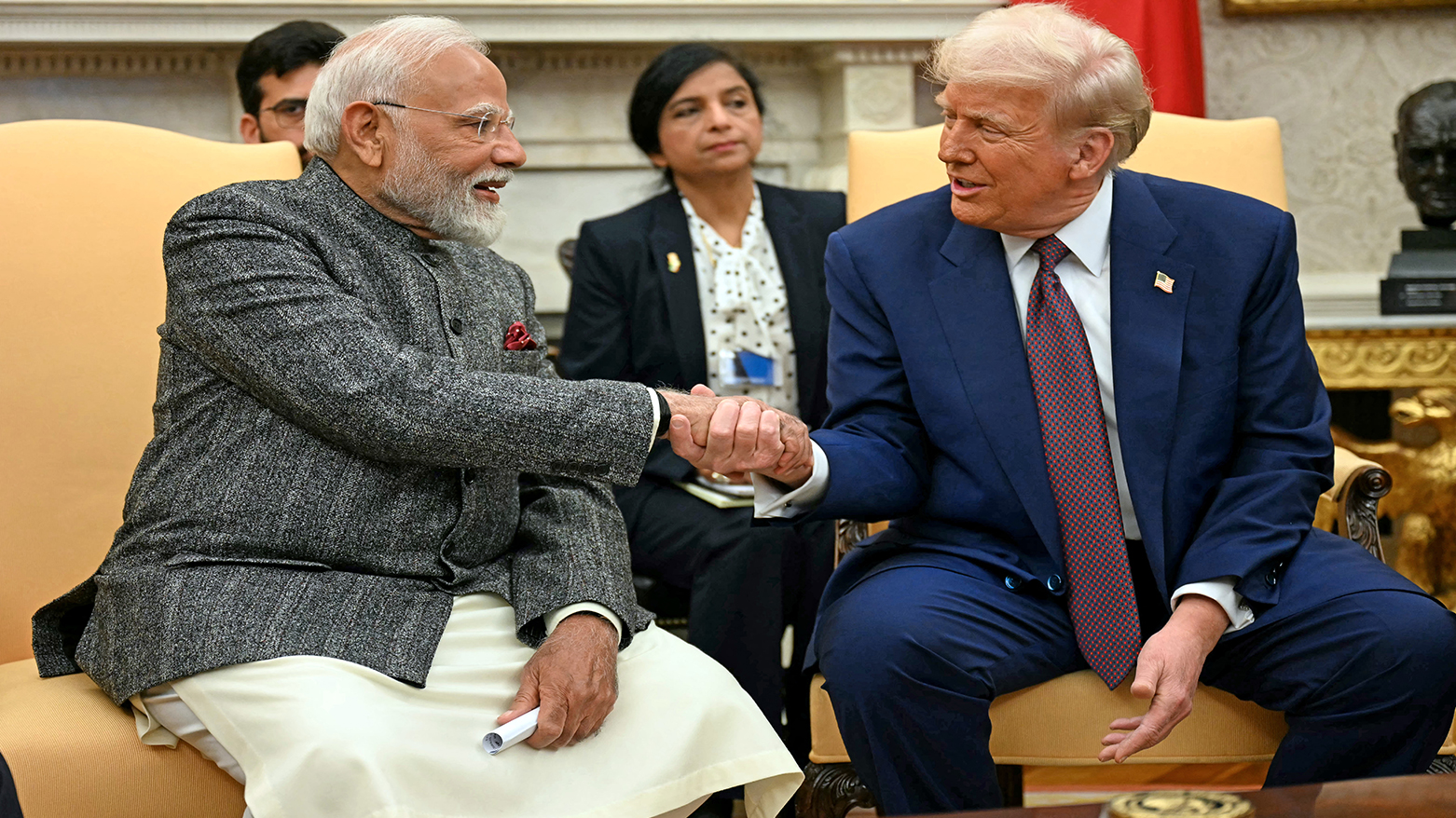
ERBIL (Kurdistan24) — U.S. President Donald Trump announced a trade deal with India on Tuesday that will significantly reduce tariffs on Indian goods, triggering a sharp rally in Mumbai’s stock markets and easing months of economic and diplomatic tensions between the two countries.
Trump said Washington would cut tariffs on Indian exports to 18 percent, down from the 25 percent “reciprocal” duties imposed last year, while also scrapping an additional 25 percent levy introduced over India’s continued purchases of Russian oil amid the war in Ukraine.
The announcement sent India’s benchmark Nifty index soaring nearly five percent at the opening bell.
The U.S. president linked the agreement directly to energy and geopolitical commitments, claiming Indian Prime Minister Narendra Modi had agreed to stop buying Russian oil and instead increase purchases from the United States and potentially Venezuela.
“This will help END THE WAR in Ukraine,” Trump said in a post on Truth Social, adding that India would also buy more than $500 billion worth of U.S. energy, technology, agricultural, coal, and other products.
“Out of friendship and respect for Prime Minister Modi, and as per his request, effective immediately, we agreed to a Trade Deal between the United States and India,” Trump wrote, describing Modi as “one of my greatest friends.”
A White House official confirmed that the extra 25 percent tariff imposed in August over India’s Russian oil imports would be dropped as part of the deal.
Modi welcomed the easing of tariffs, calling his phone call with Trump “wonderful” and praising the reduction of duties on “Made in India” products. However, the Indian leader made no public reference to Trump’s assertion that New Delhi would halt purchases of Russian oil, a sensitive issue given India’s energy security needs and longstanding ties with Moscow.
India emerged as a major buyer of discounted Russian crude after the start of the Ukraine war, providing Moscow with a crucial export outlet as Europe sharply curtailed imports. In 2024, Russia accounted for nearly 36 percent of India’s crude oil imports, or about 1.8 million barrels per day.
The announcement follows months of strained negotiations, during which India struggled to secure a deal while Washington struck agreements with most other major trading partners after Trump unveiled sweeping “Liberation Day” tariffs last year.
The absence of a pact rattled investors, contributed to capital outflows of more than $20 billion from Indian markets, and put sustained pressure on the rupee.
Indian exporters and industry groups welcomed the breakthrough. The Federation of Indian Export Organizations described it as the “father of all deals,” predicting a rapid surge in orders across several sectors.
Apparel and footwear manufacturers, who had seen U.S. orders delayed due to high tariffs, are expected to benefit immediately. Markets also reacted positively, with investors interpreting the deal as a sign of renewed strategic alignment between Washington and New Delhi.
Modi was among the first foreign leaders to visit the White House after Trump’s return to office, but talks had repeatedly stalled over what analysts call “the Russia question.”
Experts, however, urged caution. Analysts noted the lack of a joint statement or detailed framework outlining sectoral coverage, timelines, and enforcement mechanisms.
“The devil will be in the details,” said Tanvi Madan of the Brookings Institution, suggesting that a recent EU–India trade accord may have pushed Washington to accelerate its own agreement.
Others warned that unresolved issues—particularly agriculture—could resurface. India has long resisted opening its politically sensitive farming sector to greater U.S. access, while Trump has suggested India could move toward zero tariffs on American goods.
Economists and trade experts stressed that the headline figures, including the $500 billion purchase pledge, remain aspirational without clear benchmarks.
Despite the uncertainties, the deal marks a major political and economic signal, restoring momentum to U.S.–India ties at a time of global trade realignments, geopolitical pressure over Ukraine, and renewed efforts by Washington to reshape global energy and supply chains.