PM Masrour Barzani Says Kurds in Syria Have Suffered Greatly and Deserve Recognition
Masrour Barzani said at the World Governments Summit in Dubai that the SDF–Damascus agreement could bring stability to Syria if it respects all components, stressing that Kurds in Syria have suffered greatly and deserve recognition.
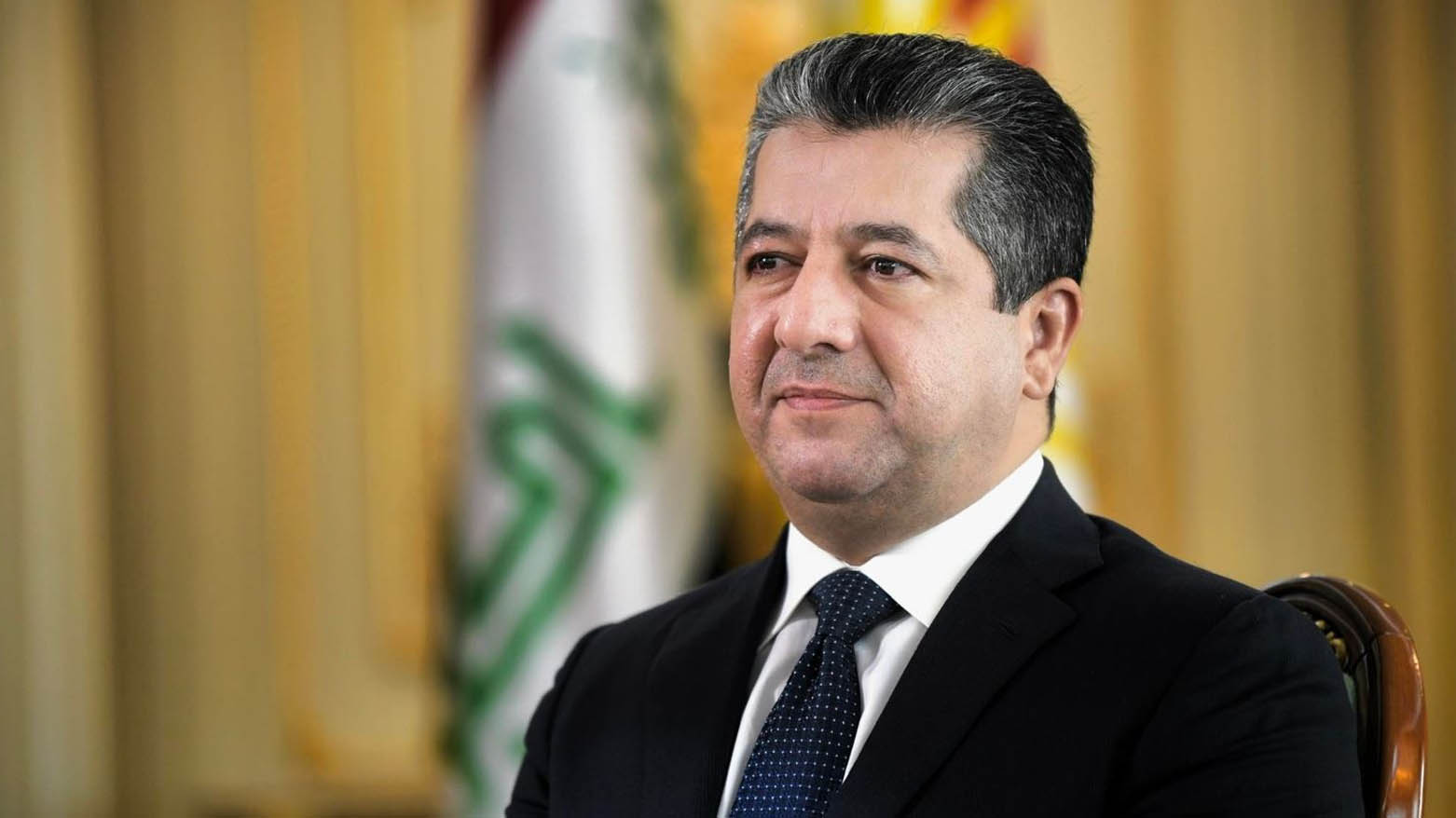
ERBIL (Kurdistan24) - From the stage of the World Governments Summit in Dubai, Kurdistan Region Prime Minister Masrour Barzani weighed in on the latest agreement between the Syrian Democratic Forces (SDF) and the Syrian government, stressing hope for lasting stability and the need to recognize the long-suffering Kurdish people of Syria.
As political and security arrangements in northeastern Syria move into a decisive phase, Prime Minister Masrour Barzani used an international platform in Dubai to underline that peace in Syria cannot be achieved without acknowledging the sacrifices and rights of its Kurdish population, who, he said, have endured profound suffering.
On Tuesday, Masrour Barzani, Prime Minister of the Kurdistan Region, spoke to journalists on the sidelines of the World Governments Summit in Dubai, where he addressed the recently announced agreement between the Syrian Democratic Forces (SDF) and the Syrian government.
Referring to the deal, Barzani expressed cautious optimism that it could mark a turning point in Syria’s prolonged crisis. He said:
“We are hopeful that this will be the beginning of a more sustainable agreement between the two sides, which will bring peace and stability to the country, with respecting the rights of all the components of Syria, including the Kurdish people who have suffered a lot and they deserve to be recognized and respected.”
📹Kurdistan’s PM Barzani said at the World Governments Summit in Dubai that he hopes recent Damascus-SDF negotiations will lead to a “more sustainable agreement” in Syria, emphasizing respect for all communities, including Kurds who have long faced hardship.
— Kurdistan 24 English (@K24English) February 3, 2026
PM Barzani stressed… pic.twitter.com/WqMaf9VaHr
His remarks came as the agreement entered its implementation phase on the ground, with security, administrative, and institutional changes unfolding across several cities in western Kurdistan.
The comments by the Kurdistan Region prime minister coincided with significant developments in Qamishlo and Hasakah under the SDF–Damascus security accord.
On Tuesday, Syrian Ministry of Interior forces began deploying into the city of Qamishlo, with a contingent of 125 personnel entering amid a strict curfew imposed from 6:00 a.m. to 6:00 p.m. by local internal security authorities. The deployment marked a critical stage in the agreement, which aims to reintegrate the region’s internal security forces, known as the Asayish, into the national police structure.
According to Kurdistan24 reporting, the plan for the day included the formal handover of Qamishlo Airport to Syrian government control, alongside steps to reassert state authority over border crossings. These measures represent the first phase of the agreement signed on Jan. 29, 2026.
The developments in Qamishlo followed similar deployments in Hasakah and Kobani. On Monday, Feb. 2, the transition in Kobani proceeded without confrontation, as a convoy of twenty vehicles carrying approximately 100 personnel entered the city peacefully. In contrast, the situation in Hasakah proved more volatile.
During the curfew in Hasakah on Monday, a Kurdistan24 correspondent witnessed an explosion in the Panorama area while reporting live. The shell landed close to the broadcast team, highlighting the fragility of the security transition. Despite the incident, Syrian government security forces proceeded to station themselves in the city’s “Security Square.”
The broader agreement, as outlined by SDF General Commander Mazloum Abdi, calls for a comprehensive restructuring of military and civil governance in northeastern Syria. Under its terms, SDF forces are to be integrated into the Syrian Ministry of Defense as a new division of approximately 16,000 personnel organized into three brigades, while withdrawing from urban centers to agreed military bases.
In parallel, regular Syrian Army units are required to pull back to the town of Shaddadi, south of Hasakah, as part of efforts to demilitarize major cities. The accord also stipulates that Asayish forces will be incorporated into the Ministry of Interior and tasked with protecting city interiors.
Administratively, civil institutions are to be transferred to official state jurisdiction, with guarantees that current employees will be absorbed into the national civil service. The agreement further formalizes Kurdish language education in schools and universities.
Political guarantees for the deal, according to Commander Abdi, are provided by the United States and France, while the Kurdish National Council in Syria (KNC) has endorsed the agreement as a necessary step toward ending instability and enabling the return of displaced persons.
As implementation unfolds amid curfews, deployments, and institutional handovers, Masrour Barzani’s remarks from Dubai underscored a central message: any sustainable peace in Syria, he said, must be built on stability, dialogue, and recognition of the Kurdish people who have borne heavy costs throughout the conflict.