Amid Budget Delays, Kurdistan Secures Oil Deal Extension and Expands 24-Hour Power Coverage
Kurdistan Region extends its oil export agreement with Baghdad until March 31, 2026, as the acting natural resources minister says over 1.2 million subscribers now receive twenty-four-hour electricity under the Runaki project.
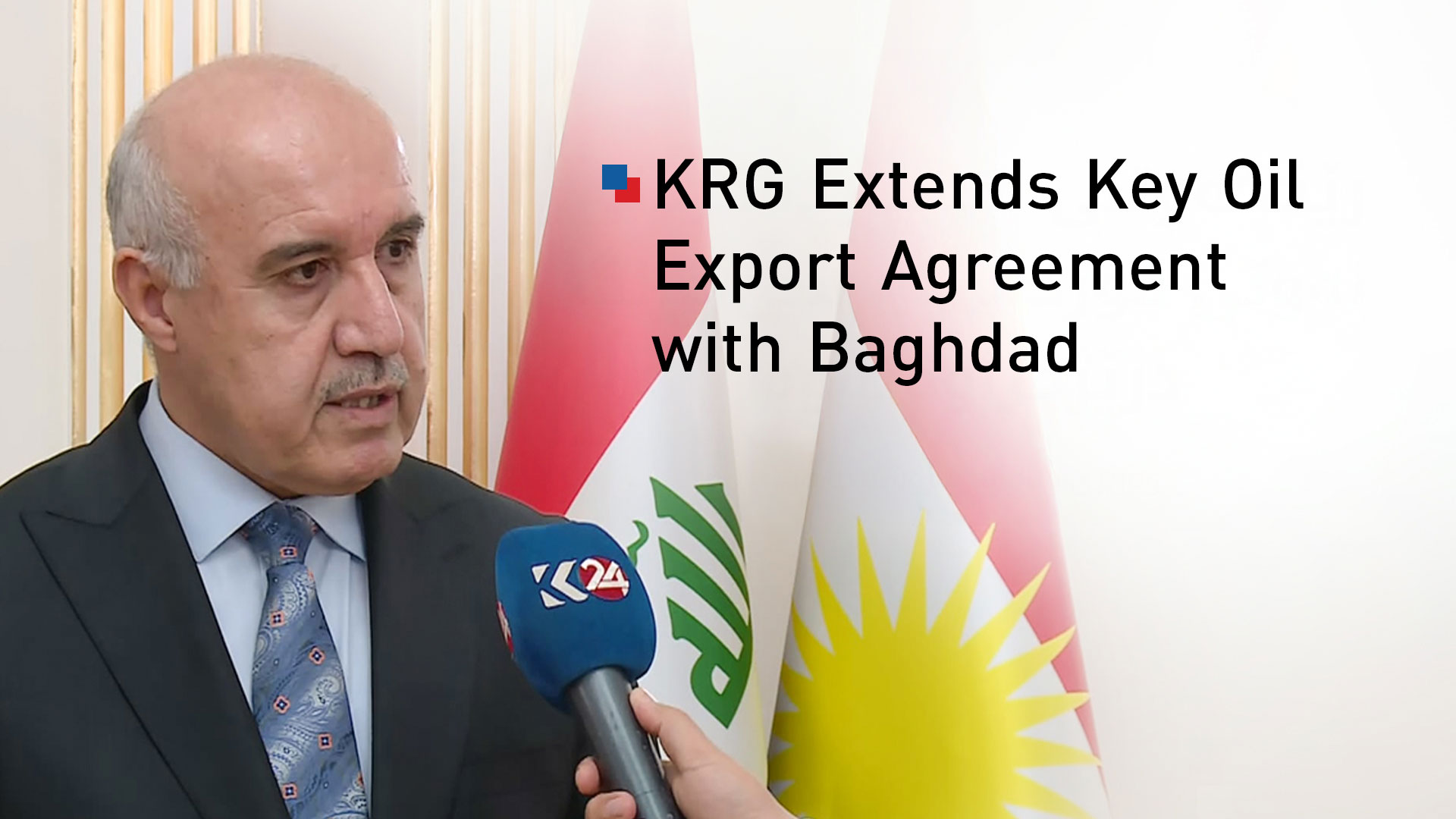
ERBIL (Kurdistan24) - With oil exports continuing and power grids running without interruption for a growing share of households, the Kurdistan Region’s acting Minister of Natural Resources announced the extension of a key oil export agreement and detailed significant progress toward universal, twenty-four-hour electricity supply across the Region.
On Wednesday, Kamal Mohammed Saleh, Acting Minister of Natural Resources of the Kurdistan Regional Government, provided a detailed briefing to Kurdistan24 correspondent Hoshmand Sadiq on the status of oil exports and electricity provision.
Addressing the oil file, Saleh said the agreement governing the export of Kurdistan Region oil—signed under the framework of the federal budget laws for 2023, 2024, and 2025—has been extended for an additional three months due to the absence of a newly approved Iraqi federal budget. He stated: “The agreement will remain in effect until March 31, 2026.”
He stressed that the extension does not mean the agreement has been revoked, confirming that export operations will continue without interruption. However, he noted that the final outcome of the arrangement remains linked to the formation of a new Iraqi federal government and the approval of a new budget law.
According to the minister, daily oil production currently ranges between 200,000 and 250,000 barrels. Of this amount, 50,000 barrels are allocated to domestic needs, while the remaining volumes are exported through Iraq’s State Organization for Marketing of Oil (SOMO).
Saleh also revealed that the Kurdistan Regional Government has contracted the British firm Wood Mackenzie, an international energy consultancy, to assess the costs of oil production and transportation in the Region. He said the company is expected to complete its report within ninety days.
Turning to electricity, Saleh disclosed that the total number of electricity subscribers in the Kurdistan Region stands at 1,963,000. Of these, more than 1.2 million subscribers currently benefit from twenty-four-hour electricity under the ‘Runaki’ project.
He explained that beneficiaries include residential households, commercial entities, industrial facilities, and the agricultural sector. At present, nearly seventy-five percent of subscribers receive continuous electricity.
“The ministry’s plan is to fully cover the remaining twenty-five percent by the end of this year and provide uninterrupted electricity to everyone,” Saleh said.
Discussing the role of foreign companies, the minister noted that major German firms, including ABB and Siemens, play a significant role in the Kurdistan Region’s electricity sector. He added that more than 4,000 megawatts of generated power come from stations operating with advanced German technology.
As oil exports proceed under an extended framework and electricity coverage steadily expands, the Kurdistan Region’s energy strategy is entering a phase defined by continuity, technical assessment, and a stated goal of round-the-clock power for all subscribers.