Qamishlo Airport Handed to Syrian Authorities as SDF-Damascus Agreement Progresses
Qamishlo Airport was handed to Damascus on Feb. 4, 2026, as the third phase of the SDF–Syria agreement began. Syrian interior forces entered the site after Russian units withdrew.
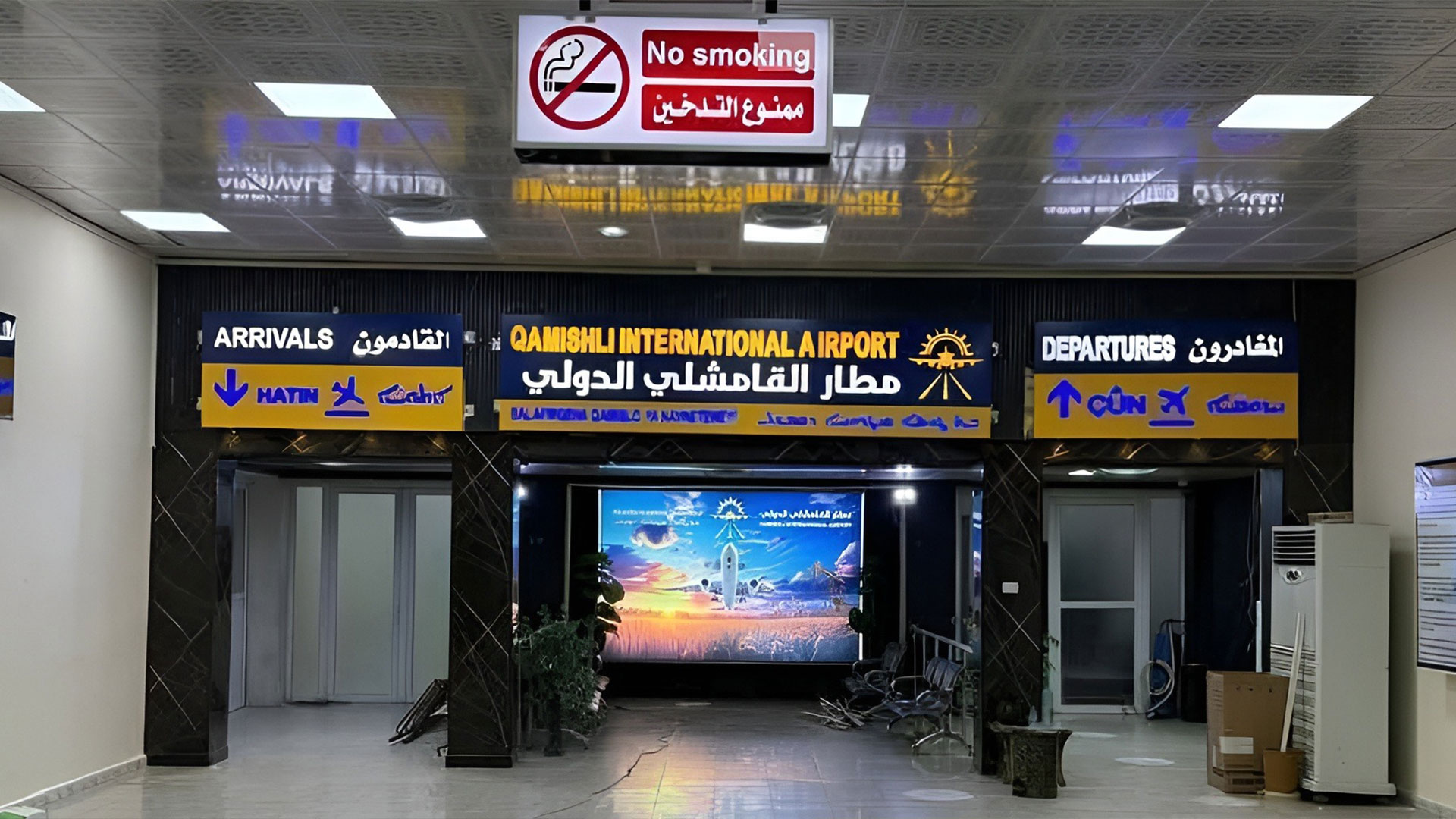
ERBIL (Kurdistan24) - Under the watch of shifting uniforms and newly opened gates, Qamishlo Airport changed hands as the third phase of the agreement between the Syrian Democratic Forces (SDF) and the Syrian government entered force on Wednesday, Feb. 4, 2026, marking a decisive step in the transfer of sensitive sites and security authority.
Within the framework of the agreement between the Syrian Democratic Forces and the Syrian government, Qamishlo Airport was handed back to the authorities in Damascus on Wednesday. Interior security forces of Syria entered the facility, while a number of government employees took positions at the gates.
The implementation comes as part of the third phase of the SDF–Damascus agreement. In subsequent stages, oil fields are also scheduled to be transferred to the Syrian government.
On the previous day, a unit from the Syrian Ministry of Interior, composed of 125 members and fifteen military and civilian vehicles, entered Qamishlo and was deployed at security points across the city.
On Jan. 26, 2026, Dilan Barzan, Kurdistan24 correspondent in Western Kurdistan (northern Syria), reported that Russian forces had begun withdrawing from Qamishlo Airport several days earlier. On the same day, a number of tanks and additional military vehicles were also relocated.
According to Kurdistan24’s correspondent, soldiers, vehicles, and military equipment were transferred from Qamishlo Airport to Russian military bases in Latakia on the Syrian coast.
Since 2019, Russia had used Qamishlo Airport to monitor northeastern Syria and confront ISIS.
Following the signing of the agreement between the SDF and the Syrian government, the full text of its provisions was released:
The first clause announces a permanent and comprehensive ceasefire, halting all arrest campaigns and raids, while maintaining SDF control of ISIS prisons and ensuring full logistical support for transfer operations.
The second clause provides for the withdrawal of SDF military forces from Hasaka and Qamishlo to agreed military positions, while the Syrian army simultaneously withdraws to the town of Shaddadi in southern Hasaka.
Under the third clause, the Syrian Ministry of Defense will form a special military division for Hasaka province, with SDF forces integrated into it within three brigades.
The fourth clause stipulates the integration of Kobani forces as a brigade under a military division of Aleppo province.
The fifth clause concerns security affairs and the Ministry of Interior, allowing the entry of fifteen security vehicles into each of Hasaka and Qamishlo to strengthen security and stability, and initiating the integration of SDF internal security forces (Asayish) into the Ministry of Interior.
The sixth clause regulates senior appointments: the governor of Hasaka will be nominated by the SDF, the provincial police and security commander will be nominated by the Syrian government, and the deputy minister of defense will be nominated by the SDF.
The seventh clause orders the handover of sensitive sites, including the Rmeilan and Sweidiya oil fields, with their civilian employees integrated into the Ministry of Oil, and the transfer of Qamishlo Airport to the civil aviation authority.
The eighth clause addresses border crossings, sending a team from the border directorate to the Semalka and Nusaybin crossings to formalize civilian staff, prevent the use of crossings for weapons and foreign fighters, and ensure their immediate reopening.
The ninth clause places all civilian institutions in Hasaka province under Syrian government supervision, merging autonomous administration bodies into state institutions and regularizing civilian employees.
The tenth clause bans the entry of military forces into cities and towns by all sides, particularly in Kurdish areas.
The eleventh clause mandates the settlement and recognition of all certificates issued by schools, institutes, and universities under the Autonomous Administration of North and East Syria.
The twelfth clause grants licenses to all local organizations, cultural groups, and media institutions under the laws of the relevant ministries.
The thirteenth clause provides for cooperation with the Ministry of Education to discuss Kurdish language instruction and to take educational characteristics into account.
The fourteenth clause guarantees the return of all displaced persons to their cities and villages, including Afrin, Sheikh Maqsoud, and Sere Kaniye, and the appointment of local administrators within the civil administrations of those areas.
With gates reopened and authority redefined, Qamishlo Airport stands as the first visible marker of a wider transformation now unfolding under the SDF–Damascus agreement.