Trump Warns Iran’s Supreme Leader ‘Should be Very Worried’ Amid Nuclear Tensions
Trump warned Iran’s supreme leader “should be very worried,” citing US strikes and claims Tehran seeks to restart its nuclear program, as Washington and Tehran prepare to resume nuclear talks in Muscat under regional pressure.
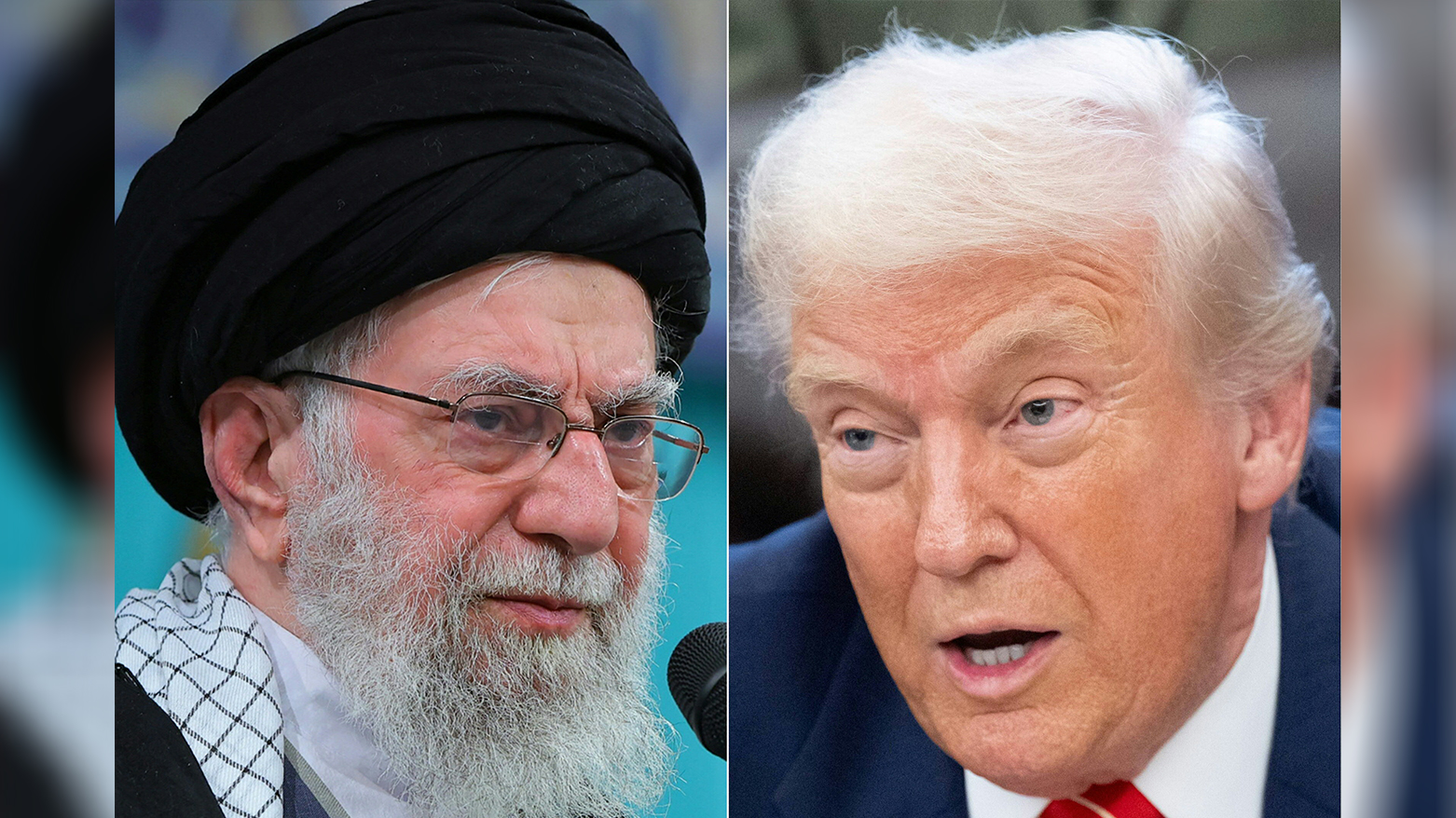
ERBIL (Kurdistan24) - In a stark warning delivered during a televised interview, U.S. President Donald Trump said Iran’s supreme leader Ayatollah Ali Khamenei “should be very worried,” as Washington and Tehran face escalating tensions over Iran’s nuclear program and uncertain diplomatic prospects.
Speaking to NBC News on Wednesday, Trump said, “I would say he should be very worried, yeah. He should be.”
He said tensions between the United States and Iran have intensified in recent weeks, describing Iran as “a mess right now because of us,” and reaffirmed US support for protesters in the country. “We have had their back,” he said.
Trump said the US had carried out an operation targeting three nuclear facilities in Iran, referring to the strikes as “Operation Midnight Hammer.” “We went in, we wiped out their nuclear,” he said. “If I didn’t take out their nuclear, think of it, if we didn’t take out that nuclear, we wouldn’t have peace in the Middle East because the Arab countries could have never done that.”
He added that regional states had previously feared Tehran. “They were very, very afraid of Iran,” he said. “They’re not afraid of Iran anymore.”
Trump also claimed that Iran was attempting to restart its nuclear program. “They tried to go back to the site. They weren’t even able to get near it. There was total obliteration,” he said. He added that Iran had been considering building a new site elsewhere. “We found out about it. I said, you do that, ‘We’re going to do very bad things to you.’”
The United States has recently expanded its military presence near Iran, boosted by the arrival of the USS Abraham Lincoln and its strike group in the US Central Command area, along with additional fighter jets and cargo planes.
Officials from both countries are scheduled to meet in Oman on Friday to discuss Iran’s nuclear program. However,
According to Axios, after disputes over the location and format of the meeting nearly caused the talks to collapse, US officials confirmed that nuclear negotiations with Iran will take place in Muscat, the capital of Oman, on Friday.
The decision came after nine Arab countries urged the Trump administration not to abandon the diplomatic track, warning that a collapse of negotiations could push Washington toward a military option.
Axios, citing two US officials, reported on Wednesday, that plans for the talks were confirmed after Arab leaders directly contacted the Trump administration, pressing it to continue dialogue.
Originally, the United States proposed holding the talks in Istanbul with the participation of other regional states to address Iran’s nuclear file, missile program, and armed groups. Iran, however, insisted the meeting be held in Muscat and limited to a bilateral format focusing solely on the nuclear issue.
Sources said Washington initially rejected Tehran’s conditions, telling Iranian officials: “Either our terms or nothing.” But under pressure from Arab allies, the US eventually agreed.
One US official said the talks would go ahead if Arab states insisted, but stressed that Washington remains deeply skeptical of Iran’s intentions. Another said the decision reflected respect for regional allies and a willingness to give diplomacy a chance, while making clear that the US is “not naive.”
It was also reported that Steve Witkoff, the White House envoy, and Jared Kushner, Trump’s son-in-law and adviser, will travel to Qatar on Thursday before heading to Oman to take part in the talks. Earlier, Witkoff met Israeli Prime Minister Benjamin Netanyahu in Israel and received new intelligence on Iran, with Netanyahu stressing that Iran cannot be trusted.
Meanwhile, Iran’s Foreign Minister Abbas Araghchi wrote on X on Wednesday that negotiations over Tehran’s nuclear program with the United States will be held on Friday at 10:00 a.m. in Muscat.
Trump’s warning comes as diplomacy is revived under regional pressure, highlighting the fragile balance between military threats and renewed negotiations over Iran’s nuclear future.