Russia Says It Is No Longer Bound by Expired Nuclear Arms Treaty with U.S.
Russia says it is no longer bound by New START as the treaty expires, ending the last nuclear arms limits with the US. The UN and global leaders warn of a dangerous new phase and urge swift negotiations.
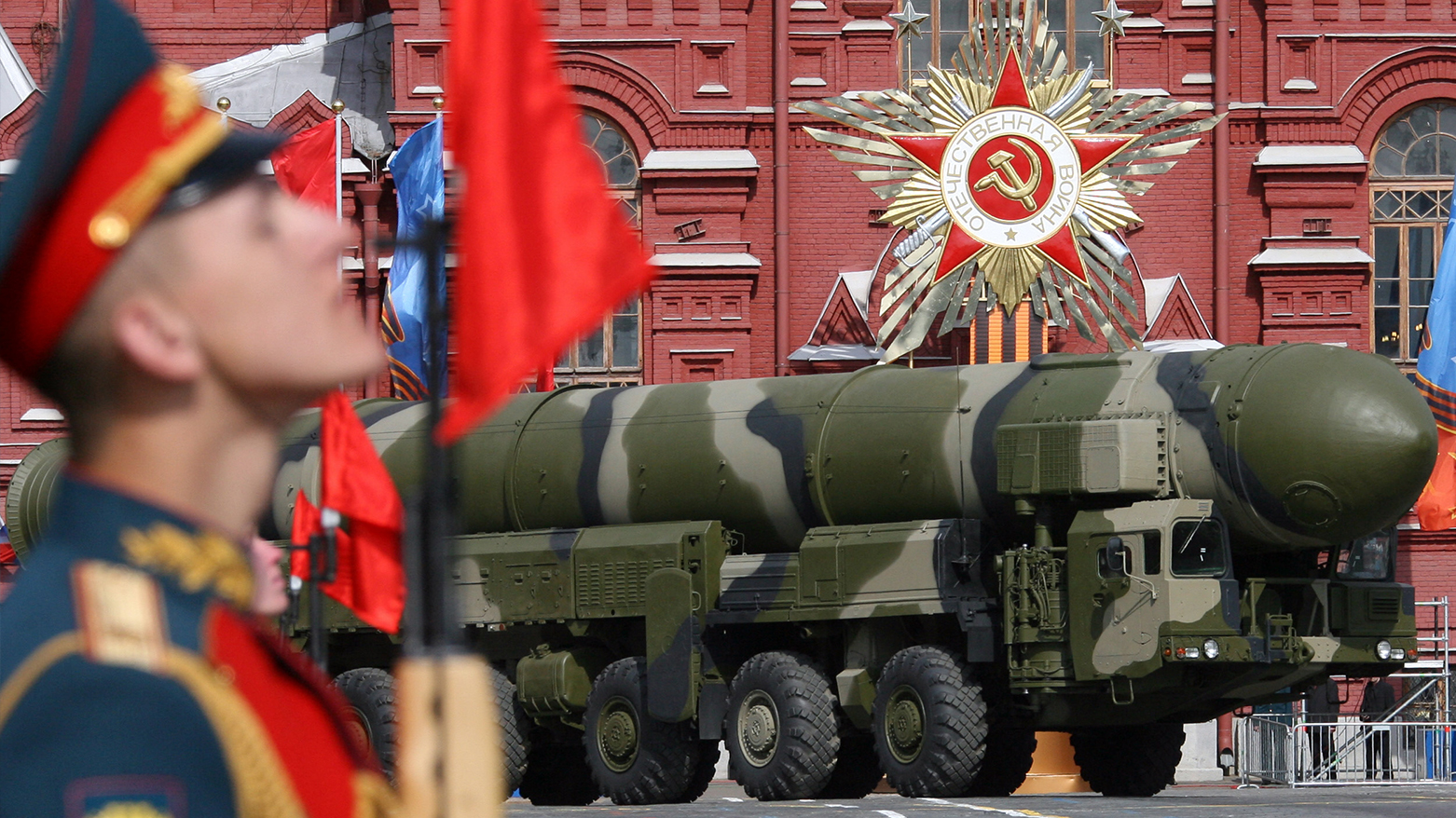
ERBIL (Kurdistan24) - As the final hours of the world’s last major nuclear arms control treaty slip away, Moscow has declared it is no longer “bound” by New START, formally closing a chapter that for more than a decade imposed limits on the strategic arsenals of Russia and the United States and signaling the arrival of a far more uncertain nuclear order.
Russia announced on Wednesday, Feb. 5, 2026, that it is no longer “bound” by the New START nuclear treaty with the United States, which expires on Thursday. The Russian Foreign Ministry said in a statement: “We assume that the parties to the New START treaty are no longer bound by any mutual obligations or declarations under the framework of the treaty.”
Moscow, however, said earlier that it would act “wisely and responsibly” in the nuclear sphere.
New START, signed in 2010, was the last remaining arms control agreement between Washington and Moscow. It capped each side at 800 launch platforms and heavy bombers, and 1,550 deployed strategic nuclear warheads, and included a verification mechanism.
The treaty’s expiration marks a shift toward a less regulated nuclear system, even though inspections were suspended in 2023 following Russia’s large-scale attack on Ukraine in February 2022.
During a Wednesday phone call with Chinese President Xi Jinping, Russian President Vladimir Putin stressed that Moscow “will act wisely and responsibly in this situation,” according to his diplomatic adviser Yuri Ushakov. Ushakov added: “We remain open to exploring ways to negotiate and ensure strategic stability.”
Washington has so far remained largely silent about its intentions. US Secretary of State Marco Rubio said on Wednesday that he had no announcement at present, adding that President Donald Trump would speak “later” on the matter, without giving a date.
Rubio said the United States wants to include China in any future talks. He told reporters: “The president has been clear in the past that in order to achieve real arms control in the twenty-first century, it is impossible to do something that does not include China, because of its vast and rapidly growing stockpile.”
The Kremlin had warned on Tuesday of the consequences of the treaty’s expiration, cautioning that the world could find itself “in a more dangerous situation than before.”
On Wednesday, Pope Leo XIV called for “preventing a new arms race” following the treaty’s end. He said: “I strongly urge you not to abandon this instrument without ensuring a concrete and effective follow-up,” adding that “it has become more urgent than ever to replace the logic of fear and mistrust with shared ethics.”
United Nations Secretary-General Antonio Guterres also called on Washington and Moscow to swiftly sign a new nuclear agreement, as the treaty was set to expire at what he described as a “grave moment for international peace and security.”
“The New START agreement will end Thursday, formally releasing both Moscow and Washington from a raft of restrictions on their nuclear arsenals,” Guterres said in a statement.
“For the first time in more than half a century, we face a world without any binding limits on the strategic nuclear arsenals of the Russian Federation and the United States of America,” he said.
The UN chief added that New START and other arms control treaties had “drastically improved the security of all peoples,” warning: “This dissolution of decades of achievement could not come at a worse time — the risk of a nuclear weapon being used is the highest in decades.”
Guterres urged both sides “to return to the negotiating table without delay and to agree upon a successor framework.”
Germany expressed concern and blamed Moscow for the failure. France, the only nuclear power in the European Union, urged the major nuclear states — the United States, Russia, and China — to work toward a global arms control system.
The French Foreign Ministry said the end of New START means the “disappearance of any limit on the world’s largest nuclear arsenals for the first time since the Cold War,” also holding Russia responsible.
The International Campaign to Abolish Nuclear Weapons (ICAN) urged Russia and the United States to publicly commit to respecting the treaty’s limits “while negotiating a new framework.”
Its executive director, Melissa Parke, said in a statement: “The risk is real that a new arms race between the United States and Russia will accelerate — more warheads, delivery systems, and nuclear maneuvers — and that other nuclear powers will feel compelled to follow.”
In Sept. 2025, Putin proposed extending the treaty’s terms by one year, a move his US counterpart described as “a good idea,” but the United States did not proceed.
The United States had previously withdrawn in 2019 from a major 1987 arms control treaty with Russia on intermediate-range nuclear missiles.
Russia and the United States together control more than 80 percent of the world’s nuclear warheads, while arms agreements between them have steadily eroded. New START, first signed in 2010, limited each side’s deployed strategic warheads to 1,550, nearly 30 percent fewer than the 2002 ceiling. The treaty also allowed on-site inspections, which were suspended during the Covid-19 pandemic and have not resumed.
With New START now expired, the two largest nuclear powers enter a world without binding limits, leaving global security suspended between unresolved diplomacy and an increasingly fragile strategic balance.