Netanyahu to Meet Trump in Washington to Discuss Iran Talks
Israeli premier insists any agreement must curb Tehran’s missile program and regional proxy network.
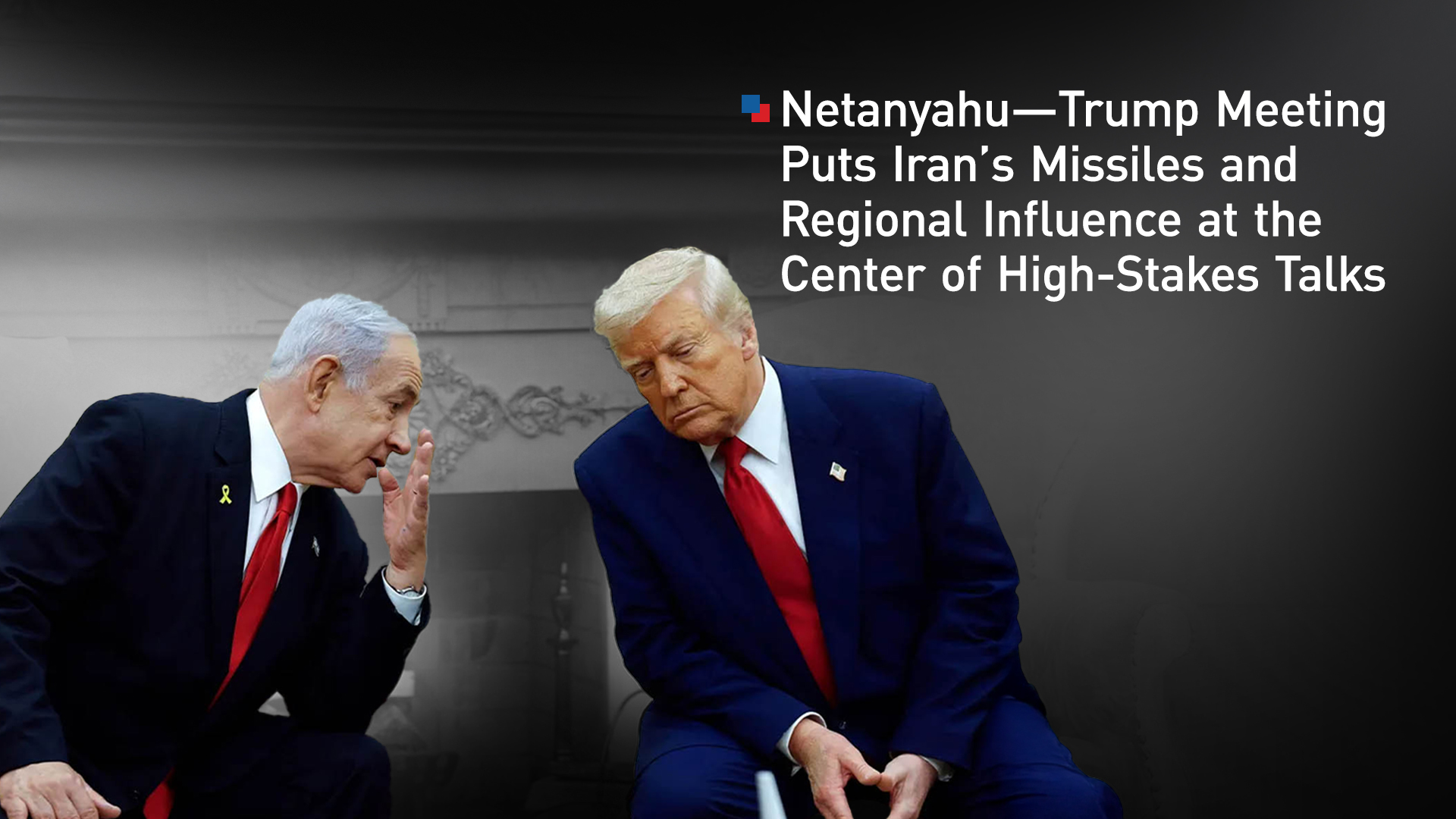
ERBIL (Kurdistan24) — Israeli Prime Minister Benjamin Netanyahu is expected to meet U.S. President Donald Trump in Washington on Wednesday, where the two leaders will discuss ongoing negotiations with Iran, according to a statement issued by the Prime Minister’s Office on X.
The statement said Netanyahu believes that any negotiations with Tehran must go beyond the nuclear file to include firm limitations on Iran’s ballistic missile program and an end to its support for what Israel describes as the “Iranian axis”—a network of allied militias and political forces operating across the Middle East.
Prime Minister's Office announcement:
— Prime Minister of Israel (@IsraeliPM) February 7, 2026
Prime Minister Benjamin Netanyahu is expected to meet with US President Donald Trump this Wednesday in Washington, and will discuss with him the negotiations with Iran.
The meeting comes at a sensitive moment, as Washington has recently re-engaged in indirect talks with Iran following a period of heightened military tension and expanded U.S. deployments in the region.
President Trump has said the United States is open to a deal but continues to maintain strong military and economic pressure on Tehran, including fresh sanctions targeting Iran’s oil sector.
Israel has long opposed any agreement with Iran that does not comprehensively address Tehran’s missile capabilities and its backing of armed groups such as Hezbollah in Lebanon, Hamas in Gaza, and various militias in Syria and Iraq.
Netanyahu has repeatedly warned that Iran’s regional activities pose an existential threat to Israel and broader regional stability.
Wednesday’s meeting will be the sixth between Netanyahu and Trump since the U.S. president took office a year ago, underscoring the frequency and strategic depth of their coordination. The talks follow U.S.–Iran negotiations held in Oman on Friday, after which Trump said discussions would resume early next week.
While both Washington and Tel Aviv view Iran as a principal adversary, Israel has adopted a markedly tougher line, openly opposing negotiations with Tehran. Netanyahu reinforced that stance last month, warning that Israel would respond to any Iranian attack with a level of force “Iran has never seen.”
During Trump’s previous term, the United States withdrew from the 2015 nuclear deal, formally known as the Joint Comprehensive Plan of Action (JCPOA), a move strongly supported by Netanyahu. Since then, Israel has advocated for a tougher framework that would permanently restrict Iran’s nuclear ambitions while also curbing its military reach beyond its borders.
The upcoming talks between Trump and Netanyahu are also expected to touch on broader regional dynamics, including the war in Gaza, tensions along Israel’s northern border with Lebanon, and the evolving balance of power involving Iran and U.S. allies in the Gulf.
Israeli officials argue that close and continuous coordination with Washington is critical to shaping any future agreement with Iran, particularly as diplomacy unfolds against a backdrop of heightened regional tensions, ongoing conflicts, and expanding military postures across the Middle East.
They stress that sustained U.S.–Israeli alignment is essential not only to prevent Iran from advancing its strategic capabilities, but also to contain its regional influence and ensure that any diplomatic outcome reinforces long-term security and stability rather than merely delivering a temporary pause in confrontation.