US Representatives Stress Protection for Kurds and Minorities, Call for Syrian Reforms in Congressional Hearing
Congress Holds Hearing on Post-Assad Syria, Highlights Protection for Kurds and Minority Rights.
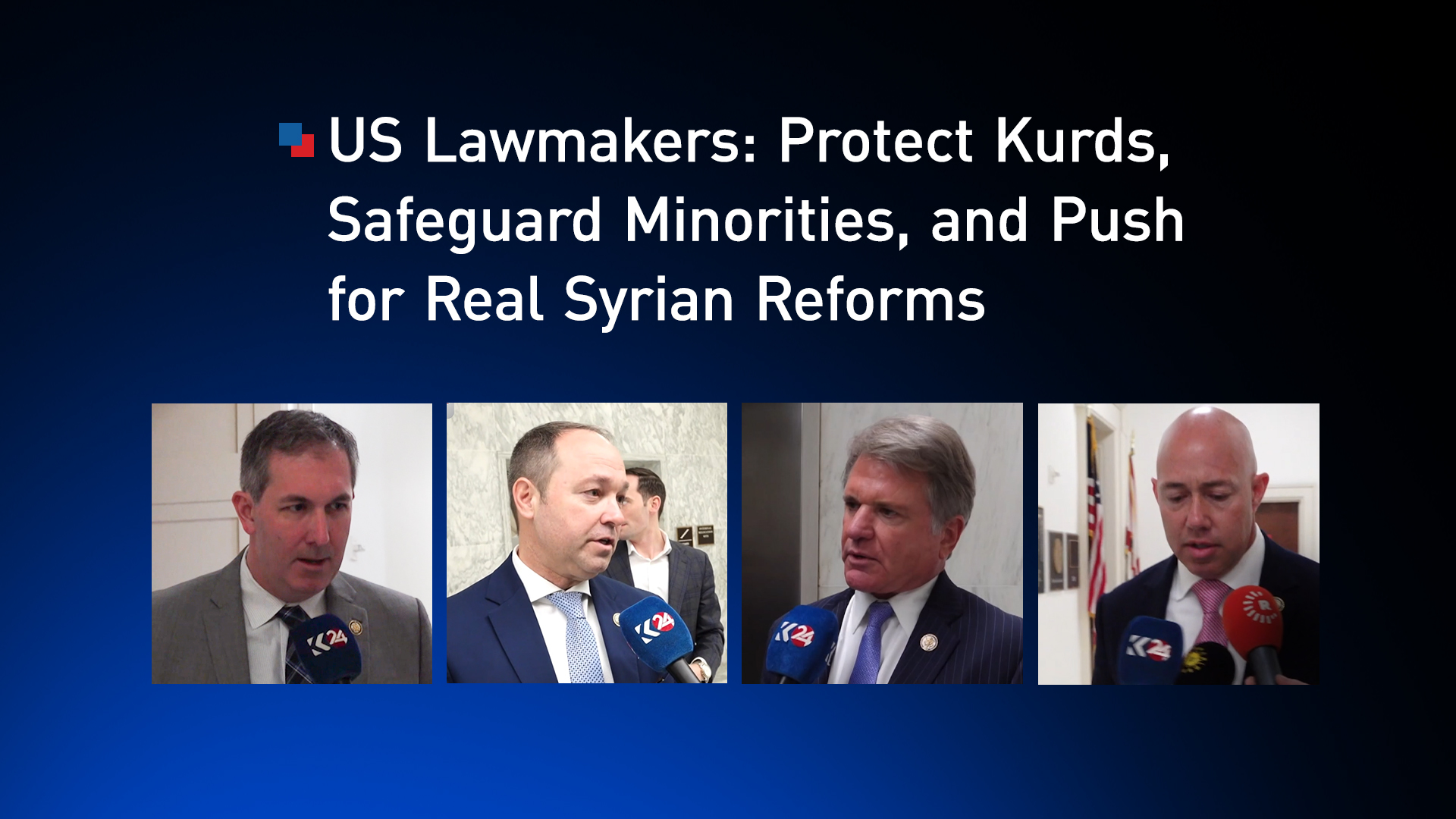
Washington (Kurdistan24) — The House Foreign Affairs Committee held a hearing on Tuesday, titled “U.S. Relations with Post-Assad Syria,” focusing on the future of the Syrian Democratic Forces (SDF) and the Kurdish-led administration. Lawmakers discussed strategies to protect Kurdish allies from military pressures and political marginalization under the new Syrian government.
The session coincided with the Save the Kurds Act, a bipartisan bill introduced by Senators Lindsey Graham and Richard Blumenthal, which would impose sanctions on any party—including the new Syrian government or regional actors—that attacks Kurdish forces. At the hearing, former U.S. Envoy James Jeffrey and other experts provided testimony on balancing U.S. engagement with Damascus while ensuring the security of the Kurds.
Speaking to Kurdistan24, U.S. Rep. Michael McCaul emphasized that Congress is committed to Kurdish protection and warned against any failures that could lead to a resurgence of the Islamic State.
“There’s a new agreement on January 30th, and we’re hopeful conditions will be met to integrate not only Kurdish forces but all ethnic minorities for normalization in Syria. If President al-Sharaa fails, then he fails his country,” McCaul said.
US Rep. Michael McCaul to Kurdistan24: "The Congress is not abandoning them [The Kurds], and I don't want to see a return to the Islamic State [in Syria], and that's why we've talked about necessary conditions to be fulfilled, otherwise it will be a return to Caesar Act… pic.twitter.com/Oi12DdHQTe
— Kurdistan 24 English (@K24English) February 11, 2026
U.S. Rep. Brian Mast highlighted the importance of continued communication with SDF Commander General Mazloum Abdi, calling him “a trusted ally” and a key voice in any agreements. Mast expressed cautious optimism but noted significant doubts about Syria’s stability and whether the government will genuinely integrate minority groups.
“I spoke to al-Sharaa once, and he said he wished for a noble future for his people. That pathway hasn’t been chosen yet,” Mast said.
📹: U.S. Representative Brian Mast on Tuesday told reporters that he will continue engaging with SDF Commander General Mazloum Abdi, describing him as a trusted ally and key voice in any future agreements concerning Syria. He expressed broad skepticism about Syria’s prospects for… pic.twitter.com/oyodNGj0KQ
— Kurdistan 24 English (@K24English) February 11, 2026
Representative Marlin Stutzman told Kurdistan24 that the hearing reflected shared concerns over minority protections and the broader goal of a free and prosperous Syria.
“I’m rooting for al-Sharaa, I want to help him, but there can’t be attacks on the Kurds, Druze, Alawites, or Christians. They have to live in harmony. Congress and President Trump lifted sanctions at their request, and now progress must be made,” Stutzman said.
📹: U.S. Rep. Marlin Stutzman on Tuesday told Kurdistan24 that Washington supports a free and prosperous Syria but insists minorities — including Kurds, Druze, Alawites, and Christians — must be protected. While backing al-Sharaa and noting that sanctions were lifted to support… pic.twitter.com/RebwapX823
— Kurdistan 24 English (@K24English) February 11, 2026
U.S. Rep. Johnny Olszewski underscored the need for reforms and careful oversight. He raised concerns about changes to Syria’s school curriculum, including the removal of references to women and concepts like love, stressing that the U.S. must continue engagement while pressing for meaningful change.
“We will keep calling on the administration to ensure the new regime leads the way we hope to see,” Olszewski said.
📹: U.S. Rep. Johnny Olszewski on Tuesday told Kurdistan24 that Congress remains committed to supporting reforms in Syria, but significant concerns persist—such as changes to school curricula that remove references to women and love. He emphasized ongoing engagement with Syrian… pic.twitter.com/7Wy4U25UbW
— Kurdistan 24 English (@K24English) February 11, 2026
The hearing reflected a unified congressional focus on securing minority rights, supporting Kurdish forces, and pressing the Syrian government toward reforms, signaling continued U.S. involvement in Syria’s complex political landscape.
Since the fall of Bashar al‑Assad’s regime in December 2024, Syria has entered a volatile transitional phase marked by shifting power dynamics between the newly installed government in Damascus under President Ahmed al‑Sharaa and the Kurdish‑led Syrian Democratic Forces (SDF).
The SDF, long a dominant force in West of Kurdistan, in northern and northeastern Syria, and a key U.S. ally against ISIS, has faced increasing pressure as the government seeks to consolidate control over territory and governance structures previously administered by Kurdish authorities.
In early January 2026, armed clashes erupted between Syrian government forces and the SDF after months of stalled negotiations on integration into a unified national army and political framework. Government troops made territorial gains in parts of Raqqa, Deir Ezzor, and other strategic locations that had been under SDF control since the defeat of ISIS, signaling a decisive shift in control on the ground.
Fighting prompted international concern and calls for restraint, including from U.S. Central Command, as the dispute reflected deeper tensions over Kurdish autonomy, minority rights, and the structure of the post‑Assad Syrian state.
In response to the clashes, both sides agreed to multiple ceasefires and extended truces in an effort to prevent a broader escalation, including a ceasefire extension aimed at facilitating the transfer of ISIS detainees to secure facilities.
A key development came with an agreement to halt hostilities and begin a phased integration process between the SDF and government forces. Under this framework, SDF fighters were to withdraw from major Kurdish cities such as Hasakah and Qamishli to agreed zones, while elements of the Syrian army and security forces take over broader control of northeastern regions.
Reports indicate that security forces have already begun deploying to former SDF checkpoints, and discussions continue on the details and timeline of formal integration.
Despite these steps toward de‑escalation, the transition remains fragile. Sporadic tensions, mistrust over implementation, and competing visions for Syria’s future political and security architecture persist, underscoring the challenge of reconciling Kurdish aspirations for autonomy with the government’s drive for territorial unity.
This evolving backdrop of conflict and negotiated coexistence adds context to the U.S. congressional focus on Kurdish protection and minority rights, reflecting broader international concerns over stability, human rights, and the long‑term prospects for an inclusive Syria.