Iraq Summons Turkish Ambassador Over Media Remarks, Reaffirms Rejection of Foreign Interference
Baghdad says comments by Turkish FM breached diplomatic norms, Ankara cites translation error and reaffirms respect for Iraqi sovereignty
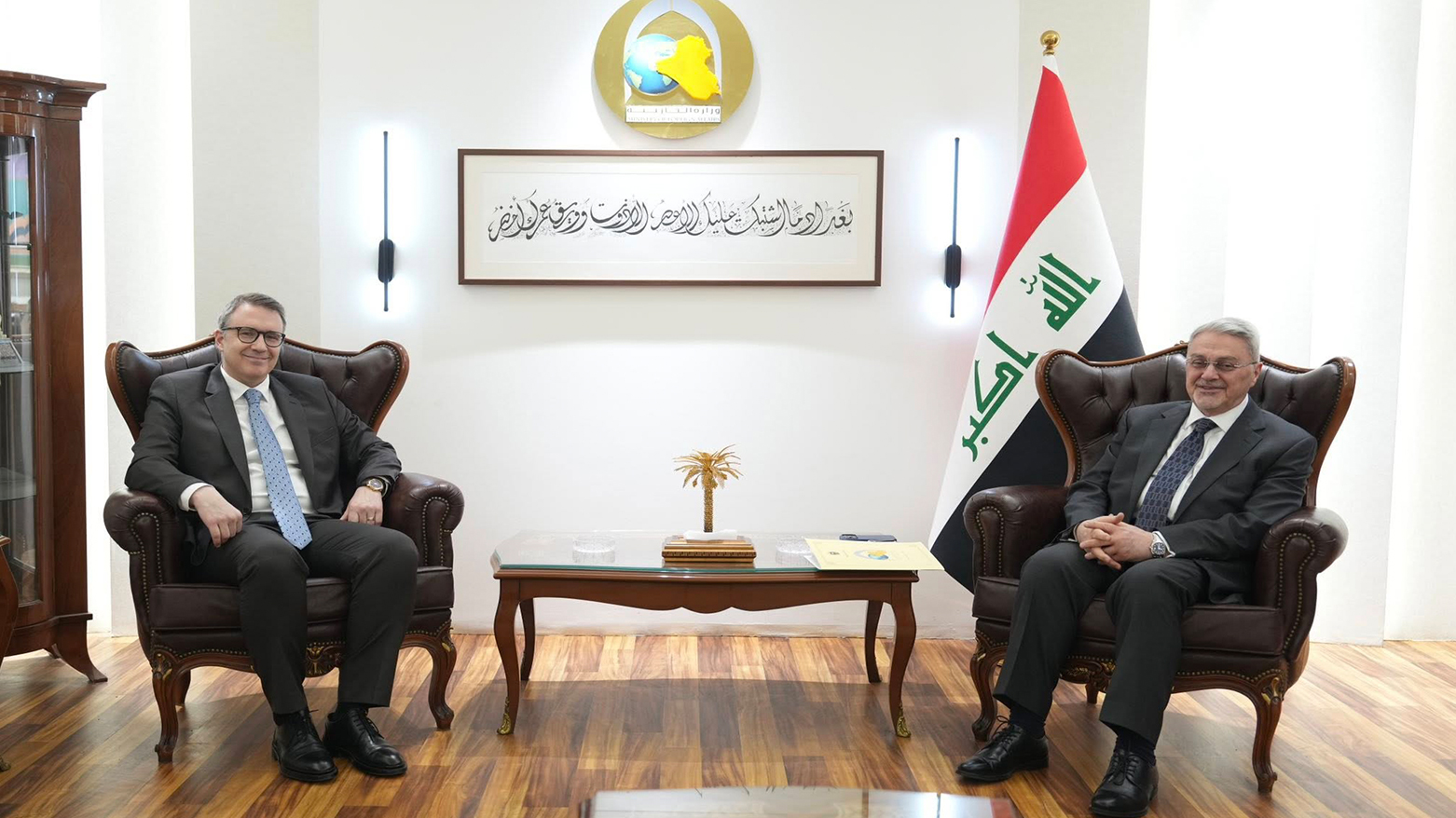
ERBIL (Kurdistan24) — Iraq’s Foreign Ministry on Wednesday summoned the Turkish ambassador to Baghdad to formally convey its reservations over recent media statements by Türkiye’s foreign minister, underscoring Baghdad’s rejection of any interference in its internal affairs.
The ministry hosted Turkish Ambassador to Iraq Anil Bora Inan at its headquarters in Baghdad, following remarks made by Turkish Foreign Minister Hakan Fidan during a televised interview on CNN Türk on February 9.
During the meeting, Undersecretary for Bilateral Relations Ambassador Mohammed Hussein Bahr al-Uloom expressed Iraq’s dissatisfaction with what he described as circulating statements that undermine the friendly relations between Baghdad and Ankara.
He stressed that the remarks constituted interference in Iraq’s internal affairs and a breach of diplomatic norms.
Bahr al-Uloom affirmed that Iraq is a state of institutions operating under a constitutional democratic system and cannot be compared to countries with different political systems. Regarding domestic matters, he emphasized that the issue of Sinjar and other Iraqi territories remains a purely national file handled according to Iraq’s own priorities and mechanisms.
He further reiterated Baghdad’s firm rejection of any external intervention aimed at imposing solutions or exploiting the Sinjar file for political or military leverage.
For his part, Ambassador Inan said the Turkish foreign minister’s remarks had been misunderstood due to inaccurate translation. He clarified that Fidan’s comments referred specifically to elements of the Kurdistan Workers’ Party (PKK) present in Iraq and were not directed at Iraq’s internal affairs or its citizens.
The Turkish ambassador reaffirmed that Ankara’s policy toward Iraq remains consistent, respects Iraqi sovereignty, and does not involve interference in its internal matters.
Concluding the meeting, Inan stressed his government’s commitment to maintaining strong bilateral ties and said he would convey Iraq’s position and concerns to Turkish leadership.
He underscored the importance of preserving relations between the two neighboring countries in a manner that serves the interests of both peoples.
Iraq and Türkiye share a long, complex relationship shaped by geography, security concerns, energy cooperation, and trade interdependence. The two countries maintain strong economic ties, with Türkiye serving as one of Iraq’s largest trading partners. Bilateral trade volumes have consistently ranked among the highest in the region, and Turkish companies are heavily involved in construction, infrastructure, and energy projects across Iraq.
Security, however, remains the most sensitive dimension of the relationship. Ankara has long conducted military operations in northern Iraq against fighters of the PKK, which Türkiye, the European Union, and the United States designate as a terrorist organization. These cross-border operations have periodically strained relations between the two neighbors.
The Sinjar issue has been particularly contentious. Following the defeat of ISIS, Sinjar became an area of overlapping influence involving federal forces, local Yazidi groups, Shiite armed factions, and PKK-linked elements.
The 2020 Sinjar Agreement between Baghdad and Erbil aimed to restore federal authority and normalize security and administrative structures in the district, but implementation has faced repeated delays, contributing to ongoing regional sensitivities.
In addition to security matters, energy cooperation has been central to bilateral ties. The Iraq-Türkiye oil pipeline, which connects northern Iraqi fields, including those in the Kurdistan Region, to Türkiye’s Ceyhan port, has been a strategic asset for both countries, though disputes over exports and arbitration rulings have occasionally complicated coordination.
Despite periodic diplomatic tensions, both Baghdad and Ankara have consistently emphasized the importance of preserving dialogue, managing disputes through official channels, and maintaining a relationship grounded in mutual economic interests and regional stability.