Maliki Calls for ‘One Army’ Under State Control, Stirring Debate Over Popular Mobilization Forces
Former Premier Emphasizes Stability, Investment, and Youth Opportunities Amid Political Scrutiny.
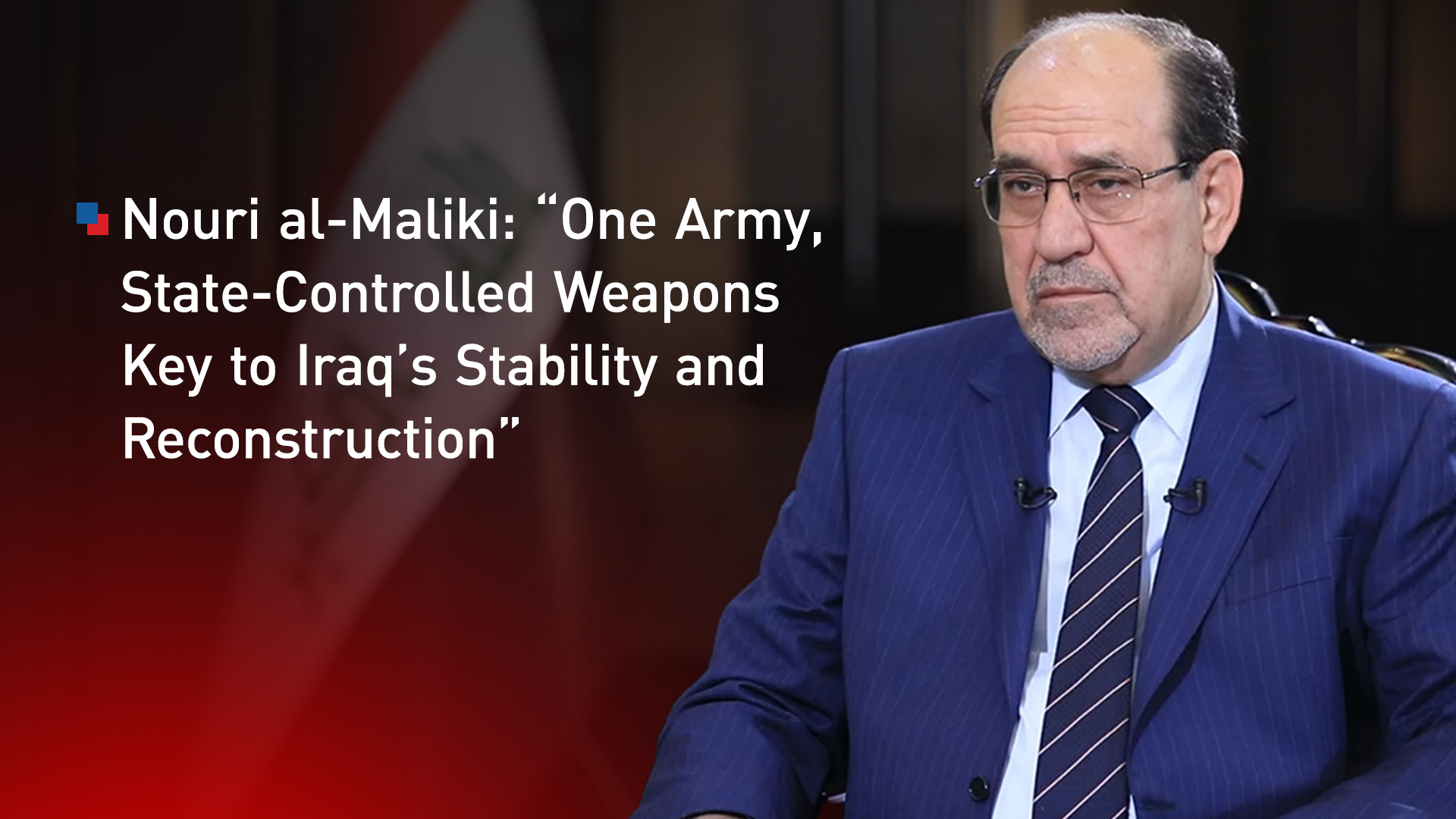
ERBIL (Kurdistan24) — Nouri al-Maliki, head of the State of Law Coalition and the Coordination Framework’s candidate for prime minister, on Wednesday stressed the need to confine weapons to the state and ensure the existence of “one army,” a phrase that has triggered questions about whether he is signaling the potential integration of the Popular Mobilization Forces (PMF) into Iraq’s regular armed forces.
In remarks published through his media office’s online portal, Maliki responded to journalists’ questions regarding the optimal path to achieving stability in Iraq and its implications for youth, reconstruction, and development.
“The Iraqi people have suffered for a long time from wars and violence, and today they deserve to live in security and dignity,” Maliki said.
He underscored that “de-escalation, unity among all parties, the extension of the rule of law, confining arms to the state, and the presence of one army that includes members of all components of the people under the leadership of the Commander-in-Chief of the Armed Forces constitute the foundation for building a stable state.”
Maliki added that such stability would create a secure environment conducive to attracting investment, generating genuine employment opportunities for young people, and advancing reconstruction efforts across the country.
However, his reference to “one army” under the authority of the Commander-in-Chief is widely expected to become a focal point of political debate in the coming days. Observers are questioning whether the statement implies the dissolution or integration of the PMF into the formal military structure.
The issue carries added sensitivity amid reported U.S. opposition to Maliki’s candidacy, which could influence future policy proposals aimed at aligning Iraq’s security architecture with conditions tied to continued international cooperation, particularly with Washington.
As political negotiations among Iraq's political blocs continue for the federal government formation, Maliki’s remarks are likely to intensify discussions over the future configuration of Iraq’s security institutions and the balance between state authority and armed factions.
The remarks also come against the backdrop of reported objections by U.S. President Donald Trump to Maliki’s return as prime minister. Trump has previously criticized Maliki’s past tenure, particularly over governance, sectarian tensions, and the security deterioration that preceded the rise of ISIS in 2014.
Maliki’s insistence on remaining the sole candidate for prime minister could complicate Baghdad’s relations with Washington, particularly in the areas of security cooperation, military assistance, and economic engagement, after President Trump reportedly threatened to suspend U.S. support to Iraq if Maliki refuses to step aside.
Despite the external pressure, Maliki has shown no indication of withdrawing his candidacy. Leaders within the Coordination Framework have repeatedly affirmed his nomination, and Maliki himself has maintained that the choice of prime minister is a sovereign Iraqi decision determined through constitutional mechanisms and parliamentary consensus.
The standoff has injected additional complexity into Iraq’s government formation process, with domestic actors weighing internal political alignments alongside the implications of international positioning.
As negotiations continue, Maliki’s insistence on remaining in the race underscores the broader contest over Iraq’s political direction and its future security architecture.