From Bangladesh 1952 to Kurdistan Today: Mother Language Day Honors Sacrifice and Resistance
Feb. 21 is International Mother Language Day, established by UNESCO in 1999. It honors global linguistic diversity and, for Kurds, it's a poignant reminder of their enduring struggle to preserve their native tongue against assimilation and conflict.
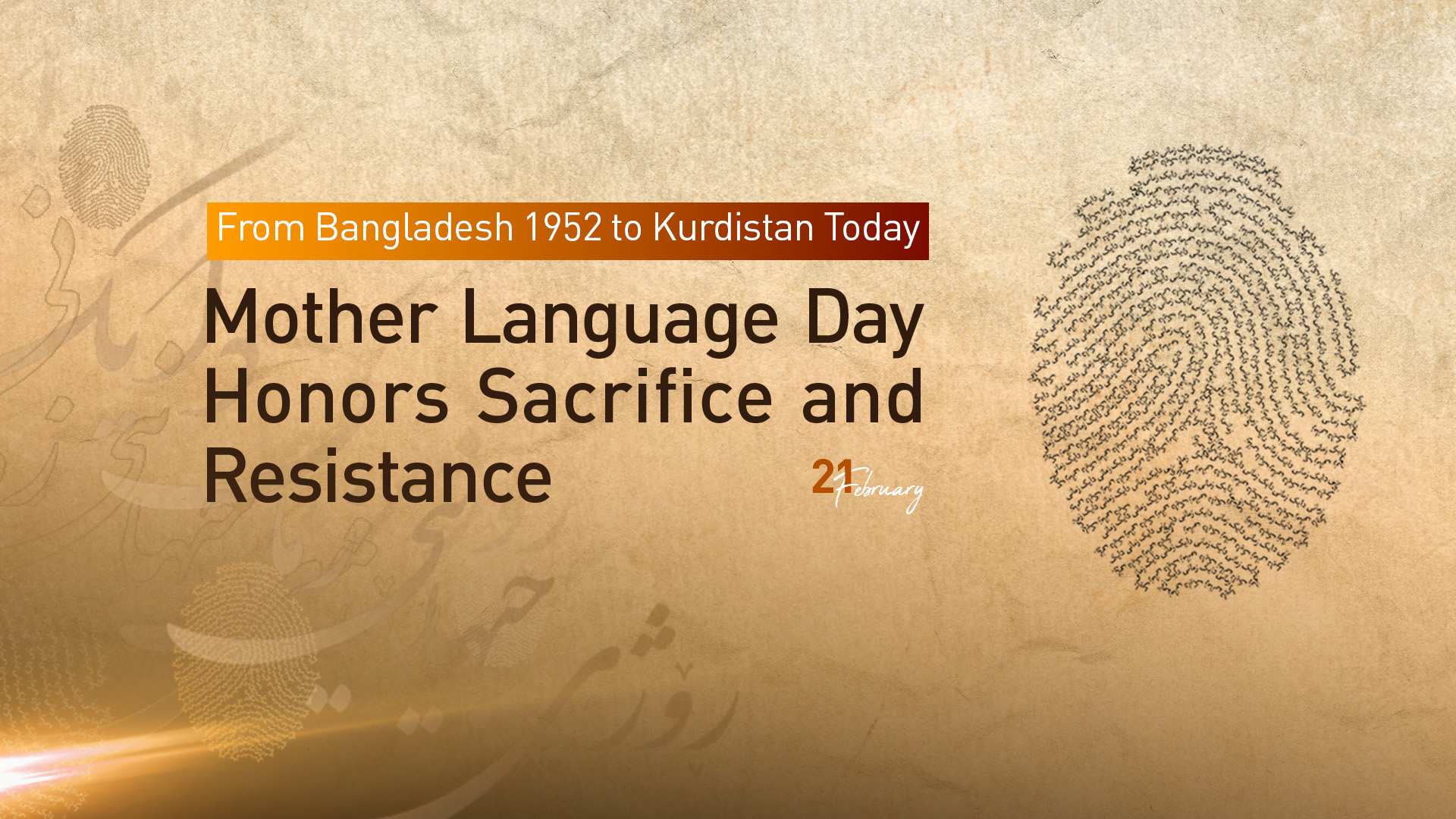
ERBIL (Kurdistan24) - Feb. 21 marks International Mother Language Day, a global observance dedicated to the languages that shape the identity, memory, and dignity of nations. Behind this date stands a history marked by sacrifice, political struggle, and cultural resistance in defense of linguistic diversity.
The origins of the day trace back to 1952, when present-day Bangladesh, then part of Pakistan, witnessed mass protests demanding recognition of the Bengali language as an official language. After the Pakistani government declared Urdu the sole official language, Bengalis rose in protest. On Feb. 21, 1952, police opened fire on demonstrators, killing several. Those deaths became the catalyst for a broader political and cultural movement that ultimately led to Bangladesh’s independence in 1971.
In 1999, at the request of the Government of Bangladesh, UNESCO proclaimed Feb. 21 as International Mother Language Day. The observance seeks to raise awareness about multilingualism and cultural diversity worldwide. In 2008, the United Nations General Assembly expressed its support for the day’s activities and declared 2008 the International Year of Languages.
For the Kurdish people, the mother tongue is not merely a means of communication but a trench of defense. During the first half of the twentieth century, as policies promoting “one state and one language” prevailed in the region, Kurds faced campaigns of assimilation and cultural dissolution, including Arabization, Turkification, and Persianization.
Alongside armed and political struggle, a significant academic and cultural movement emerged to safeguard the Kurdish language. Scholars such as Amir Hassanpour played a pivotal role in introducing Kurdish to global academic circles. Through his research, particularly in international sociolinguistic journals, Hassanpour sought to clarify both the value of the Kurdish language and the risks threatening it, aiming to ensure that future generations would not be deprived of the right to learn and speak their mother tongue.
Debates surrounding language have also examined the role of women, particularly mothers, in transmitting linguistic heritage. Research highlights the need to distinguish between the biological role of motherhood and the broader social position of women.
Researcher Nazand Begikhani has written that successive wars in Kurdistan — including the Anfal campaign, chemical bombardment, and the war against ISIS — left profound psychological impacts on Kurdish women and families. These tragedies, she argues, led many Kurdish mothers at different stages to choose silence or to carry a language burdened with pain and bitterness. Such instability did not allow women, as free individuals beyond pressure, to redefine themselves and their language in new terms.
While the family and the mother remain the first foundation of language learning, preserving Kurdish in the modern era is not solely the responsibility of mothers. Specialists emphasize the importance of educational institutions. Nurseries and kindergartens, as sensitive formative stages, can play a positive role in nurturing a generation fluent in clear and academically grounded Kurdish.
In this sense, the role of women within educational centers becomes an extension of a historical responsibility that began at home, but carried forward in a systematic and contemporary manner.
Globally, International Mother Language Day serves as a reminder that linguistic diversity is part of humanity’s shared heritage. For Kurds, it also represents a day of resilience — a reaffirmation that language is the vessel of history, culture, and collective memory.
As the world marks Feb. 21 each year, the message remains clear: preserving a mother tongue means preserving identity itself.