Four Decades of Complicated Diplomacy Continue as Iran Seeks Talks With Washington
Iran’s president has announced readiness to negotiate with the United States, continuing a history of intermittent diplomatic engagement since 1981.
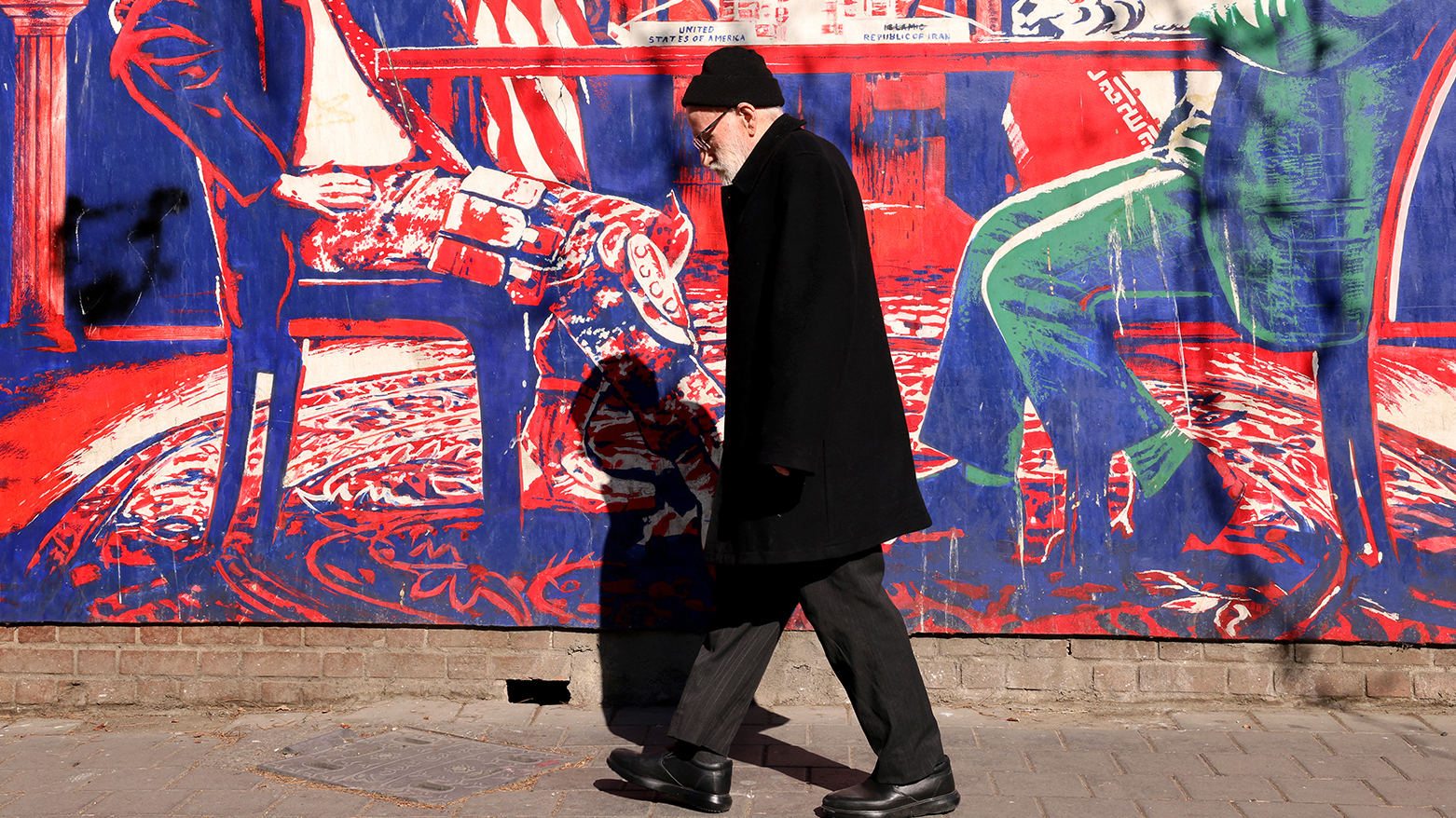
ERBIL (Kurdistan24) - Iran’s President Masoud Pezeshkian announced that Tehran is prepared to negotiate with the United States, naming his foreign minister to manage preparations for talks, marking the latest chapter in a decades‑long and uneven history of diplomatic engagement between the two countries.
The United States and the Islamic Republic of Iran have engaged in intermittent negotiations since 1981, when the two governments first sat down to resolve the crisis triggered by the seizure of the U.S. Embassy in Tehran. The crisis began on Nov. 4, 1979, when 98 people, including American diplomats and other civilian personnel, were taken hostage at the Embassy of the United States in Tehran, with 52 of them being held until Jan. 20, 1981. Those initial direct talks were held in Algeria and focused on securing the freedom of the American diplomats taken hostage.
The negotiations culminated in the hostages’ release after 444 days in captivity, establishing a precedent for direct, public negotiation between the two sides despite broader political antagonism.
In the mid‑1980s, U.S.–Iran discussions resumed under different, more covert circumstances.
The United States dispatched its National Security Advisor to Tehran with the objective of arranging the sale of weapons to Iran for use in its war with Iraq, this later came to be known as "Iran-Contra Affair". These talks, which took place directly but in secret, ultimately failed — a setback widely attributed within the historical record to external interference.
Following the Sept. 11, 2001, terrorist attacks in the United States, successive rounds of talks occurred in Germany and in Washington between U.S. officials and Iranian counterparts in 2001 and 2003.
These meetings, conducted at the level of foreign ministry diplomats, were also direct and secret. At issue was Iran’s potential role in the wars in Afghanistan and Iraq, and the negotiations reportedly aimed to reduce Tehran’s involvement in regional conflict dynamics.
The discussions did not produce a formal agreement, but the Iranian government offered limited cooperation and ultimately avoided direct military confrontation with U.S. forces in the ensuing conflicts.
More than a decade later, diplomatic contacts between Iran and the United States focused on Tehran’s nuclear program. Beginning in 2012, negotiations took place in Oman and Vienna between Iranian officials and representatives of the P5+1 — the United States, United Kingdom, France, Russia, China and Germany.
These discussions were initially held in secret at the foreign ministry level and later became public as progress was made. In 2015, those efforts culminated in a structured nuclear agreement that placed restrictions on Iran’s nuclear activities in exchange for sanctions relief, ending years of international contention over Tehran’s nuclear ambitions.
That 2015 nuclear agreement represented a high point in direct U.S.–Iran engagement, but the diplomatic breakthrough proved fragile.
In 2018, the administration of U.S. President Donald Trump withdrew the United States from the accord, citing concerns about its terms and enforcement mechanisms. The withdrawal prompted renewed diplomatic efforts to revive some version of the agreement under Trump’s successor, President Joe Biden.
From 2021 to 2023, three rounds of indirect negotiations took place in Vienna and Doha between Iranian negotiators and representatives of the Biden administration.
These sessions, which were public and indirect by design, sought to restore certain elements of the 2015 nuclear deal. However, they did not yield tangible results. Both sides publicly acknowledged that the talks failed to produce a framework acceptable to the principals.
The most recent series of negotiations occurred in April and May of the previous year and again focused on Iran’s nuclear program. According to official accounts, five rounds of discussions were held in Oman and Italy. Like the talks in Vienna and Doha, these negotiations were conducted indirectly and publicly.
Those rounds, too, failed to achieve an agreement. Observers noted that hostilities triggered by a reported Israeli attack on Iranian territory and the subsequent 12‑day conflict contributed to the breakdown in diplomatic progress.
In the context of that history, President Pezeshkian’s announcement of Iran’s readiness to negotiate directly with Washington — with his foreign minister handling preparations — signals a renewed willingness on Tehran’s part to engage.
The president’s declaration did not specify the agenda or timetable for such talks, but it reflects a continuation of long‑standing diplomatic efforts that have ebbed and flowed over more than four decades.
Throughout this history, negotiations have ranged from public, direct engagement during crises to more opaque, indirect exchanges aimed at technical or strategic objectives.
Early talks in the 1980s addressed an acute diplomatic emergency. Later negotiations focused on regional wars and counterterrorism cooperation.
The nuclear negotiations of the 2010s and early 2020s combined public pressure and international diplomacy, reflecting the complexity of multilateral negotiations involving not only the United States and Iran but also other major powers.
The announcement by the Iranian President may be understood in the context of this historical pattern: periods of heightened tension have often been accompanied by diplomatic overtures, even amid broader strategic disagreements.
How the designated foreign minister will approach preparations for talks with the United States has yet to be detailed by official Iranian sources. The announcement comes amid ongoing regional and international debates over Iran’s nuclear program, its role in Middle Eastern geopolitics, and the legacy of past negotiations.
Analysts following the diplomatic history note that the earliest direct engagement between the two countries occurred when their interests coincided on a specific goal — securing the release of hostages in 1981.
Later, secret military‑related talks in the 1980s highlighted how geopolitical contexts can shape engagement strategies. The post‑9/11 negotiations again reflected shifting U.S. priorities in the Middle East. The nuclear negotiations of the 2010s and 2020s demonstrate how international frameworks and multilateral engagement have been integral to managing tensions.
With President Pezeshkian’s recent announcement, the question now turns to how Iran and the United States will define the priorities and modalities of any forthcoming negotiations. Whether talks will be direct or indirect, public or private, and how they will address issues such as nuclear activities, regional security dynamics, and economic relations remains to be seen.
What is clear from the historical record is that U.S.–Iran negotiations have taken many forms over the past 45 years, oscillating between crisis management and strategically focused engagement. Each round of talks has been shaped by the geopolitical context of its time, from hostage crises to regional wars and complex multilateral nuclear diplomacy.