Kurdistan Region PM Masrour Barzani Meets UNESCO Director-General in Dubai
Discussion highlights heritage preservation, cultural projects, and closer engagement with UNESCO.
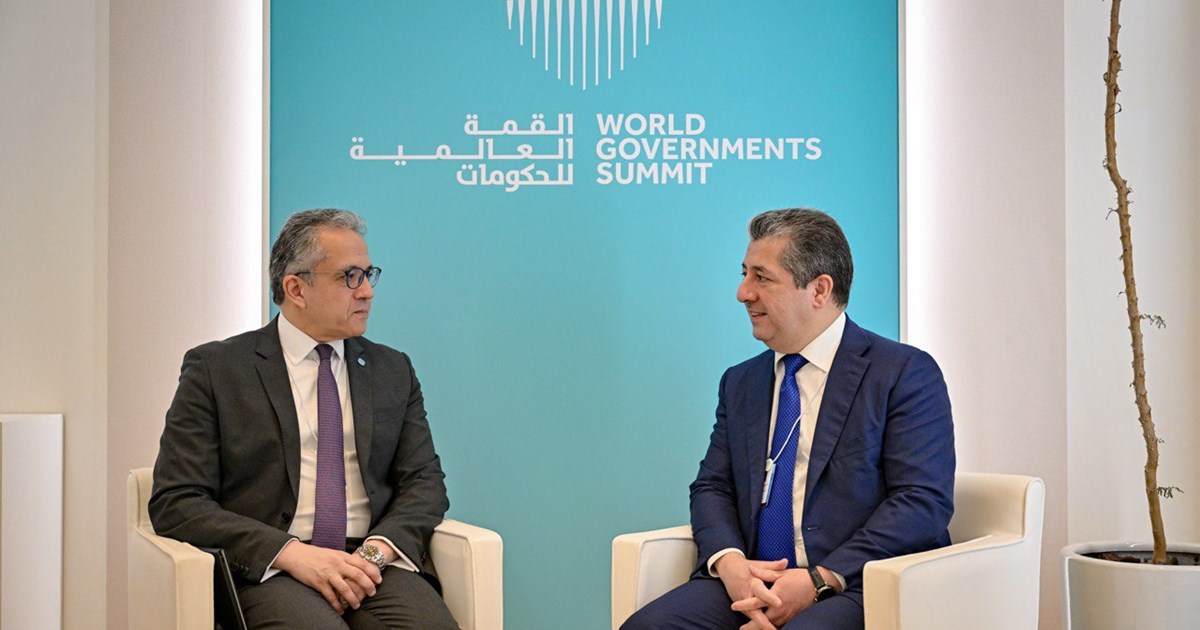
ERBIL (Kurdistan24) — Kurdistan Region Prime Minister Masrour Barzani met on Wednesday in Dubai with UNESCO Director-General Khaled El-Enany on the sidelines of the World Government Summit 2026 (WGS2026), focusing on cooperation in education, science, and cultural heritage preservation.
Prime Minister Barzani extended his congratulations to El-Enany on assuming leadership of the global organization, expressing hope for the success of his initiatives.
The discussions emphasized UNESCO’s ongoing projects to protect and restore cultural sites, with particular attention to the renovation of Erbil Citadel, recognized as a historic and globally significant landmark.
The UNESCO Director-General detailed the organization’s efforts in safeguarding heritage sites and highlighted initiatives promoting education, science, and cultural knowledge. He specifically referenced the Erbil Citadel restoration project as a key example of preserving both local identity and world heritage.
Barzani requested that the Kurdistan Region be accepted as an associate member of UNESCO, and the Director-General of the organization expressed readiness for any cooperation and coordination in this regard.
The Kurdistan Region has long sought to preserve its rich cultural and historical heritage, with UNESCO playing a key role in supporting these efforts. Sites such as the Erbil Citadel, a UNESCO World Heritage site, along with ancient settlements, archaeological landmarks, and traditional urban areas, have received international attention for restoration and protection.
The Region has collaborated with UNESCO on projects spanning heritage conservation, education, cultural promotion, and scientific research, reflecting its commitment to safeguarding historical identity while fostering development and international recognition.
Participation in UNESCO initiatives has also helped integrate the Kurdistan Region into global networks for cultural preservation, education, and knowledge exchange.