Iraq Faces Economic Risk if Strait of Hormuz Closes, Iraq's FM Warns
Iraqi FM Fuad Hussein warned that Iraq risks severe economic crisis if the Strait of Hormuz is closed, stressing the need for a fully functioning government, political consensus, and careful management of regional and international relations to protect oil exports and sovereignty.
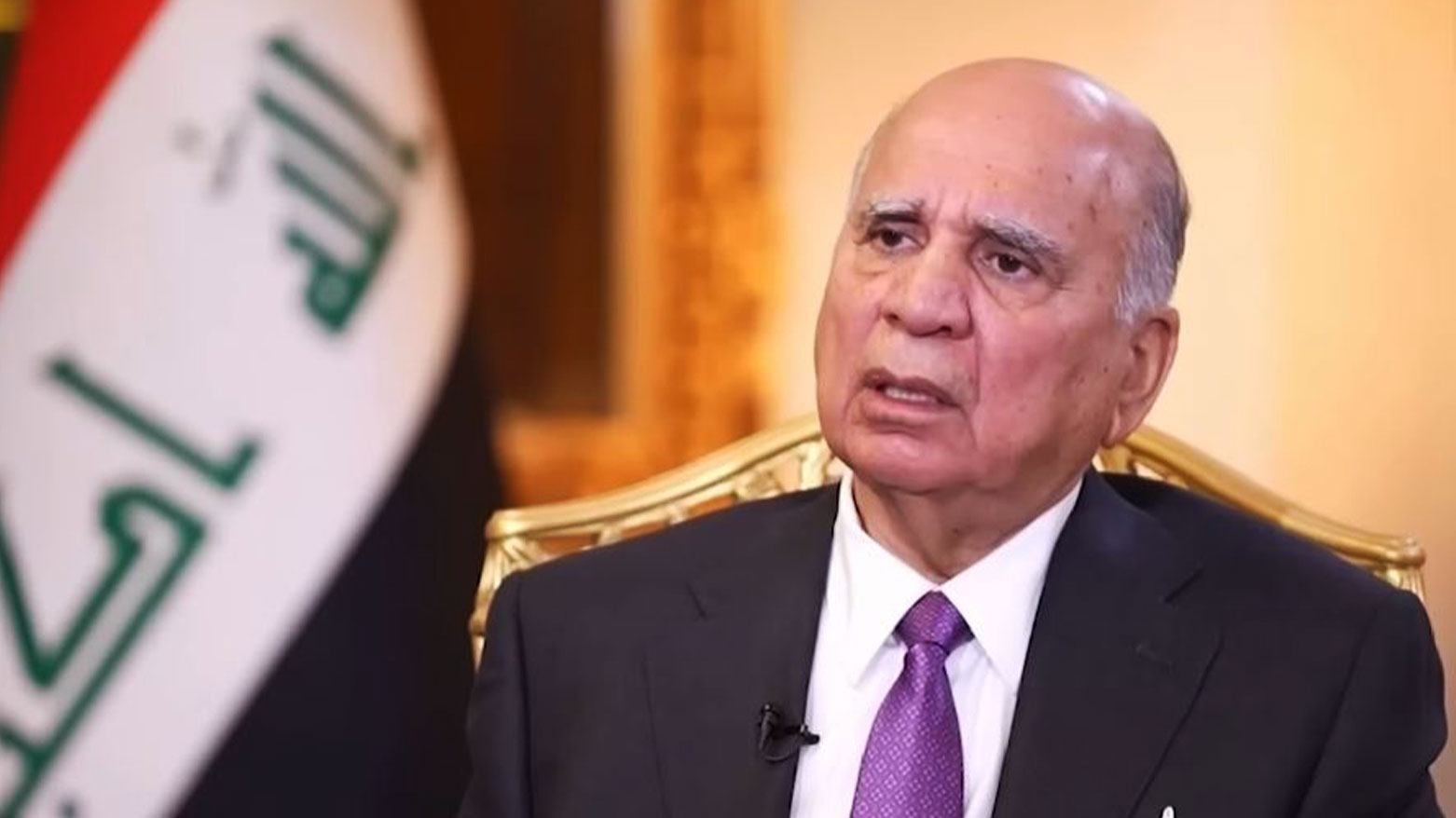
ERBIL (Kurdistan24) - Iraqi Foreign Minister Fuad Hussein warned that Iraq could face a severe economic crisis if the Strait of Hormuz were closed, emphasizing the country’s dependence on oil exports and the urgency of forming a fully functioning government.
Speaking in a television interview with Al Sharqiya, Hussein said the nation requires an active administration, noting that a caretaker government has limited legal authority and that many current ministers have assumed parliamentary roles, complicating state management.
Hussein highlighted that Iraq faces major financial and economic challenges and called on political leaders to convene and reach a resolution. “We need an active government because a caretaker government has limited legal authority,” he said. “Leaders of the Coordination Framework must meet and find a political solution to escape this crisis.”
Addressing Iraq’s position between regional and global powers, Hussein stated that the United States has expressed concern over Iranian influence on the next Iraqi government.
He explained that U.S. officials communicated their perspective through oral messages delivered via the U.S. Chargé d’Affaires. These messages, Hussein noted, were intended for the Coordination Framework and focused on the selection of a prime ministerial candidate and management of armed groups listed under U.S. sanctions.
“In today’s world, the understanding of sovereignty has changed,” Hussein said. “Most countries have deficiencies in their sovereignty, except for the superpowers. Iraq must either be very wise or have a strong alliance to protect itself.” He described Iraq’s geopolitical situation as being caught between a neighbor, Iran, and an ally, the United States, adding that tensions between the two poles directly affect Iraqi society and politics.
Hussein urged support for international negotiations, including those in Vienna and Geneva, stating that escalation could disrupt Iraq’s oil exports from Basra and trigger an economic disaster. “Any tension brings disaster to Iraq and the region,” he said.
The foreign minister also noted that the Iraqi government and Ministry of Foreign Affairs played a role in preventing an Israeli military strike on armed groups operating within Iraq. He said that during his visit to Washington and through communications with the U.S. National Security Advisor, Iraqi officials were able to pressure Israel not to carry out attacks on Iraqi territory.
On the domestic political front, Hussein addressed rumors of an agreement between the Kurdistan Democratic Party (KDP) and the Patriotic Union of Kurdistan (PUK) regarding a joint presidential candidate.
He denied that any new agreement had been reached and confirmed his candidacy for the presidency on behalf of the KDP.
“The rumors regarding an agreement between the KDP and the PUK on a joint candidate are far from the truth. I am continuing as the candidate of the Kurdistan Democratic Party and am fully confident that I will secure the votes in Parliament,” he said, emphasizing his support for Kurdish unity in Baghdad but noting that parliamentary decisions would prevail in the absence of an agreement.
Hussein stressed the importance of safeguarding Iraq’s economic interests in international relations.
He warned that restricting the flow of U.S. dollars could create severe difficulties for Iraq, which relies heavily on oil exports and is not a dollar-producing country. He added that national interest should guide the country’s interactions with the United States and the broader international community.
The foreign minister’s comments underscore the fragility of Iraq’s political and economic landscape amid ongoing regional tensions and internal governance challenges. Hussein framed the formation of a functioning government as central to maintaining economic stability and protecting national sovereignty.
Iraq’s economic vulnerability, he noted, is closely linked to oil transit through the Strait of Hormuz.
Disruptions in exports from Basra could have immediate and severe consequences for the country’s financial stability. Hussein emphasized that both political consensus and careful management of foreign relations are essential to mitigate these risks.
Hussein concluded by reiterating the urgency of an immediate political solution to ensure governmental functionality and continuity. He called on the Coordination Framework and other political stakeholders to act promptly to prevent further deterioration of Iraq’s economic and political situation.
The minister’s statements highlighted Iraq’s economic dependence on oil exports, the need for a fully operational government, and the importance of balancing relations between regional neighbors and international partners to avoid potential crises.