Artists and Academics Press for Institutional Support of Kurdish Language
Kurdish artist Naser Razzazi and academic Dr. Feryad Fazil said on International Mother Language Day that protecting and modernizing Kurdish requires coordinated institutional support, digital integration, and educational reform to safeguard identity and ensure its future in the AI era.
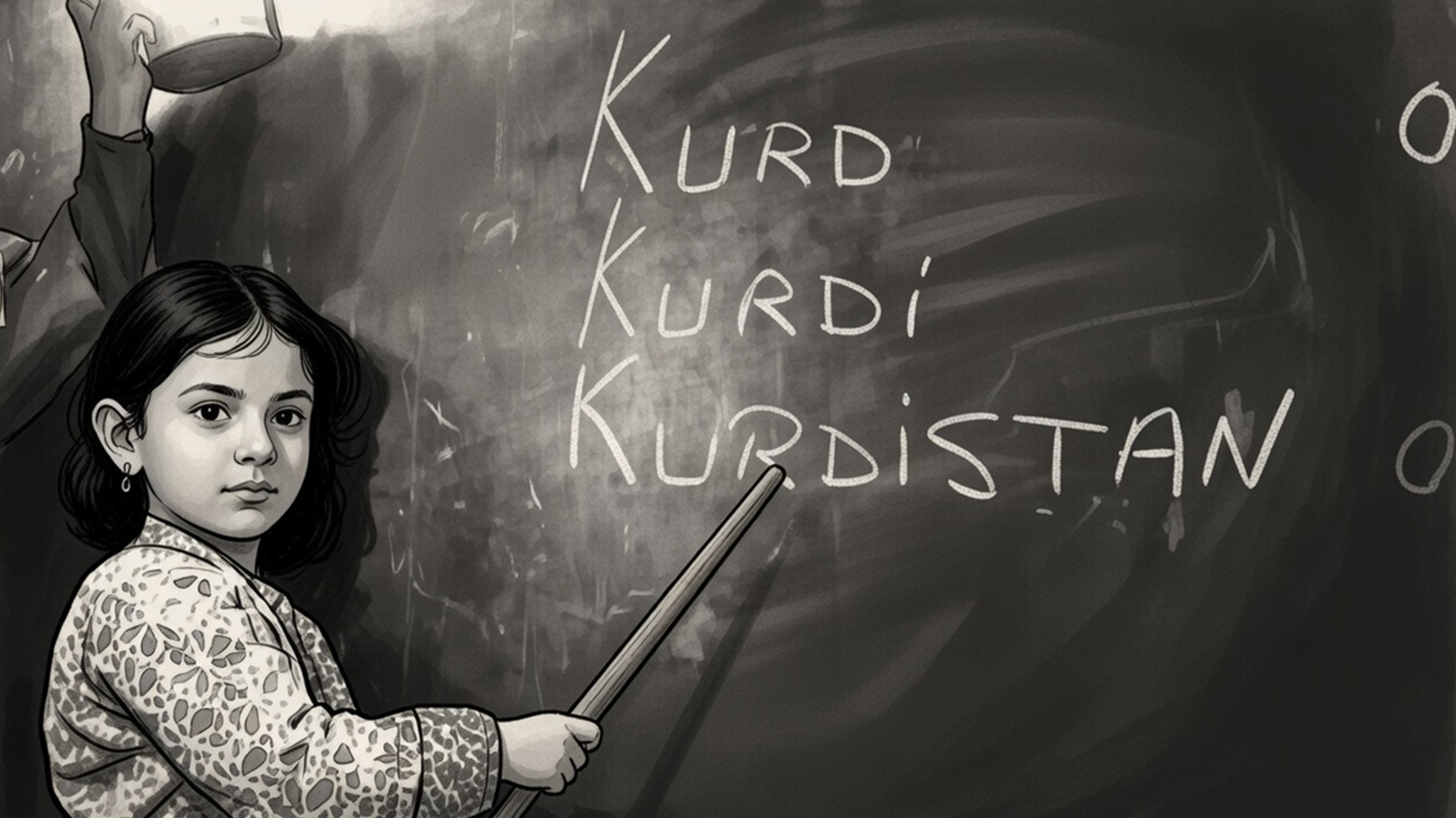
ERBIL (Kurdistan24) - The great Kurdish artist and singer Naser Razzazi and academic Feryad Fazil issued separate statements on International Mother Language Day emphasizing the psychological, cultural, and institutional importance of the Kurdish language and calling for coordinated efforts to strengthen its position in the era of digital technology and Artificial Intelligence.
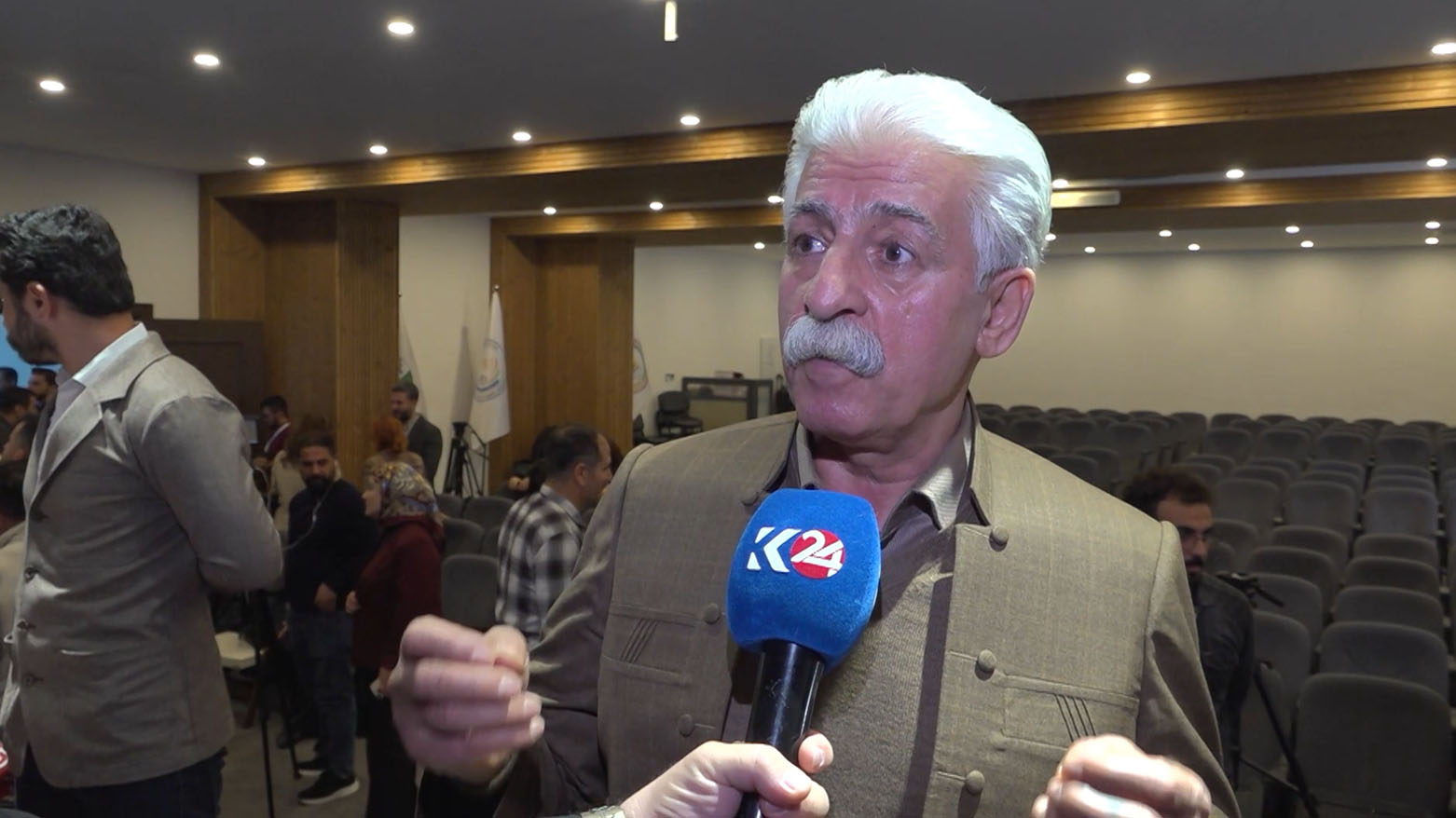
In an exclusive statement to Kurdistan24, Razzazi underscored what he described as the deep psychological and spiritual bond between a person and their mother tongue. “The importance of the mother tongue is not limited only to proving the existence of a language we speak; rather, it lies in the psychological dimension,” he said. “Whoever does not know their mother tongue will inevitably suffer from a sense of deficiency, inferiority, and marginalization.”
He added that language carries an emotional dimension beyond communication. “Without the mother tongue, any human being is unable to sincerely express their deepest inner feelings and emotions,” he said.
Razzazi also addressed linguistic and technical challenges facing Kurdish, calling for what he described as practical and institutional attention to overcome obstacles confronting the language. Referring to the development of Kurdish dialects, he said, “The Kurmanji dialect has forged its path strongly and relied on itself. In contrast, the Sorani dialect has been able over the past two centuries to impose itself as a standard (normative) language; despite this, it still suffers from some deficiencies that must be addressed seriously.”
He further emphasized the challenges posed by technological transformation. “It is very necessary for the Kurdish language to be fully established in this era dominated by Information Technology (IT), Artificial Intelligence (AI), and the digital world,” Razzazi said.
Concluding his remarks, he stated: “If we can elevate the Kurdish language to become like the advanced languages of the world and take its true place among them, only then will we be able to take pride in it, saying: Kurdish is our language... and it is important to us and to the world.”
Razzazi, born in 1955, is regarded as one of the prominent figures in Kurdish music and art. In addition to his work as a singer, he is known for his engagement with Kurdish literature, language, and folkloric heritage.
International Mother Language Day is observed annually on Feb. 21. The day was established by UNESCO to promote awareness of linguistic and cultural diversity and multilingualism worldwide.
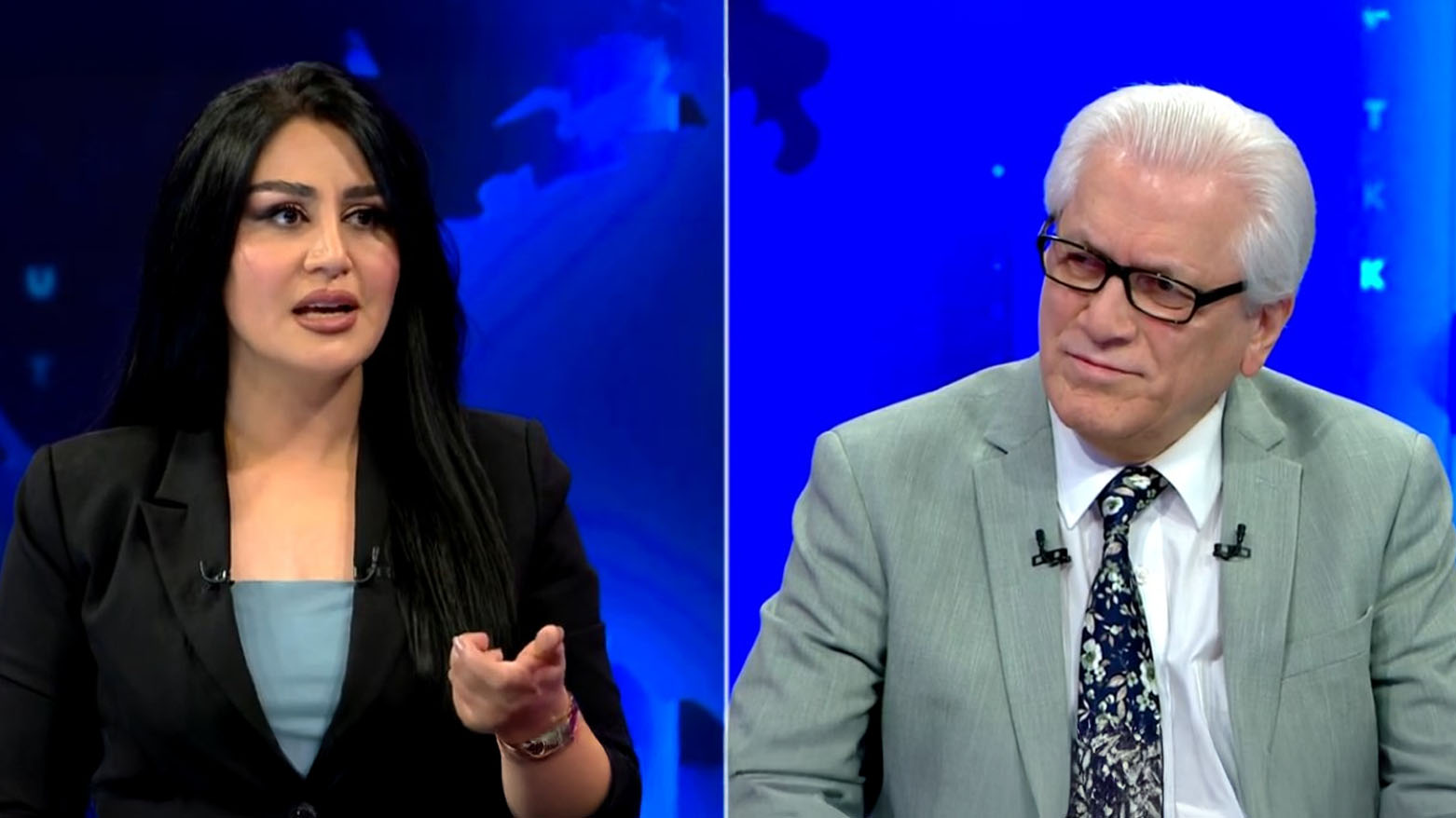
In a separate interview with Kurdistan24, Dr. Feryad Fazil, President of the Institute of Kurdish Studies in Berlin, described the Kurdish language as central to the preservation of Kurdish identity.
“There is no nation on earth that has been subjected to injustice and prejudice in all walks of life as the Kurdish nation has,” he said. “The only thing that stood firm and protected the Kurdish spirit from extinction is its language.”
He added that International Mother Language Day should not be viewed as “just a passing occasion,” but rather as a day that must be observed with recognition of the language’s role in sustaining Kurdish existence.
Dr. Fazil emphasized that protecting and developing the Kurdish language requires long-term planning. “The advancement of the language is not the responsibility of a single entity, but requires a collective effort and full coordination between the ministries of Education, Higher Education, and Culture, and all institutions of the Kurdistan Regional Government,” he said.
He expressed appreciation for what he described as support provided by Masoud Barzani and the Prime Minister of the Kurdistan Regional Government for language protection initiatives, while stating that the current phase requires expanded backing due to technological demands.
“We live in the digital age and the world of software, and introducing the Kurdish language into this complex field requires great capabilities and competent individuals,” he said.
Dr. Fazil stated that he has documented and published more than 300,000 Kurdish words during his career in efforts to consolidate Kurdish identity in Europe. He also announced a new strategic initiative centered on a book titled “Learn Kurdish Easily,” formulated in 13 living geographical languages with the aim of broadening access to Kurdish beyond its traditional geographic sphere.
According to his explanation, the 13 languages include seven European languages — among them English, French, and Italian — three Middle Eastern languages — Arabic, Turkish, and Persian — and three languages from the Far East — Japanese, Chinese, and Korean.
Dr. Fazil also addressed what he termed the importance of “reverse translation.” He stated that he translated major works of Kurdish literature poetically rather than literally, including the epic “Mem and Zin” by the seventeenth-century poet Ahmad-i Khani into English and German, as well as poems by Abdullah Goran.
“We must introduce ourselves to the world,” he said. “Just as the Persians take pride in Saadi and Hafez, we have Ahmad-i Khani, who reached the pinnacle in the seventeenth century.”
Addressing dialectal diversity, Dr. Fazil described it as a natural outcome of historical divisions of Kurdistan between different empires. He said that dialects including Kurmanji, Sorani, and Hawrami represent the richness of the Kurdish language.
He referred to literary developments in different dialects, stating that figures known as “The Three Knights” — Nali, Salem, and Kurdi — elevated the Sorani dialect in the nineteenth century, similar to earlier contributions to Kurmanji literature by Ahmad-i Khani, Melayê Cizîrî, and Feqiyê Teyran.
Dr. Fazil also directed remarks to educational authorities and families. “A child who does not learn and master their mother's local language or dialect first will be unable to learn any other language,” he said. He added that local dialects should not be marginalized in early education and that children should study in the dialect of their region before progressing toward a unified academic language.
He concluded by emphasizing the need to develop “radical and etymological” dictionaries that explain the origins and roots of words, noting that he worked on dictionary publications for Kurmanji and Sorani alongside the German language.
Both Razzazi and Dr. Fazil framed their remarks within the broader observance of International Mother Language Day, focusing on linguistic development, institutional coordination, and adaptation to technological change. On Feb. 21, they emphasized that strengthening Kurdish requires coordinated educational and technological efforts to ensure its sustained presence in contemporary and global contexts.