Saudi Arabia Backs Kuwait in Dispute Over Maritime Claims Filed by Iraq
Saudi Arabia reiterated its rejection of third-party claims in the divided submerged area and urged Iraq to respect Kuwait’s sovereignty and UN-demarcated borders.
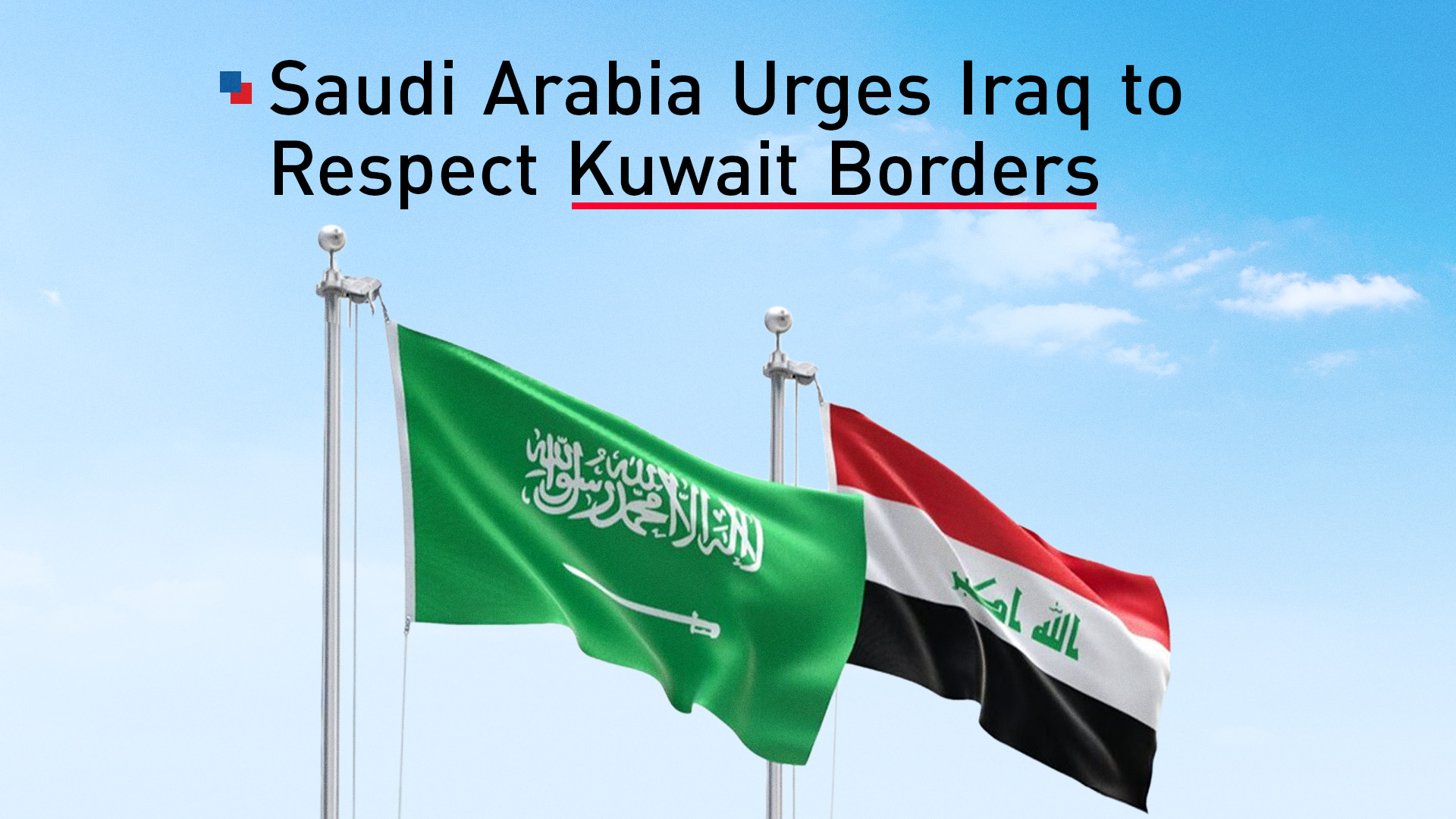
ERBIL (Kurdistan24) - Saudi Arabia has renewed its categorical rejection of any claims by other parties to rights in the divided submerged area it shares with Kuwait, expressing concern over maritime coordinates and a map recently deposited by Iraq with the United Nations and emphasizing the importance of Iraq’s commitment to respecting Kuwait’s sovereignty and territorial integrity, according to a report by Asharq Al-Awsat.
In a statement issued by its Ministry of Foreign Affairs on Monday and reported by Asharq Al-Awsat, the Kingdom said it was monitoring “with great interest and deep concern” the lists of coordinates and the map submitted by Iraq to the United Nations, which it said contained encroachments affecting areas adjacent to the Saudi-Kuwaiti Divided Zone.
According to the Asharq Al-Awsat report, the submitted coordinates and map include large parts of the divided submerged area adjacent to the Saudi-Kuwaiti Divided Zone, where Saudi Arabia and Kuwait share ownership of natural resources under concluded and effective agreements between them. The ministry said those agreements are based on the provisions of the 1982 United Nations Convention on the Law of the Sea.
The Saudi Foreign Ministry added that the coordinates “violate the sovereignty of the brotherly State of Kuwait over its maritime areas and water elevations [shoals] such as ‘Fasht al-Qaid’ and ‘Fasht al-Aij,’” Asharq Al-Awsat reported.
The Kingdom reiterated its “categorical rejection of any claims regarding the existence of rights for any other party in the divided submerged area within its defined borders between the Kingdom of Saudi Arabia and the State of Kuwait,” according to the communiqué cited by Asharq Al-Awsat.
The statement further emphasized “the importance of the Republic of Iraq's commitment to respecting the sovereignty of the State of Kuwait and its territorial integrity, and respecting bilateral and international pledges, agreements, and all relevant United Nations resolutions—particularly Security Council Resolution 833 (1993), by which the land and maritime borders between the State of Kuwait and the Republic of Iraq were demarcated,” the newspaper reported.
Saudi Arabia also called for prioritizing “the language of reason, wisdom, and dialogue to resolve disputes,” and for serious and responsible engagement in accordance with the rules and principles of international law and good neighborliness, according to Asharq Al-Awsat.
The Saudi position follows a formal protest lodged by Kuwait over the same Iraqi submission to the United Nations. Kuwait’s Foreign Ministry announced that it had summoned Iraq’s chargé d’affaires in Kuwait to deliver an official protest memorandum regarding maritime coordinates and a map filed by Baghdad that Kuwait said infringe upon its sovereign maritime territories.
In a statement issued late Saturday, Kuwait said Iraq had submitted a list of geographical coordinates and a map to the United Nations outlining what it described as Iraqi maritime domains. According to Kuwait, the submission contains claims that encroach upon Kuwaiti sovereignty over established maritime areas and fixed water elevations, including Fasht al-Qaid and Fasht al-Aij.
Kuwait stated that these areas “have never been the subject of any dispute regarding the full sovereignty of the State of Kuwait,” and described Iraq’s move as a violation of settled understandings between the two neighboring countries.
Acting Deputy Foreign Minister Ambassador Aziz Rahim Al-Deihani summoned Dr. Zaid Abbas Shanshul, chargé d’affaires of the Iraqi Embassy in Kuwait, to formally convey Kuwait’s rejection of the claims, according to the Kuwaiti statement. The protest memorandum objected to what it characterized as an infringement on Kuwait’s maritime sovereignty and affiliated water elevations.
Kuwait’s Foreign Ministry called on Iraq to take into account the historical trajectory of bilateral relations and to engage responsibly in accordance with international law, particularly the 1982 UN Convention on the Law of the Sea. It also urged adherence to existing bilateral agreements and memoranda of understanding signed between the two states.
The maritime dispute revives longstanding sensitivities between Iraq and Kuwait over territorial and maritime boundaries. Tensions date back decades and culminated in Iraq’s 1990 invasion of Kuwait under former Iraqi leader Saddam Hussein, which prompted the 1991 Gulf War and subsequent United Nations-led efforts to demarcate the boundary between the two countries.
In 1993, the United Nations established the United Nations Iraq-Kuwait Boundary Demarcation Commission, which formally delineated the international land and maritime boundary between Iraq and Kuwait. The demarcation was endorsed by UN Security Council Resolution 833 (1993), which Saudi Arabia referenced in its latest statement, as reported by Asharq Al-Awsat.
While Kuwait accepted the demarcation, successive Iraqi governments have periodically expressed reservations over aspects of the maritime boundary, particularly in relation to access to the Gulf and navigation channels near the strategic Khor Abdullah waterway.
In 2012, Iraq and Kuwait signed the Khor Abdullah agreement to regulate maritime navigation and cooperation in the shared waterway. The agreement was ratified by both parliaments. However, it has remained controversial within Iraq, where critics argue that it limits the country’s sovereign access to maritime routes.
In 2023, Iraq’s Federal Supreme Court invalidated the parliamentary ratification of the Khor Abdullah agreement, reigniting political debate and diplomatic sensitivities between Baghdad and Kuwait.
Despite periodic tensions, bilateral relations between Iraq and Kuwait have generally improved since 2003, with both governments emphasizing economic cooperation, border security coordination, and efforts to resolve outstanding issues through dialogue and international legal mechanisms.
Saudi Arabia’s Foreign Ministry, as cited by Asharq Al-Awsat, underscored that the divided submerged area adjacent to the Saudi-Kuwaiti Divided Zone is governed by existing bilateral agreements between Riyadh and Kuwait and reiterated that no other party holds rights within those defined borders.