Iraq Signs Preliminary Energy Agreements with U.S. Firm Chevron Covering Central and Southern Oil Fields
Deals Cover West Qurna-2 Transfer and Development of Nasiriyah and Balad Fields, Marking Major Step in Energy Sector Reform
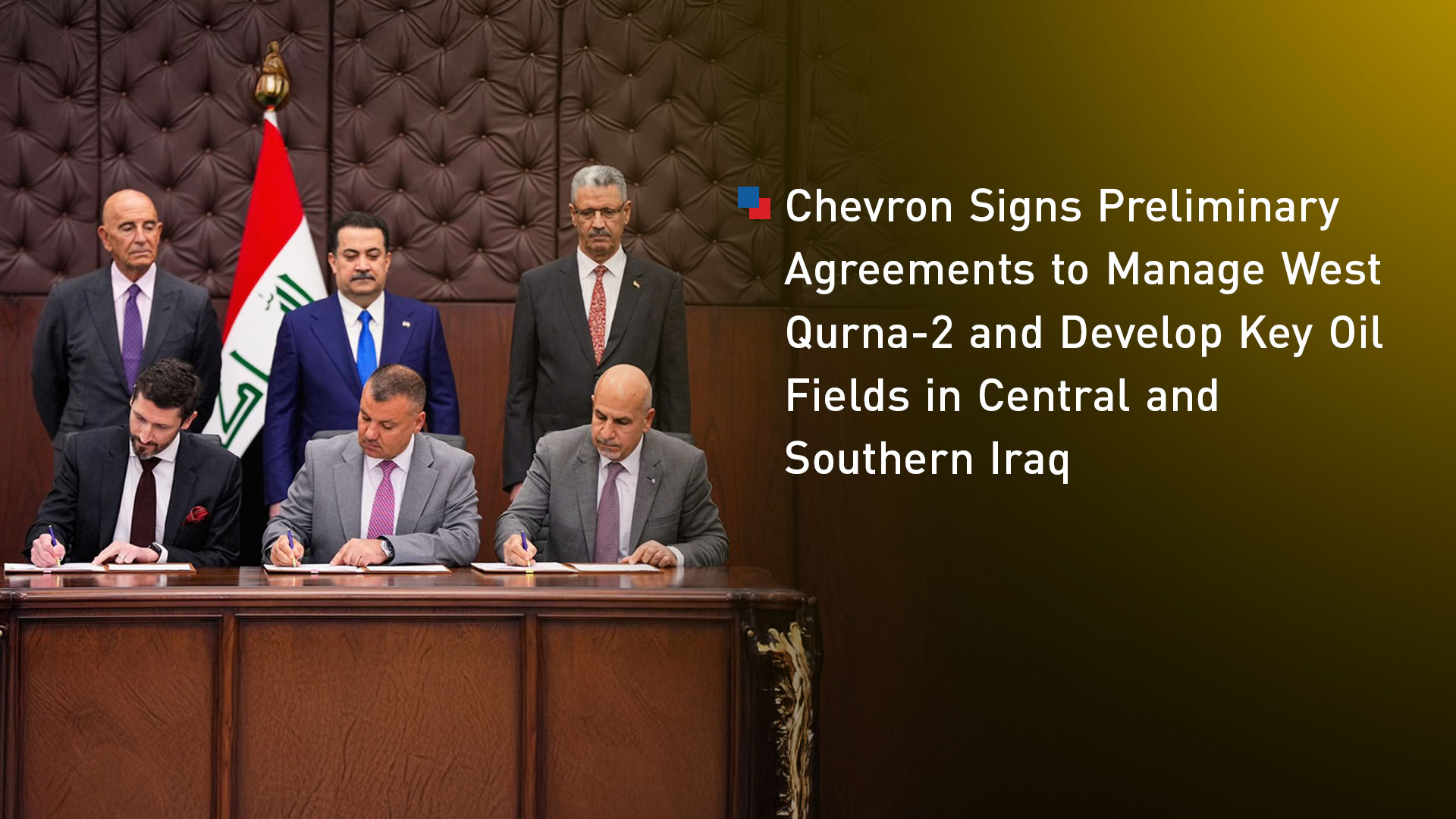
ERBIL (Kurdistan24) — Iraqi Prime Minister Mohammed Shia' Al-Sudani on Monday sponsored the signing ceremony of two preliminary principles agreements between Iraqi state oil companies and U.S. energy giant Chevron, in a move aimed at restructuring management of major oil fields and advancing broader energy sector reforms.
According to a statement issued by the Iraqi Prime Minister’s Media Office on Monday, the first agreement was signed between Basra Oil Company and Chevron to transfer the management of the West Qurna-2 oil field.
The second agreement was concluded with Dhi Qar Oil Company and North Oil Company to develop the Nasiriyah oil field and four exploratory blocks in Dhi Qar province, in addition to the development of the Balad field in Salahuddin province. The arrangement also includes an amendment to a previous agreement by incorporating the Nasiriyah field.
The signing ceremony was attended by U.S. Special Envoy to Syria Tom Barrack and U.S. Chargé d’Affaires Joshua Harris, underscoring Washington’s backing of the deal.
Sudani emphasized that the agreements represent a significant step toward completing oil sector reforms, highlighting their expected positive economic and social impact in Dhi Qar and Saladin provinces.
He noted that strengthening production capacity and modernizing management structures would contribute to improving living standards and boosting local development.
In parallel, Basra Oil Company and Russia’s Lukoil signed a settlement agreement under which the West Qurna-2 contract will be temporarily transferred to Basra Oil Company, with all outstanding financial dues between the two sides resolved. The settlement will take effect upon approval by the Council of Ministers.
Additionally, a tripartite framework agreement was signed between Basra Oil Company, Lukoil, and Chevron. Under this arrangement, the contract will be temporarily assigned to Basra Oil Company before being transferred to Chevron following the completion of negotiations and agreement on the terms of a new contract. The framework grants Chevron exclusive negotiation rights for one year under mutually agreed standards.
West Qurna-2 is one of Iraq’s largest oil fields and accounts for nearly 12 percent of the country’s total oil production, making its management transition strategically significant for Baghdad’s energy policy.
The U.S. Embassy in Baghdad described the agreement as “a significant milestone for the people of Iraq and for one of America’s leading energy companies,” stating that the partnership reflects strong support for President Donald Trump’s vision of promoting peace through shared prosperity in the Middle East.
In a statement posted on X, Special Envoy Tom Barrack said Chevron’s commitment to stewarding a field contributing nearly 12 percent of Iraq’s oil output demonstrates confidence in Iraq’s stability and long-term potential.
He added that American investments in Iraq would create new opportunities for economic growth, job creation, and enhanced resilience, advancing a future built on mutual prosperity.
The agreements follow Iraq’s earlier invitation to U.S. companies to bid for the West Qurna-2 field, which had been operated by Russia’s Lukoil. The Russian firm has faced U.S. sanctions linked to the war in Ukraine, a factor that added geopolitical weight to Baghdad’s decision to restructure the field’s management and open the door to an American operator.
The signing ceremony was attended by Tom Barrack, who currently serves as U.S. ambassador to Turkey and Special Envoy to Syria and has visited Iraq multiple times in recent months. While Iraq’s Prime Minister’s office referred to him as the U.S. Special Envoy to Iraq, that designation has not been formally confirmed by Washington.
The developments come as oil-dependent Iraq—one of the founding members of OPEC—seeks to attract greater foreign investment across its energy and non-energy sectors.
With crude exports accounting for roughly 90 percent of federal budget revenues, Baghdad views the modernization and stable management of major producing fields such as West Qurna-2 as critical to sustaining fiscal stability and reinforcing investor confidence amid a gradually improving security environment.