Discovery of 100 Human Skulls, Sassanid-Era Coins Unearthed in Erbil
According to Babakr, archaeologists recovered approximately 100 human skulls, along with a number of silver coins thought to date back to the Sassanid dynasty (224–651 AD).
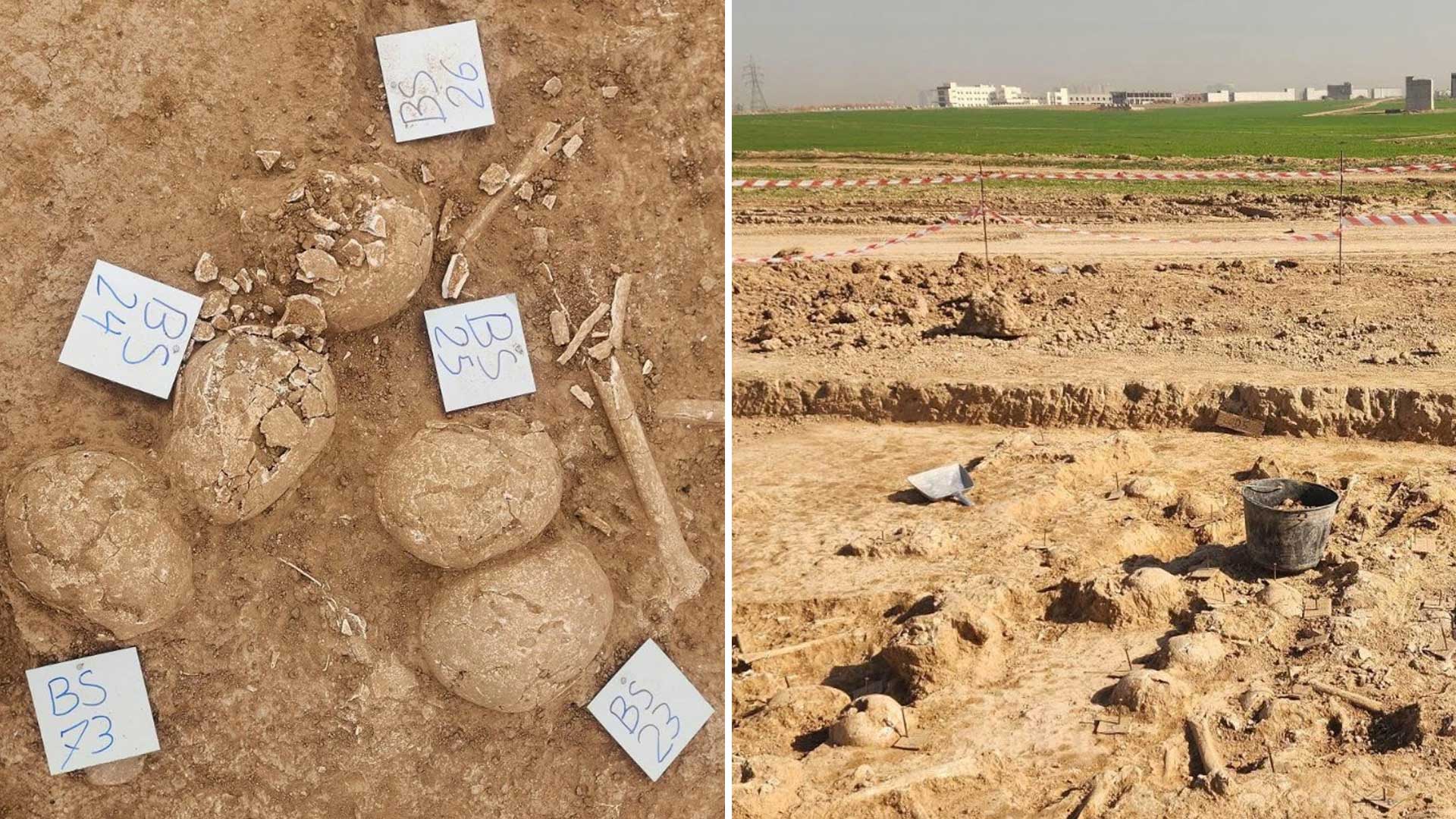
ERBIL (Kurdistan24) – A significant archaeological discovery has been made in Erbil’s Baghluminara neighborhood, where workers uncovered around 100 human skulls and a collection of artifacts believed to date back to the Sassanid period.
Nader Babakr, Director of Antiquities in Erbil, told Kurdistan24 on Tuesday that the remains were found during street work in the area. “After workers discovered several human skulls, our teams were immediately contacted. Subsequent excavation revealed the existence of a historical monument at the site,” Babakr said.
According to Babakr, archaeologists recovered approximately 100 human skulls, along with a number of silver coins thought to date back to the Sassanid dynasty (224–651 AD). Additional findings included ancient currency, two bronze anklets, two pearl bracelets, an iron bracelet, and four pieces of pottery.
He noted that the remains will undergo DNA testing to determine their origins and historical context. Authorities have not yet decided whether the site will be preserved in its current location or whether the artifacts will be transferred to a museum for protection and study.
The discovery adds to Erbil’s long and rich archaeological record. The city, one of the oldest continuously inhabited settlements in the world, is home to the iconic Erbil Citadel, a UNESCO World Heritage Site that dates back thousands of years.
Erbil has been ruled by numerous civilizations. The Sassanid Empire, which controlled large parts of Mesopotamia prior to the Islamic conquests, left behind cultural and economic influences that are still being uncovered through archaeological research.
Recent years have seen increased efforts by local authorities to preserve and document historical sites across the province, as urban development continues to expand into older districts. Discoveries such as the one in Baghluminara highlight the depth of Erbil’s buried heritage and the importance of safeguarding it for future generations.
Further analysis of the remains and artifacts is expected to shed more light on the historical significance of the site.