Iran Launches Missile Attack on Israel Following Israel-U.S. Military Operations
Iran launched dozens of missiles at northern Israel, triggering air raid sirens, as a dramatic escalation unfolded hours after President Trump announced major U.S. combat operations against the Islamic Republic.
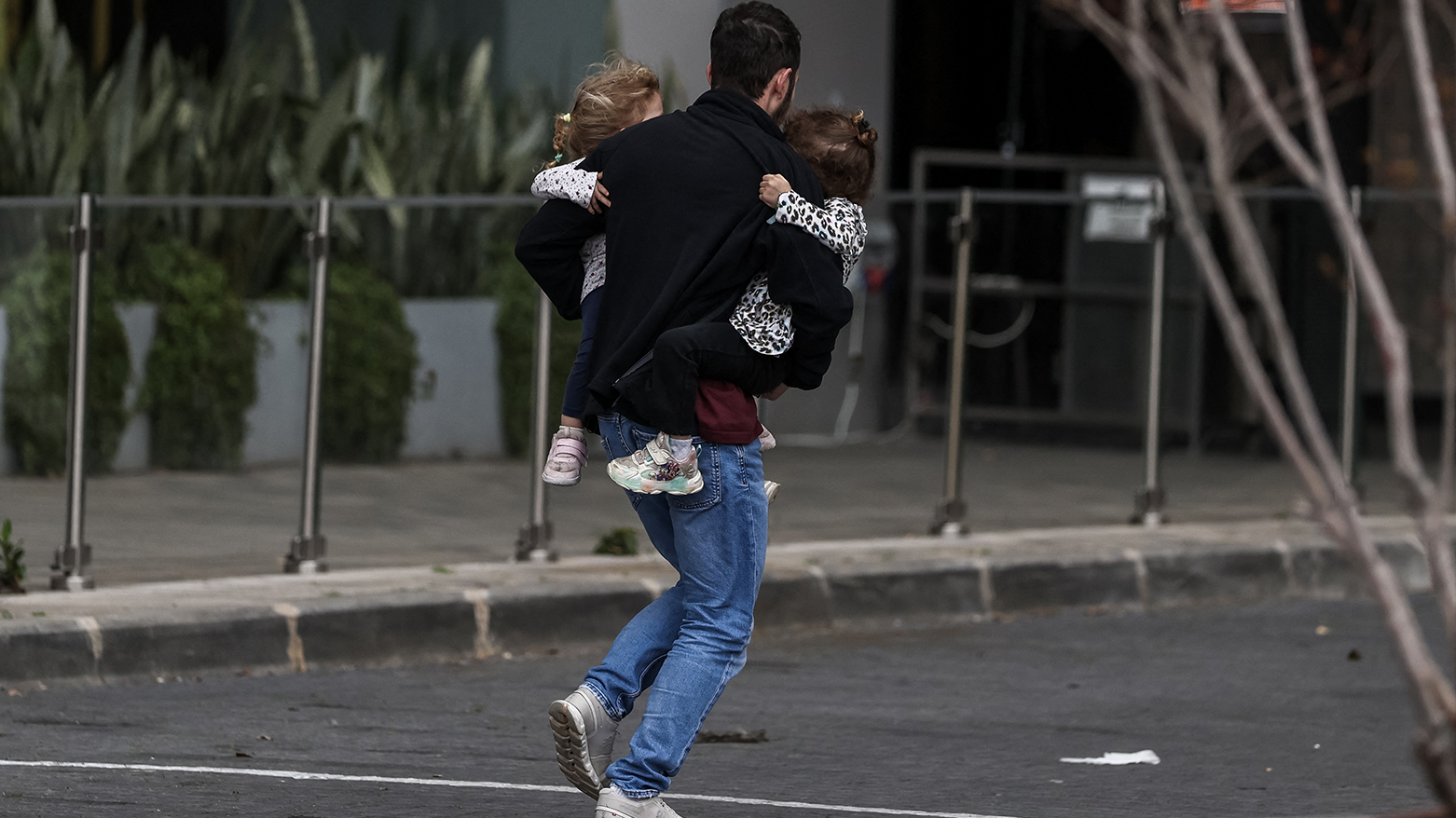
ERBIL (Kurdistan24) - Iran on Saturday launched a missile attack against Israel, triggering air raid sirens across wide areas of the country’s north, in a dramatic escalation that follows U.S. President Donald Trump’s announcement of “major combat operations” against the Islamic Republic.
Earlier on Friday, the Israeli military said in a statement that Iran had fired dozens of missiles toward Tel Aviv, adding that defense systems were activated to intercept the incoming threats. Simultaneously, Israel’s Home Front Command announced that warning sirens were sounding across broad areas in northern Israel and urgently called on residents to immediately enter shelters to protect their lives.
Iranian media reported that 30 missiles were launched toward northern Israel.
The missile barrage comes hours after President Trump declared that the United States had begun a large-scale military operation against Iran. In a video message posted on Truth Social, Trump announced the start of what he described as “major combat operations in Iran.”
“Our objective is to defend the American people by eliminating imminent threats from the Iranian regime,” Trump said, calling the Iranian leadership “a vicious group of very hard, terrible people” whose activities, he claimed, directly endanger the United States, its troops, overseas bases, and allies.
He accused Tehran of waging decades of violence against American interests, referencing the 1979 U.S. Embassy hostage crisis in Tehran, the 1983 Marine barracks bombing in Beirut that killed 241 American military personnel, the 2000 USS Cole attack, and attacks on U.S. forces in Iraq. Trump also accused Iran of arming and funding militias across Lebanon, Yemen, Syria, and Iraq, and said Iran’s proxy Hamas carried out the Oct. 7 attacks on Israel that killed more than 1,000 people, including 46 Americans.
Reiterating that Iran “can never have a nuclear weapon,” Trump referred to what he called “Operation Midnight Hammer” last June, stating that U.S. forces had “obliterated the regime's nuclear program at Fordow, Natanz, and Isfahan,” and warning that Washington would not allow Tehran to rebuild its nuclear or long-range missile capabilities.
“For these reasons, the United States military is undertaking a massive and ongoing operation,” he said, vowing to “destroy their missiles and raze their missile industry to the ground,” “annihilate their navy,” and ensure Iran’s regional proxies can no longer destabilize the Middle East or attack American forces.
Trump acknowledged that American casualties were possible, stating that “the lives of courageous American heroes may be lost,” but described the mission as necessary and “noble.” He urged members of the Islamic Revolutionary Guard Corps and Iranian armed forces to lay down their weapons in exchange for “complete immunity,” warning they would otherwise “face certain death.”
Addressing the Iranian public directly, Trump urged civilians to remain indoors. “Stay sheltered. Don’t leave your home. It’s very dangerous outside; bombs will be dropping everywhere,” he said, adding that “the hour of your freedom is at hand” and encouraging Iranians to take control of their government once operations conclude.
The escalation has triggered sweeping regional repercussions. An Iranian official told Reuters that Tehran is preparing a “crushing” retaliation. Iran’s Fars News Agency reported explosions in Isfahan, Qom, Karaj, and Kermanshah.
An Israeli official told N12 that preparations are underway for four days of intense joint strikes, adding that Tehran “will not look the same the day after.” Israel’s public broadcaster reported that the strikes are targeting regime and military sites. Reuters, citing Israel’s Defense Ministry, reported that Israel had launched a preemptive strike targeting official, missile, and security sites, while Israel’s Army Radio said a second wave of airstrikes had begun. Channel 12 reported that dozens of targets were struck, and an Israeli official told Yedioth Ahronoth that numerous assassinations had taken place and that “every missile has a target.”
Israel’s defense minister declared a “special state” across the country under the Civil Defense Law for 48 hours beginning at 10:08 a.m. on Feb. 28, citing a high probability of attacks on civilians.
Airspace across the region has been widely affected. Israeli airspace has been closed, while Iran’s Civil Aviation Organization spokesperson Majid Akhavan said the country’s entire airspace has been shut until further notice under a NOTAM.
In Iraq, the Ministry of Transport announced it is clearing Iraqi airspace in preparation for closure. Ahmed Hoshyar, Director of Erbil International Airport, told Kurdistan24 that flights have been suspended and that Iraqi airspace has been fully closed. A warning siren was also heard inside the Erbil consulate compound.
The financial impact was immediate in the Kurdistan Region. Following Israel’s strikes on Iran, the U.S. dollar surged sharply against the Iraqi dinar in regional currency markets. Kaif Khoshnaw, spokesperson for the Erbil Dollar Sellers Syndicate, told Kurdistan24 that as soon as the Israeli attack began, the price of $100 rose to 156,300 Iraqi dinars.
An Iranian official also told Reuters that Supreme Leader Ali Khamenei has been transferred to a secure location outside Tehran.
Iranian authorities circulated emergency guidance advising civilians to move away from explosion sites, seek safe shelter, assist the injured, contact emergency services, and warn others.
The unfolding developments mark a dramatic escalation in the Israel-Iran confrontation, now intertwined with direct U.S. military involvement, as both sides signal further action and governments across the region implement urgent security measures.