Araghchi to Baghdad: Tehran's Retaliation Confined to American Sites Amid Regional Escalation
Iranian FM Araghchi told Iraq that Tehran's retaliation will target only U.S. military bases in self-defense, as strikes hit Hashd al-Shaabi positions in Iraq and border crossings face new restrictions.
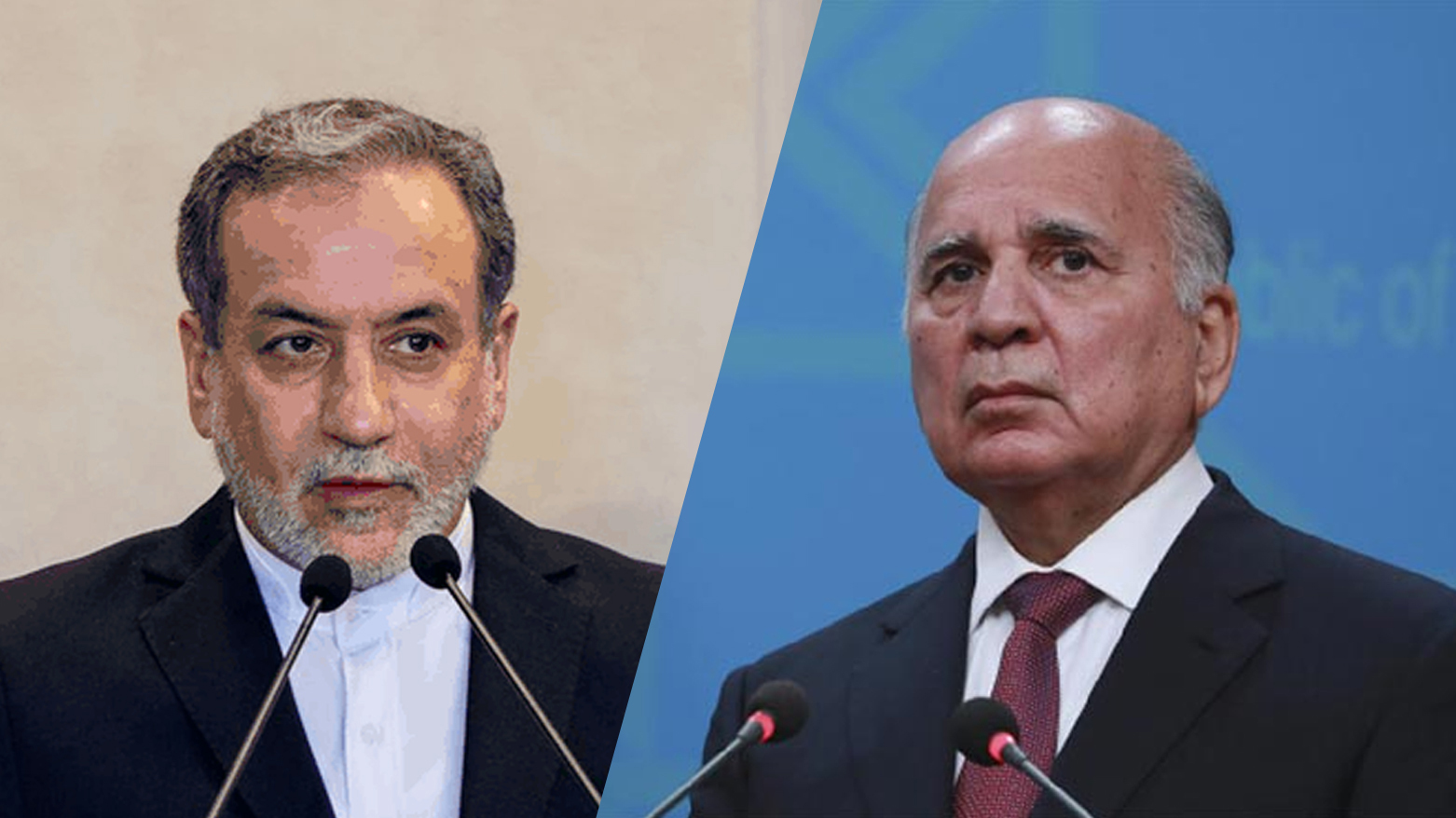
ERBIL (Kurdistan24) - Iranian Foreign Minister Abbas Araghchi told his Iraqi counterpart Fuad Hussein on Saturday that Tehran’s response will be limited to U.S. military bases in the region, asserting that Iran is acting within its right to self-defense.
According to a statement, Hussein received a phone call on Saturday, from Araghchi, who briefed him on the latest military developments after Israel and the United States launched joint strikes on Iranian territory earlier in the day.
During the call, Araghchi stressed that Iran considers it its legitimate right to defend itself and would continue to do so. He clarified that, in response, Iran would target U.S. military bases in the region, describing this as a defensive measure. He further emphasized that the attacks would not target countries involved but would be strictly limited to military sites.
For his part, Hussein reaffirmed Iraq’s firm position rejecting military escalation and reiterated that war cannot serve as a solution to crises. He underscored that dialogue and de-escalation remain the most effective means to resolve conflicts in a way that preserves regional security and stability.
The developments come amid a widening regional confrontation. Earlier Saturday, Iranian state television announced the launch of “Operation True Promise 4,” stating that Tehran had initiated a large-scale missile assault using hundreds of missiles.
In response, Israel officially declared the start of “Operation Lion’s Roar,” with Israeli sources indicating that air forces began intensive strikes on key military and strategic sites inside Iran.
Simultaneously, the U.S. Department of Defense announced its direct entry into the conflict under an operation it described as “Midnight Hammer,” saying American forces had begun direct strikes on Iranian military infrastructure to degrade Tehran’s capabilities and protect U.S. interests.
The escalation has already had repercussions inside Iraq. Warplanes targeted several positions belonging to the Popular Mobilization Forces (Hashd al-Shaabi) in the Jurf al-Sakhar area of Babil province, according to Kurdistan24 correspondent Saif Ali. Media outlets close to the Hashd said the strikes were carried out by Israeli and U.S. aircraft, resulting in the deaths of two fighters.
Border crossings have also been affected. Abbas Aziz, Director of Raparin Customs, told Kurdistan24 that the Kele crossing between the Kurdistan Region and Iran is not operating under normal conditions. He said Iraqi tourists are currently not permitted by Iran to enter the country, although Iraqi visitors already inside Iran are allowed to return, and Iranian visitors in the Kurdistan Region may also return home.
He added that since early morning, local cargo trucks waiting in Sardasht have not been permitted to return. According to available information, Iran has closed the Haji Omran international crossing to its own tourists seeking to travel to the Kurdistan Region, while allowing Iranian and eastern Kurdistan travelers to return to Iran. At the same time, Iran is not permitting tourists from the Kurdistan Region and Iraq to enter its territory, with only Iraqi travelers being allowed to return.
With airspace across much of the region closed to civilian flights and all three sides formally announcing broad military operations, the Middle East has entered a dangerous phase of direct confrontation, raising fears of a wider regional war as governments monitor developments with deep concern.