Iran Reaffirms Military Strikes on U.S. Bases as Leadership and Nuclear Program Remain Secure
Foreign Minister Abbas Araghchi Says Strikes Target Only U.S. Bases, Condemns Israel for Civilian Attacks and Reports Domestic Demonstration Casualties
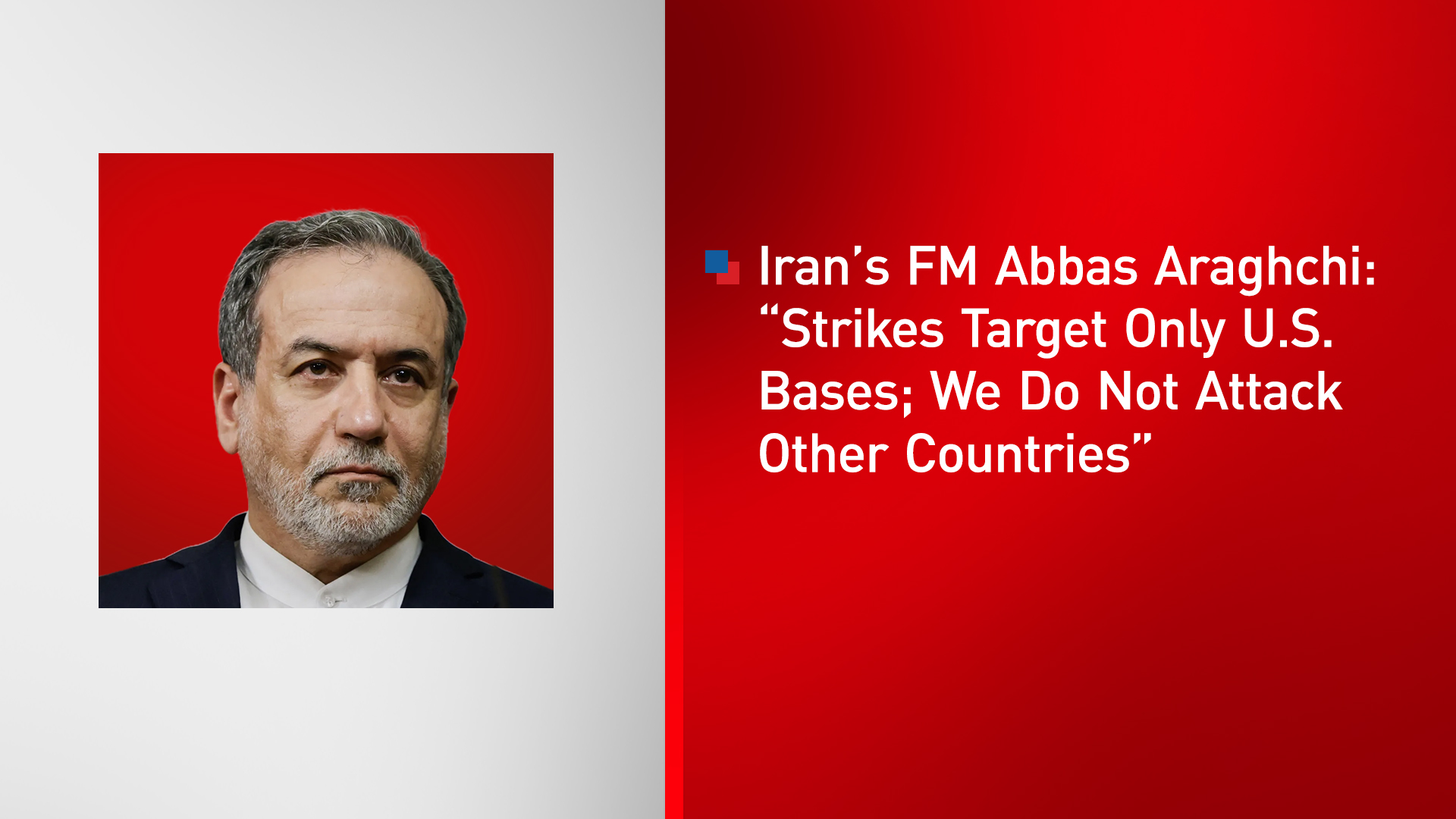
ERBIL (Kurdistan24) — Iran’s Foreign Minister, Abbas Araghchi, on Saturday confirmed that the country’s high-ranking leaders are safe and that Tehran faces no direct threat to its regime amid ongoing regional tensions. He emphasized that recent Iranian strikes were carried out solely against U.S. military bases in the region as part of defensive measures, condemning Israel for civilian attacks and the killing of children during past operations.
Speaking in an interview with NBC, Araghchi addressed Iran’s domestic situation, its nuclear program, and regional military developments. He asserted that while internal conditions may be tense, life continues under control and that Iran’s leadership, including the Supreme Leader and the President, remain unharmed, though some commanders may have been affected.
Araghchi clarified that Iran has no intention of attacking other countries, stating, “Our actions are exclusively directed at American military bases in the region. These strikes are a legitimate exercise of our right to self-defense; if attacked, we will respond.”
He strongly criticized U.S. policies as “unjust” and accused Washington of pursuing aggression even during diplomatic talks, citing past incidents in June where U.S. actions targeted Iran despite ongoing negotiations.
Araghchi confirmed that Iran maintains a peaceful nuclear program and has acted transparently in international discussions.
The minister also condemned Israel for previous attacks on civilians, referencing a strike on a school in Minab that killed 57 children. He underscored that any attack on schools or civilians is intolerable and that Israel bears full responsibility for such acts.
Addressing domestic unrest, Araghchi reported that 3,117 people died in recent demonstrations in Iran. He alleged that initial protests were peaceful, but interference by armed Israeli operatives (Mossad) escalated violence, causing additional casualties among demonstrators and security personnel.
Araghchi emphasized that Iran only supports groups in the region that fight to liberate their own territory and does not command their operations. “At this time, we do not require protection from anyone, nor do we need cooperation from any external party,” he said, reiterating Iran’s self-reliance and readiness to defend its interests independently.
A major military confrontation erupted on Saturday, after the United States and Israel launched coordinated air and missile strikes against multiple targets inside Iran. Both capitals described the operation as a pre‑emptive measure aimed at disabling Iran’s military infrastructure amid long‑standing tensions over its nuclear and missile programs.
The offensive — referred to as “Operation Roaring Lion” by Israel and also linked with U.S. strategic strikes — saw explosions reported in several Iranian cities, including Tehran, and widespread emergency alerts as airspace closures were imposed.
Tehran responded with a broad wave of missile and drone attacks targeting Israeli territory and American military bases across the Gulf region, including in Bahrain, Qatar, the UAE, and Kuwait. Civil defense sirens sounded across multiple countries as surface‑to‑air defenses engaged incoming threats.
The U.S. administration announced the beginning of “major combat operations” against Iranian forces, framing the campaign as necessary to eliminate perceived threats and urging Iranians to rise up against their leadership. Israel’s government also justified its actions by citing existential security concerns.
The conflict comes after years of deteriorating relations, failed nuclear negotiations and a previous 12‑day war in June 2025, and marks one of the most significant escalations in Middle Eastern hostilities in decades.