Explosion Hits Tanker Off Kuwait, Causing Oil Spill as Regional War Expands Across Middle East
A tanker was struck by a large explosion off Kuwait, causing an oil spill, UKMTO said, as the widening US-Israel war with Iran continues to escalate with missile interceptions in Saudi Arabia and airstrikes in Beirut.
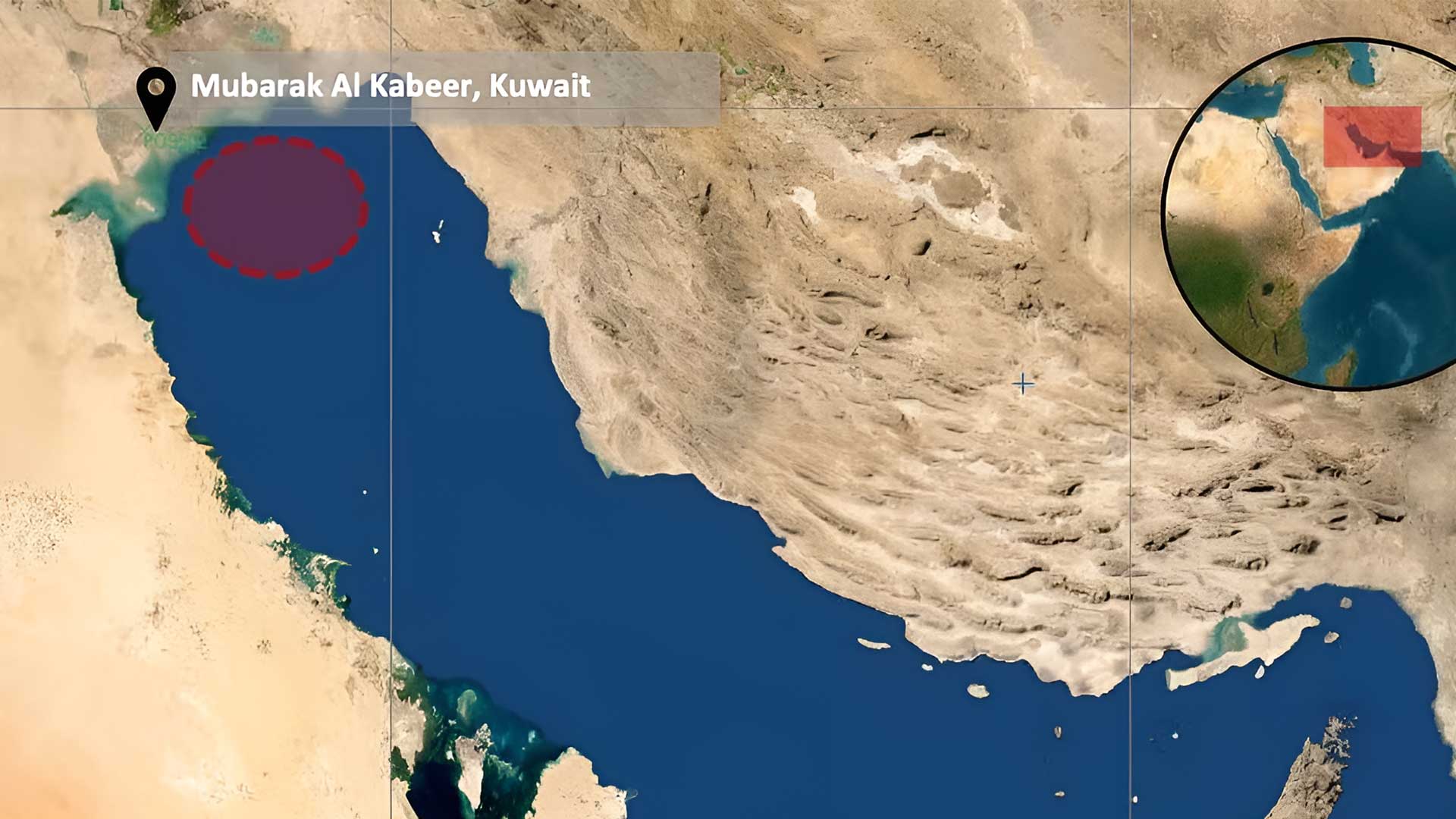
ERBIL (Kurdistan24) – A powerful explosion struck a tanker in waters off Kuwait on Thursday, triggering an oil spill and raising new concerns over maritime security as the widening regional conflict linked to the US-Israel war with Iran continues to spread across the Middle East.
The United Kingdom Maritime Trade Operations (UKMTO), a British maritime security agency, reported that the tanker was hit by what it described as a “large explosion” while anchored near Kuwait’s Mubarak Al-Kabeer area.
According to the agency, the vessel’s master reported witnessing and hearing a blast on the port side of the tanker.
“The Master of a tanker at anchor reports witnessing and hearing a large explosion on the port side then seeing a small craft leave the vicinity,” UKMTO said in a statement posted on X.
The agency added that the blast caused an oil leak from one of the tanker’s cargo tanks.
“There is oil in the water coming from a cargo tank which could have some environmental impact,” the statement said.
No further details about casualties or the extent of damage were immediately available.
The maritime incident comes as the war ignited by US and Israeli strikes on Iran enters a widening and volatile phase across the Middle East.
On Thursday, the office of Israeli Prime Minister Benjamin Netanyahu said Israel and the United States had achieved what it described as “historic gains” in the war against Iran, which began when the two allies launched strikes on the Islamic republic.
In a video message, Netanyahu’s spokesperson Shosh Bedrosian stated: “Israel and the United States have together made historic gains to protect our citizens and the civilized world.”
She said the attack was necessary because Iran was rebuilding its atomic bomb program in “new underground bunkers” and because there were indications of Iranian plans “to attack Israel and American forces in the Middle East.”
Meanwhile in Saudi Arabia, the kingdom’s Ministry of Defense announced on March 5 that it intercepted three cruise missiles near the city of al-Kharj in central Saudi Arabia, on the sixth day of the war that began Saturday.
A spokesperson for the ministry said on the platform X that authorities carried out the “interception and destruction of three cruise missiles outside the city of al-Kharj.”
At the same time, Lebanon’s Health Ministry said late on March 4 that Israeli airstrikes on vehicles along Beirut’s airport highway killed three people and wounded six.
The ministry said: “Two Israeli air strikes on the airport highway killed three people and wounded six.”
Israel’s military said it had targeted two individuals in the Beirut area but did not immediately provide further details.
The strikes came after a third consecutive day of Israeli bombardments in response to renewed attacks by Hezbollah.
Early on March 5, Israel issued new evacuation orders for a Beirut suburb, warning residents it was preparing to strike targets it said were linked to Hezbollah.
The Tehran-backed group’s leader had earlier vowed to continue fighting Israel, whose forces have pushed into several border towns and conducted airstrikes across Lebanon.
Lebanon was drawn into the expanding conflict on March 3 when Hezbollah attacked Israel following the killing of Iranian supreme leader Ali Khamenei during US-Israeli strikes over the weekend.
On March 4, Hezbollah escalated its operations, saying it carried out at least 15 attacks targeting Israeli positions as far as Tel Aviv.
As military exchanges intensify across multiple fronts — from Israel and Lebanon to the Gulf — the conflict continues to expand, drawing in regional powers and raising fears of a broader confrontation.
The explosion off Kuwait’s coast adds a new maritime dimension to the expanding regional confrontation, as military and security incidents spread across multiple theaters of the Middle East conflict.