Iran Warns It Will Respond if Neighboring Countries Are Used to Launch Attacks
President Pezeshkian says Tehran does not seek conflict with regional states but will retaliate if its territory is targeted, as Israel intensifies strikes and the regional war expands
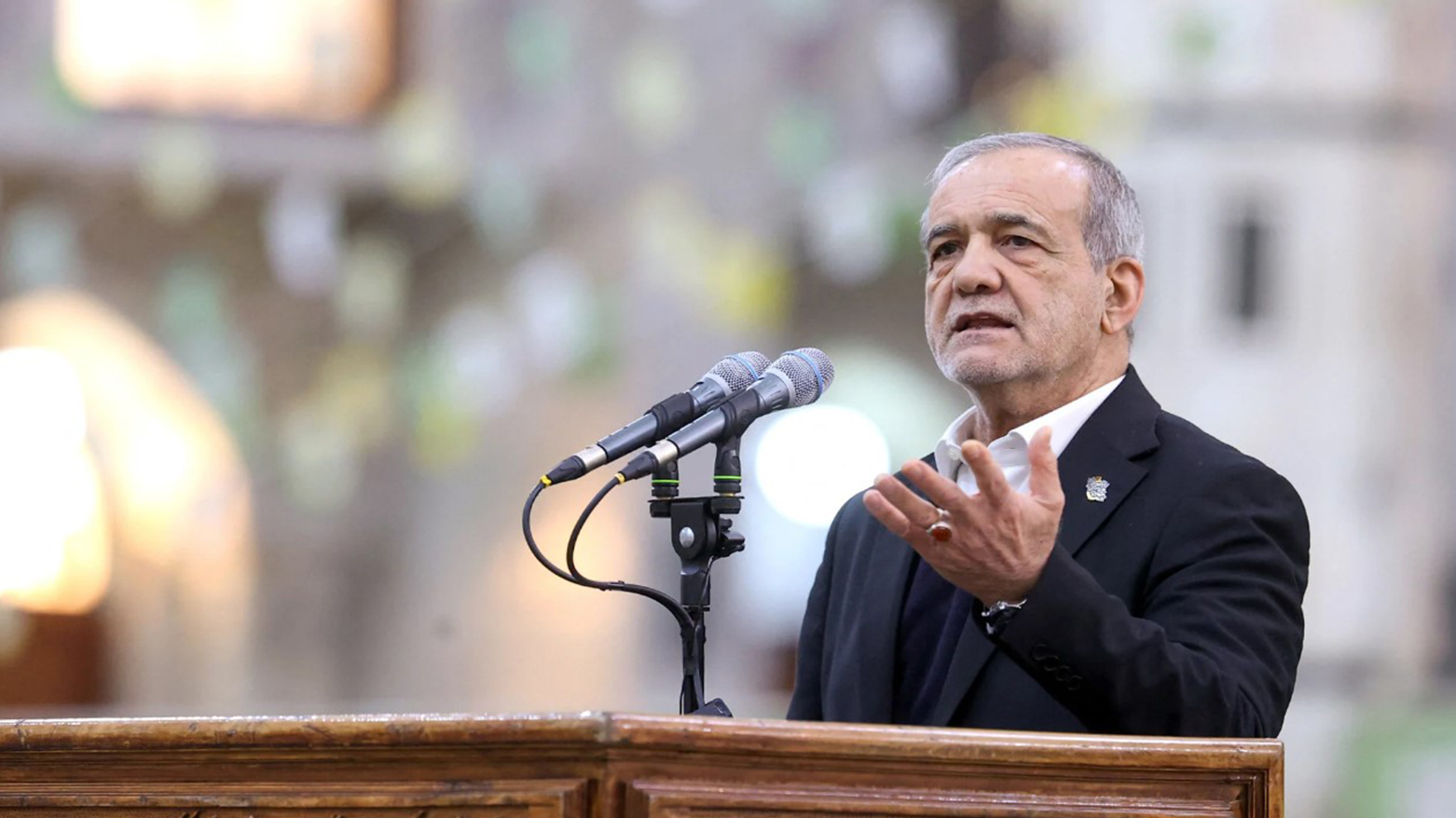
ERBIL (Kurdistan24) — Iranian President Masoud Pezeshkian said Sunday that Tehran would be “forced to respond” if any neighboring country were used as a launchpad for attacks against Iran, as the widening war involving Iran, Israel, and the United States continued to spread across the Middle East.
In remarks aired by Iranian state television, Pezeshkian warned that any attempt to attack or invade Iran using the territory of nearby countries would trigger retaliation, though he stressed Tehran did not seek confrontation with their governments or populations.
“If Iran's enemies try to use any country to attack or invade our land, we will be forced to respond to that attack,” Pezeshkian said. “Responding does not mean we have disputes with that country or wish to harm its people — we would be responding out of necessity.”
The Iranian president had apologized a day earlier to neighboring countries hosting American military bases after attacks linked to the escalating conflict affected their territories.
The warning came as the war entered its second week, with hostilities spreading across the region. Iran’s Islamic Revolutionary Guard Corps said Sunday the country’s forces were capable of sustaining an “intense war” for up to six months at the current pace of fighting.
Guard spokesman Ali Mohammad Naini said Iran had so far relied on “first and second generation” missiles but could deploy more advanced long-range weapons in the coming days.
Israel continued its military campaign with new strikes across Tehran on Sunday, a day after targeting fuel storage facilities in the Iranian capital. The Israeli military said the sites were used to support military infrastructure.
Israeli Prime Minister Benjamin Netanyahu has vowed to continue the war against Iran “with all our force,” after joint U.S.-Israeli raids last week killed Iran’s supreme leader Ali Khamenei, an event that ignited the broader regional conflict.
The war has increasingly spilled into Gulf states hosting U.S. military assets. Authorities in Saudi Arabia said they intercepted more than a dozen drones targeting sites, including the diplomatic quarter in the capital Riyadh.
Qatar reported that Iran fired two cruise missiles and 10 ballistic missiles toward the country on Saturday, while the defense ministry in the United Arab Emirates said its forces were intercepting incoming missiles and drones.
In Kuwait, authorities said a strike hit aviation fuel tanks at the international airport, raising concerns over energy supplies and prompting the national oil company to cut crude production due to threats to the Strait of Hormuz, through which roughly a fifth of global oil and gas shipments pass.
Explosions were also reported Saturday evening in Baghdad and Erbil, according to journalists on the ground. The United States has also suffered casualties. President Donald Trump attended the return ceremony for six American service members killed in a drone strike on a U.S. base in Kuwait last week.
Inside Iran, damage to infrastructure and residential areas has been mounting as Israeli air strikes continue. Iran’s health ministry said Friday that at least 926 civilians had been killed and around 6,000 wounded, though the figures could not be independently verified.
Residents described growing anxiety amid heightened security measures. “I don't think anyone who hasn't experienced war would understand it,” a 26-year-old teacher told AFP, speaking anonymously.
Despite escalating violence, analysts say there is still no clear path to ending the conflict. U.S. and Israeli officials have suggested the war could last weeks or longer.
Trump has argued Iran was close to developing a nuclear weapon and suggested American troops could eventually be required to secure the country’s enriched uranium stockpiles. He also proposed that Iran’s economy could be rebuilt if a leader acceptable to Washington replaces the late supreme leader — a proposal Tehran has rejected.
Meanwhile, China and Russia have largely remained on the sidelines despite their close ties with Tehran.
China’s top diplomat Wang Yi said Sunday that the war “should never have happened,” warning that global politics must not revert to what he described as “the law of the jungle.”