'Continuation of War Will Prevent Oil Exports and Production,' Says Qalibaf
The Iranian Parliament speaker and the president confirmed that ongoing hostilities continue to threaten oil production and export capacity in Iran.
ERBIL (Kurdistan24) - Iranian Parliament Speaker Mohammad Bagher Qalibaf warned Sunday that ongoing hostilities between Iran, the United States, and Israel could halt oil sales and disrupt production across the country. Posting on the X platform, Qalibaf said the expansion of confrontations has made it difficult for Iran to maintain existing production levels or continue exporting oil, AFP reported.
“Due to the expansion of the scope of confrontations, the continuation of tensions makes oil sales or even maintaining production levels difficult for Iran as well,” Qalibaf wrote. He highlighted previous U.S. positions, noting, “U.S. President Donald Trump previously emphasized that oil prices would not rise significantly, but following the rapid surge in the markets, he is now speaking about carrying out interventions,” according to the statement.
Qalibaf also directly criticized Israeli Prime Minister Benjamin Netanyahu, accusing him of instigating regional tensions. He said the situation threatens U.S. interests and inflicts damage on countries in the region and globally. Separately, a member of Iran’s Parliament Energy Committee predicted Saturday that oil prices could reach between $150 and $200 per barrel as the conflict continues, AFP reported. Bloomberg data cited by the agency indicated that only large Iranian tankers were passing through the Strait of Hormuz, suggesting that most global maritime transport companies are avoiding the strategic waterway amid the hostilities.
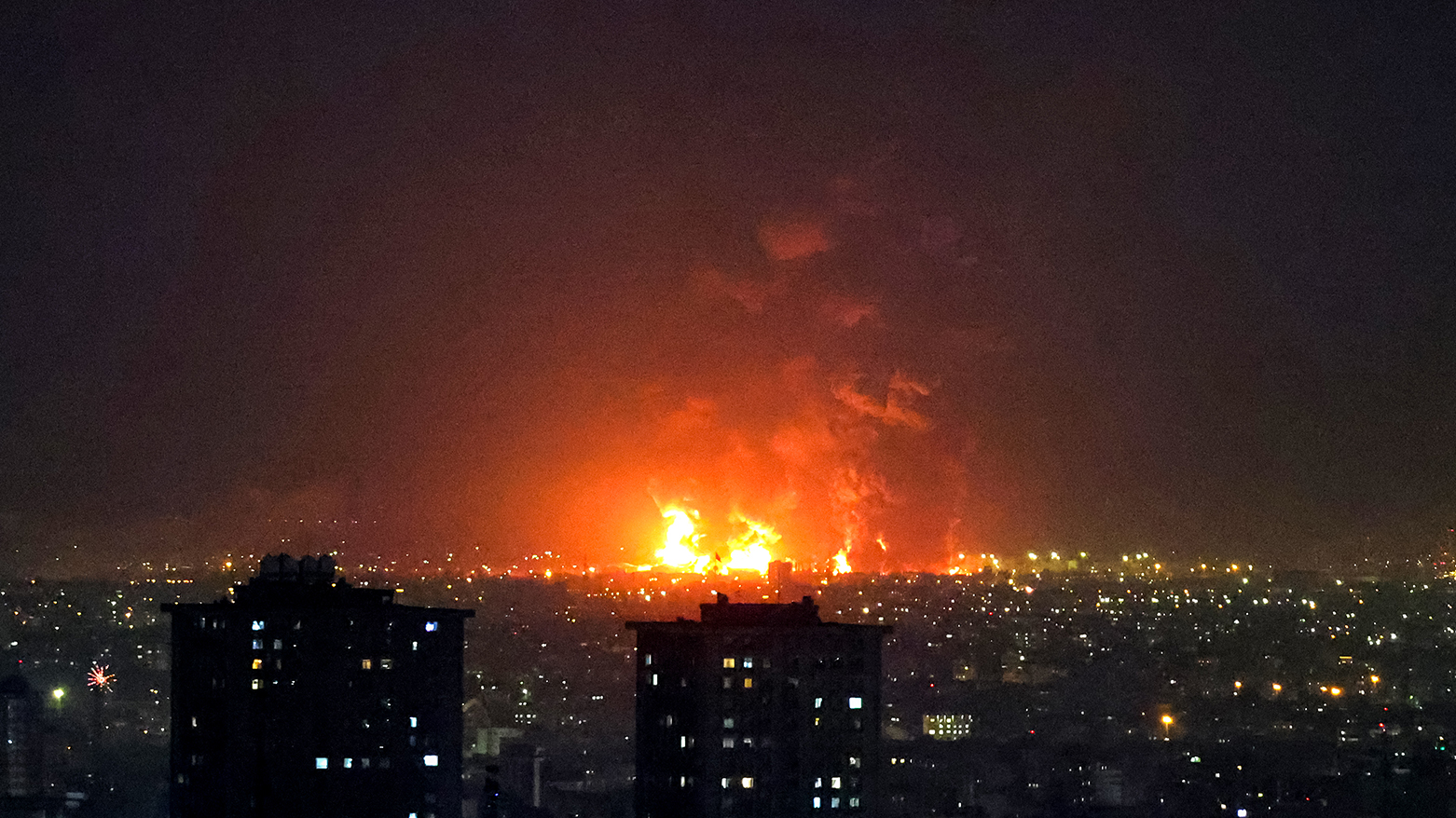
The warnings from Qalibaf coincided with overnight U.S.-Israeli airstrikes targeting five oil facilities in and near Tehran, killing four people, including two tanker drivers, and damaging depots and a petroleum products transport center. Keramat Veyskarami, CEO of the National Iranian Oil Products Distribution Company, told state television that the fires had been brought under control and that gasoline reserves remained sufficient, AFP reported. Smoke from the strikes lingered over Tehran, casting a haze across the capital as residents reported the smell of burning in the air.
The strikes followed initial U.S.-Israeli operations on February 28 that killed Iran’s supreme leader Ali Khamenei and marked the start of a broader regional conflict. Iran has responded with missile and drone attacks on Israel and U.S. targets across the Middle East.
Iranian President Masoud Pezeshkian also issued a warning Sunday, stating that Tehran would be compelled to retaliate if any neighboring country were used to launch attacks against Iranian territory. Speaking on state television, Pezeshkian emphasized that Iran does not seek conflict with other governments or populations, but would respond out of necessity if its territory were attacked, AFP reported.
Pezeshkian had earlier apologized to neighboring countries hosting U.S. military bases after retaliatory strikes linked to the escalating conflict affected their territories. He later clarified in a social media post that Iran had targeted only U.S. military bases, facilities, and installations in the region.
Iran’s Islamic Revolutionary Guard Corps said the country’s forces are capable of sustaining an “intense war” for up to six months at the current pace, with spokesperson Ali Mohammad Naini noting that first- and second-generation missiles have been deployed so far, and more advanced long-range weapons could be used in coming days, AFP reported.
Israeli air operations continued Sunday, targeting fuel storage sites across Tehran a day after striking similar facilities. The Israeli military said the locations supported military infrastructure. Prime Minister Netanyahu has vowed to continue the campaign “with all our force” following the death of Khamenei.
The conflict has spread to Gulf states hosting U.S. military assets. Saudi authorities reported intercepting over a dozen drones targeting sites in Riyadh, including the diplomatic quarter. Qatar confirmed Iran fired two cruise missiles and ten ballistic missiles toward the country, while the UAE’s defense ministry said forces were intercepting incoming projectiles. In Kuwait, a strike hit aviation fuel tanks at the international airport, prompting the national oil company to reduce crude production due to threats to the Strait of Hormuz, AFP reported. Explosions were also reported in Baghdad and Erbil Saturday evening, according to journalists on the ground.
Inside Iran, civilian casualties and damage have been mounting. The Iranian health ministry reported at least 926 civilians killed and roughly 6,000 wounded, though figures have not been independently verified. Residents described heightened anxiety and security measures. “I don't think anyone who hasn't experienced war would understand it,” a 26-year-old teacher said to AFP, speaking anonymously.
U.S. President Donald Trump dismissed threats from Iranian security official Ali Larijani in a phone interview with CBS News Saturday evening. Larijani had posted on social media that Trump would “pay the price” for U.S.-Israeli strikes. Trump said he “couldn’t care less” and added that Larijani had “already been defeated,” CBS News reported.
Trump described Iran’s military capabilities as largely neutralized, asserting that missile systems, drone operations, naval forces, and air capabilities had been extensively damaged. He cited U.S. Central Command data indicating at least 43 Iranian ships damaged or destroyed and more than 3,000 targets struck since the start of the conflict. Trump said operations would continue and that allied contributions were not necessary, CBS News reported.
Larijani countered that the United States misread Iran’s political and social dynamics and underestimated the response of the Iranian population. He said the strategy of targeting senior leadership and military commanders was intended to quickly end the conflict, but that Iranian citizens unite when the nation faces external threats. “Our people may have disagreements, but when the nation is in danger they stand together and will not allow America’s plans to succeed,” he said, CBS News reported.
The war has prompted U.S. and Israeli officials to suggest it could continue for weeks or longer, while regional actors confront escalating military, political, and diplomatic pressures. Iran’s Parliament and executive officials have warned of economic and strategic consequences, including disruptions to oil production and exports, as military operations persist.
President Pezeshkian reiterated that Iran does not seek conflict with neighboring states, but will respond if its territory is used for attacks, while Speaker Qalibaf warned that ongoing confrontations threaten the country’s oil production and sales.
The combination of sustained military operations, strategic warnings from Iranian leaders, and disruptions to global energy transit routes underscores the continuing escalation of the conflict as of Sunday, March 8, 2026.